
Quebec wakes to ‘worst
Quebec enters a perilous new phase of the trade war Saturday after trade talks between Canada and the United States collapsed and the Trump administration applies new 50 per cent tariffs on Canadian goods.
Taking effect at 12:01 a.m. Saturday, the fresh round of duties takes aim at about $28 billion in Canadian exports and come on top of existing U.S. tariffs on Canadian industries, including steel, aluminum, automobiles and softwood lumber. The Quebec Federation of Chambers of Commerce (FCCQ) called it the “worst-case scenario” for the province’s businesses.
Goods in Quebec already face an average effective U.S. tariff rate of 7 per cent, the highest in Canada, according to economists at the National Bank. The new measures are expected to push that rate to about 11 per cent, leaving Quebec as the only province in double digits.
RBC economists said Saturday the tariffs would fall heavily on plastic products, electrical machinery, furniture and wood products, concentrating much of the economic pain in Quebec, British Columbia and Ontario.
Over the past 12 months, Quebec exported $580 million worth of softwood lumber to the U.S., a decline of already 28 per cent from the previous year, according to Statistics Canada. Its total goods exports to the U.S. fell 7.6 per cent to $40 billion over the same period.
Hours before the new deadline at midnight Friday, U.S. President Donald Trump said he believed an agreement could still be reached. He had initially set the tariff deadline for Wednesday before postponing it Tuesday, saying the two countries had a deal aside from several outstanding details.
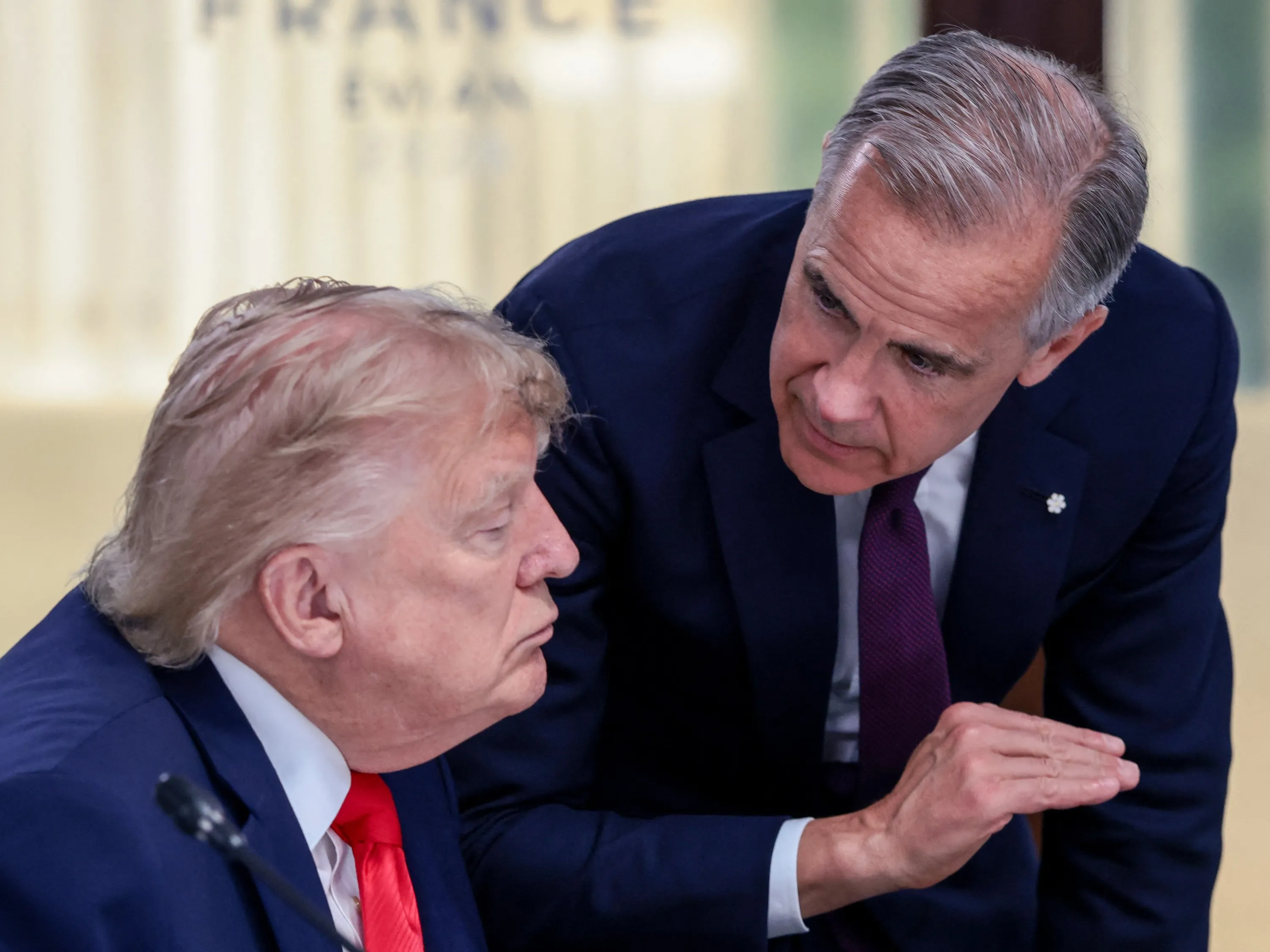
But, ultimately, Prime Minister Mark Carney suspended the negotiations shortly before midnight Friday over last-minute terms added by the Americans that were “unfair, uneconomic, and called into question the reliability of any deal.”
Speaking Saturday morning, Carney said Washington had sought to narrow the proposed auto provisions, including the treatment of Canadian parts, steel and other content, while excluding some truck production. The Americans also wanted to restrict Canada’s ability to strike trade agreements with other countries and weaken its protections for language and culture, he said.
On the table from the Canadian side, Carney said, was the offer to remove its remaining retaliatory tariffs on steel, aluminum and automobiles, if Washington lowered its duties enough to keep Canadian exports economically viable. Carney added they were also prepared to encourage the provinces to return U.S. alcohol to store shelves and make administrative changes related to supply management without altering the system, U.S. import quotas or applicable tariffs.
“In short, they asked too much, and they offered too little,” Carney said on why he walked away.
Canada will match the new U.S. tariffs “dollar for dollar,” with its response focused on products including steel, dairy, appliances, agricultural equipment, pulp and paper, and electronics, Carney said. It will also cover goods subject to U.S. tariffs under sections 232 and 338.
The details would be released in the coming days and the counter-tariffs would take effect the Tuesday after Labour Day, Carney said, adding Ottawa would announce support for affected companies and workers in the coming days.
U.S. Trade Representative Jamieson Greer offered a different account, according to U.S. media reports, telling reporters Canada had walked away from terms agreed to earlier in the week. Trump has not yet commented on the talks collapsing.
Quebec Premier Christine Fréchette blamed the breakdown on a U.S. administration that had “once again chosen confrontation.”
Fréchette said in a statement: “Quebec will not stand idly by while our businesses are being attacked head-on.
“This morning, I will convene my Cabinet to implement the necessary measures to support the businesses and workers who will be affected. I will also speak with the federal government and request that support measures be put in place.”
An FCCQ survey found 68.3 per cent of respondents favoured an agreement with the U.S., even if it required Canada to make significant concessions in other sectors. More than half said their businesses were already subject to at least one U.S. tariff.
Affected companies reported average losses of $2.07 million, a figure expected to rise to $6.09 million within six months. The average number of jobs eliminated at those companies was expected to climb from 10 to 38 over the same period, the FCCQ report said.
Véronique Proulx, president and CEO of the FCCQ, urged Ottawa to consult businesses before choosing its retaliatory measures. She warned tariffs intended to punish the U.S. could also hurt Quebec companies.
The Quebec Employers Council said in a statement the suspension of talks is a major setback for companies seeking greater certainty in their dealings with Canada’s largest trading partner.
“This is a major setback for Quebec businesses that were hoping to finally regain some predictability in their trade with our main trading partner. This suspension further weakens our economy, with effects that are being felt beyond the sectors directly affected,” said Michelle Lambías Meunier, CEO of the council.
Caroline Senneville, president of the Confédération des syndicats nationaux, Quebec’s largest union, said in a statement it would examine the assistance plans expected from Carney and Fréchette.
The union, she added, “will make every effort to defend and protect workers affected by these new tariffs.”
Related Stories
 Canada
Edmonton mother says husband is suffering in Gaza
1 hour ago
 Canada
How the Canada
1 hour ago
 Canada
How the Canada
1 hour ago
 Canada
What's the fire danger from lithium batteries?
1 hour ago
 Canada
Thousands of Alberta referendum mail
2 hours ago
 Canada
Sentencing hearing in dramatic stroller hit and run
2 hours ago
 Canada
Railway bridge to close for work to stabilise slopes
2 hours ago
 Canada
Quebec Liberals double their seats
2 hours ago