
‘The nurse used the torch on her phone to do the op’: hospitals stripped of resources in Ukraine’s occupied territories
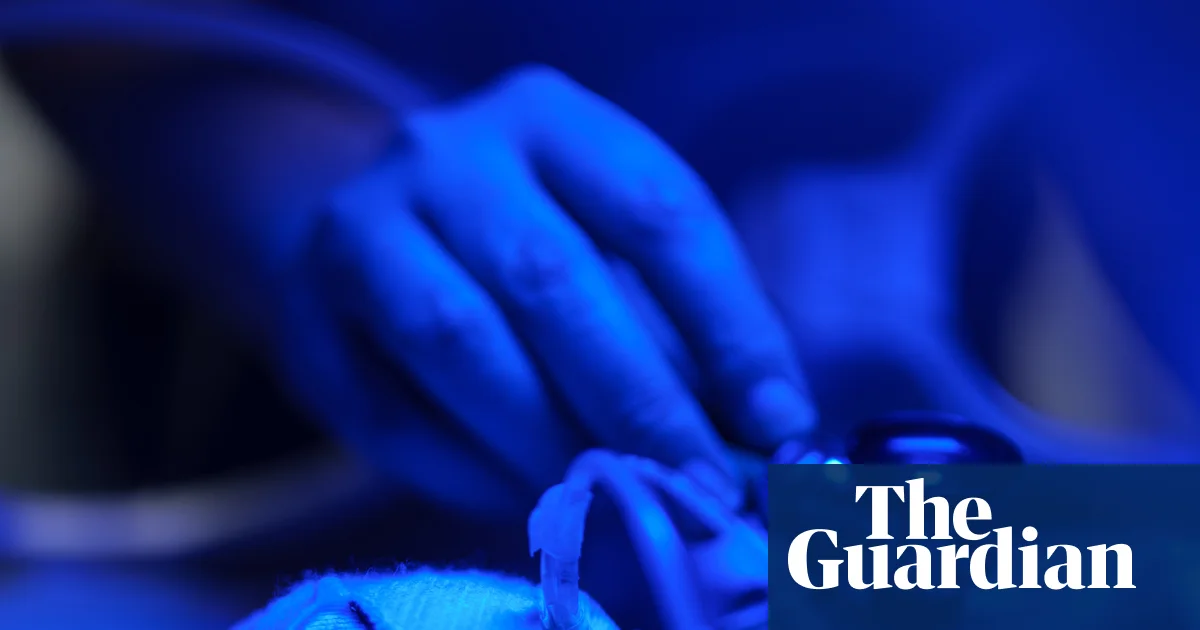
Earlier this summer, the once bustling corridors of the district hospital in Hola Prystan, a city in the Russian-occupied Kherson region of Ukraine, were ominously quiet. At times, it was plunged into darkness during power cuts lasting hours.
Much of the hospital’s medical equipment and supplies had been stolen and redirected to the military, and many experienced staff had gone.
“They [the Russian forces] even took some of the furniture,” says Natalia Sergeevna, who spent more than two decades working as a nurse in the hospital before escaping to Ukrainian-held territory in July.
In some ways, her hospital had been lucky, she says, with others in Russian-occupied territories repurposed for military use – as has been happening in regions bordering Ukraine – or simply closed down.
Despite its bare-bones infrastructure and dark corridors, people still came to the hospital, says Sergeevna, often making difficult journeys across the mine-infested landscape of occupied Kherson.
“They came with injuries and wounds; they came looking for oncologists or endocrinologists or palliative care. Women still came with pregnancies,” she says, “but every day it was getting harder to help them.”
In recent months, the situation has deteriorated further, with blockades and supply shortages leaving some Russian-occupied territories with limited medical support.
In June, the UN Human Rights Monitoring Mission in Ukraine said conditions in Oleshky and Hola Prystan, where Sergeevna worked, were becoming desperate, with thousands of people left without food, water and medicines.
It said ambulances had stopped coming to people’s homes, with medical assistance only available for the most urgent cases and patients dying during attempted evacuations.
Sergeevna says she had stayed in the hope of liberation, but by the summer things had become unbearable. “There is almost no available support to do any kind of surgeries; even basic procedures like removing polyps aren’t possible.
“In one case this year, we were performing a C-section, and the woman developed uterine bleeding, but there was no blood available for transfusion, because all of the supplies had been sent to the [Russian] soldiers,” she says.
Another obstacle is the forced “passportisation” of the population in occupied territories, with medical services refused to people who do not have a Russian compulsory health insurance policy, which can only be obtained through a Russian passport.
“They treat you very badly if you are Ukrainian. We have no rights, they tell us to our face, ‘you’re a nobody’,” says Marina*, who lives in a town occupied by Russian forces. She says she had to be taken to hospital in 2023 after she developed complications during her pregnancy and went into early labour.
“The baby was coming with the backside down, and I needed an emergency C-section. I was in a lot of pain,” she says. “But it was 11.30pm, and the curfew was in place. We tried getting out, but they shot at us.”
Marina says she spent an excruciating night cared for by her husband and a neighbour, before rushing to the clinic as soon as the curfew lifted. “When we got there, there was no obstetrician, no qualified staff for pregnancy, no one to help. I eventually had a C-section with the help of my neighbour, who was a nurse, and thankfully my baby and I survived.
“In a normal circumstance, we would have known about this complication, but because there were no tests or medical professionals left in our town, not even an ultrasound machine, I had no way of diagnosing this,” she says.
In another case, from earlier this year, Sergeevna says her colleagues were forced to treat a patient with endometriosis without anaesthesia.
“She was bleeding when she came to the hospital. So there was no anaesthesia, not even power. And the nurse at the time used the torch on her phone to do the procedure because there was no other option.”
Accurate figures are not available; but organisations monitoring the situation in the region detect an anecdotal rise in maternal and child mortalities, as well as long-term health problems. There are also reports of difficulties in accessing contraceptives and abortion.
Sergeevna says the situation is particularly acute for women, and that she had been dealing with women facing a range of mental health issues because of the lack of medical care and trauma they had suffered, including rape and sex slavery.
She says one 18-year-old had come with the letter “Z” cut into her torso with a blade. While inspecting her wound, Sergeevna discovered the girl had been raped. “But that was not why she came to us; she was too ashamed to admit that. She came only because she couldn’t tolerate the wound any more because of swelling and inflammation.”
With few doctors left in her district and depleting resources, Sergeevna and her team did their best to stitch her up. “But there was nothing else we could do for her. There were no resources to check her for STDs or provide her with contraceptives. We did not even have any way to provide psychological support.”
Related Stories
 World
World
Video. Latest news bulletin | October 7th, 2026
8 minutes ago
 World
World
Verlume Clears Key Test for Offshore Wind Subsea Battery
12 minutes ago
 World
World
Iran
1 hour ago
 World
World
Mali says its forces have retaken the northern rebel stronghold of Kidal
1 hour ago
 World
World
Israeli settlers beat press photographer as soldiers watch in West Bank
1 hour ago
 World
World
Should kids living with obesity be on GLP-1s? New global guidance says yes
1 hour ago
 World
World
WHO says Russia told it ‘no cases of plague’ but isn’t identifying pathogen
2 hours ago
 World
World
Sumitomo, TFI Marine Introduce Mooring Solutions to Floating Wind
2 hours ago