
Protect the Earth
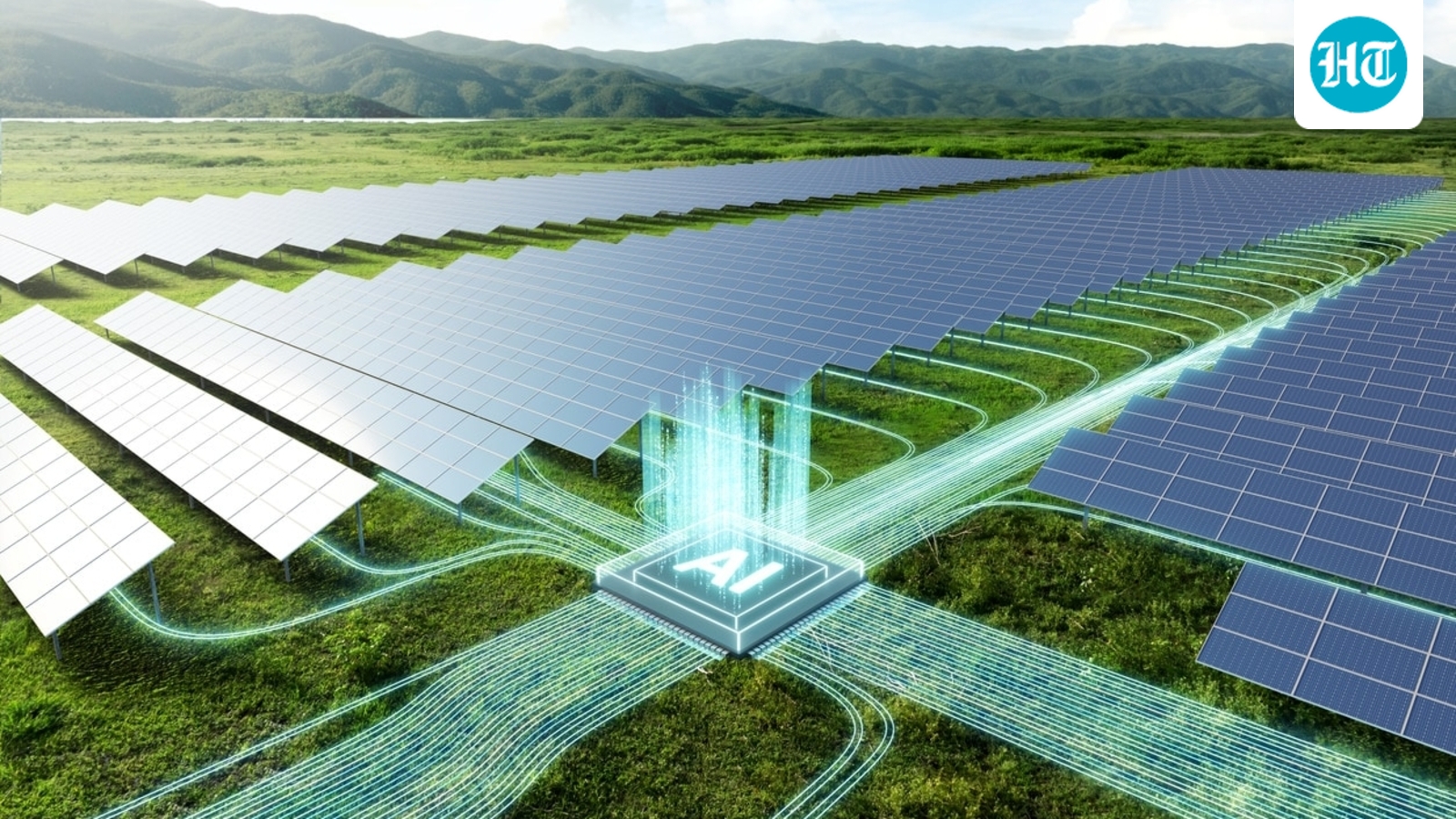
Protect the Earth—Build More Data Centers
Their need for reliable power drives innovation while AI helps develop new clean technology.
Opposition to artificial intelligence has intensified over the past year. A majority of Americans worry that AI will kill jobs, distrust the information it generates, and doubt that tech leaders will develop the technology responsibly. Opposition has crystallized in environmental concerns about data centers. More than 70% of Americans oppose their construction, and 10 times as many Americans told Pew Research that data centers are bad for the environment than said they are good for the environment.
The environmental movement has jumped on the bandwagon. The National Wildlife Federation calls the AI boom “an environmental justice crisis.” Student activists from the Sunrise Movement stormed the Washington lobbying offices of OpenAI last month, insisting that AI threatened their job prospects and access to clean drinking water.
But what if AI holds the key to a better environment? While concern about data centers focuses on dubious claims about water use, water quality, electricity prices and (somewhat more credibly) short-term carbon emissions, the environmental promise of this moment is being overlooked. AI and the build-out of data centers may offer a generational opportunity to clean up our electricity grid, improve water quality and water-use efficiency, and accelerate technologies to lighten the burden we impose on the planet.
How is this possible when hyperscalers are scrambling to build data centers and often powering them with carbon-emitting natural gas and sometimes even coal? Surging growth in electricity demand historically has accelerated the deployment of clean electricity-generation technology. The golden age of nuclear energy in the U.S. in the 1960s and ’70s was a response to the rapid expansion of the grid in the postwar era. Rapid expansion of electricity grids in China, India and other developing countries has supercharged the adoption of solar, wind and batteries globally over the past 15 years. New research suggests this may be happening with the build-out of data centers in the U.S.
Moreover, the economics of AI electricity demand are unique and promising for the commercialization of key clean-energy technologies. Data centers need large amounts of power around the clock, so reliable generation is at a premium. Data-center developers are uniquely able to pay high prices—data centers need a lot of electricity, and that cost is a comparatively small share of the total capital and operating cost of a large data center. Much of the investment in frontier AI computation, which accounts for 50% or more of the cost of a large data center, depreciates in a few years. Therefore providing power to those high-powered chips so they are running all the time becomes an economic imperative.
Hyperscalers are deploying a lot of natural gas-powered generation because it is the only technology available that can meet the demanding reliability requirements of data centers. But there is a backlog of orders for new combined-cycle natural-gas plants and good reason to think that gas prices will rise in the future. As a result, hyperscalers are making major commitments to next-generation nuclear, nascent geothermal and natural-gas plants that capture the carbon they produce. The massive data center build-out may prove to be the critical platform for commercializing clean, reliable, low-carbon electricity-generation technology that the world will need to tackle climate change.
The revolution in computational capabilities that is driving the AI revolution also promises to accelerate environmental-technology innovation. Whether by modeling the behavior of superhot plasmas in fusion reactors, developing better membranes to clean wastewater cheaply for reuse, or designing high-powered computer chips that use electricity more efficiently, the AI revolution is already seeding a revolution in clean technology.
That transformation will likely go beyond the energy and water footprints of data centers or electricity generation, promising everything from affordable and palatable cultivated meats to lower-impact precision agriculture to hyperefficient jet engines.
Whatever you think about AI, the future of the planet will be determined not by a short-term blip in domestic carbon emissions from data centers or the comparatively modest land and water demands of even the largest data centers, but by how quickly the world develops clean technologies to meet the food, energy and water needs of eight billion people. We shouldn’t pass up this opportunity.
Mr. Nordhaus is president of the Breakthrough Institute.
Related Stories
 Technology
Nauticus Robotics, Inc. Announces ROV Offshore Projects
39 minutes ago
 Technology
MoU signed for technology to prevent wild elephant
1 hour ago
 Technology
Credo Technology Group Q1 Earnings Call Highlights
2 hours ago
 Technology
Best Customer Support Software for Startups: A SaaS Founder's Playbook
3 hours ago
 Technology
NAF, AUST Explore Collaboration In Aviation, ICT, Defence Technology
3 hours ago
 Technology
What Gen Z, Millennials, and Older Adults Expect from Hotel Technology
3 hours ago
 Technology
Mark Ruffalo comments cause pushback against anti
4 hours ago
 Technology
Malaysian deep
6 hours ago