
IndiGos next flight plan: Airline targets bigger global push, diaspora traffic through India
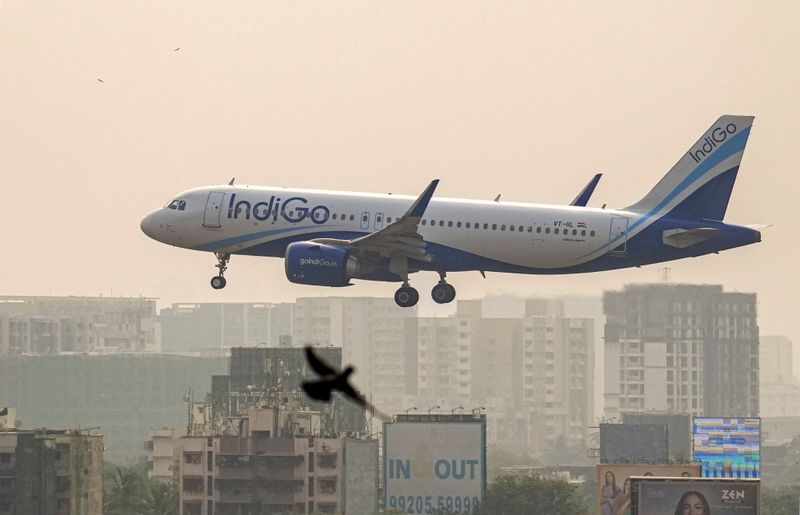
IndiGo's next flight plan: Airline targets bigger global push, diaspora traffic through India
Managing Director Rahul Bhatia says long-haul services will primarily cater to Indians travelling abroad and overseas communities returning home.
As IndiGo marks 20 years of operations, the airline that transformed air travel in India is preparing for what its co-founder calls a “longer leap of flying” as it charts an ambitious international expansion to connect the global Indian diaspora to their homeland, recapture international traffic now flowing through Gulf hubs and, over the longer term, carry passengers between foreign countries via India.
The country’s largest airline, which has a domestic market share of more than 66 per cent, is set to induct Airbus A321 XLR aircraft before taking delivery of wide-body A350s from 2028.
With an extensive domestic network, IndiGo is prepared to take a “longer leap of flying”, IndiGo Managing Director Rahul Bhatia said in an interview to PTI, adding that the airline will connect more overseas destinations with the A321 XLR and later with the A350.
However, Bhatia, also IndiGo’s co-founder, said the airline was still far from being a global carrier as it approaches its 20th anniversary of operations on August 4.
“Do we want to get there? Yes, we aspire to get there. But we are still, I mean the heart of the company is really the domestic network we have.
“... we do a little bit of experimenting with larger planes, but I think to call us global is kind of extending your imagination,” he said.
IndiGo has expanded its overseas network in recent years and is operating leased Boeing 787 aircraft from Norse Atlantic Airways, although some international services have been curtailed due to the West Asia conflict and airspace restrictions.
Citing a challenging operating environment because of ongoing geopolitical tensions, the airline last week said it would discontinue wide-body operations from October 25 and conclude its damp lease agreement for the Boeing 787 aircraft from October 31.
Bhatia said IndiGo’s long-haul strategy would primarily focus on serving Indian travellers and the global Indian diaspora.
“When the airline does longer length of flying, it will be about taking Indians to markets around the world and bringing large Indian diaspora who live around the world to India,” he said.
He said Gulf carriers had captured much of the international traffic from India over the past decade by funnelling passengers through their hubs, resulting in Indian economic value flowing overseas.
“The onus lies with airlines like IndiGo and Air India to bring all that economic wealth back and truly have Indian carriers fly Indian customers to the world,” Bhatia said.
“We have an extensive network in India, we can connect into a hub and fly people to the world. And vice-versa, bring people from geographies where we have large Indian concentration, bring them to India,” he added.
Whether IndiGo was looking to emulate Emirates’ hub model, Bhatia said connecting international passengers through India would remain a non-core business for the airline, unlike the Gulf carrier, as India still has significant untapped domestic demand.
Whether IndiGo could connect countries with the largest Indian diaspora over the next decade, Bhatia replied: “absolutely without a question”.
The ambition traces back to a simple premise. IndiGo commenced operations on August 4, 2006, with a handful of Airbus A320 aircraft, launching services between Delhi, Guwahati, and Imphal before expanding to 13 destinations within its first year.
The airline built its model around four pillars—low fares, on-time performance, courteous and hassle-free service, and a clean flying experience—betting that a single-aircraft-type strategy would keep costs down and reliability high.
That discipline compounded quickly. By FY16, IndiGo had become India’s largest airline by market share, with 35 domestic and five international destinations.
Between 2016 and 2023, the network scaled from 35 to more than 85 domestic destinations, international routes expanded across the Middle East, Southeast Asia, and the SAARC region, and annual passenger traffic crossed 100 million.
In 2023, the airline placed what it describes as the world’s largest single aircraft order -- 500 Airbus A320 Family jets—and announced its ambition to double in size by FY30, laying the groundwork for the long-haul push now underway.
It is an ambitious pivot for a carrier that built its identity on domestic dominance. IndiGo controls more than 66 per cent of India’s domestic market, operates a fleet of over 430 aircraft, and serves more than 95 domestic and over 40 international destinations.
Its order book, already the envy of the industry, stands at more than 900 aircraft, including wide-body Airbus A350s due from 2028 and long-range A321 XLRs arriving sooner.
Yet, for all its scale, Bhatia was careful not to overstate where the airline stands today.
A different kind of global ambition
Where some rivals have built their international strategy around funneling the world’s passengers through a single mega-hub, Bhatia was explicit that IndiGo’s ambitions run in a different direction—one rooted in India’s own diaspora rather than in competing head-on for global connecting traffic.
He framed this as something closer to a correction than an expansion—pointing to the way Gulf carriers have, in his view, captured the economic value of Indian travel by routing passengers through their own hubs over the past decade.
“We have an extensive network in India, we can connect into a hub and fly people to the world. And vice-versa, bring people from geographies, where we have large Indian concentration, to India,” he added.
Looking further out, Bhatia sketched a future in which IndiGo’s international network becomes large enough to carry travellers between two entirely foreign countries via India—citing, as an example, a passenger flying from the UK to Australia by routing through Indian soil.
That aspiration dovetails with the airline’s stated Vision 2030, which positions India as a preferred global aviation hub connecting Europe, Asia, Africa, and the Middle East, with international capacity targeted to rise from roughly 30 per cent of the network today to 40 per cent by the end of the decade.
Related Stories
 World
World
World Cup news: UEFA ready to hit Gianni Infantino with criminal complaint over failed $20 billion plan
11 minutes ago
 World
World
Video. Latest news bulletin | August 27th, 2026
11 minutes ago
 World
World
Another Canadian charged in international drug trafficking scheme
11 minutes ago
 World
World
‘Saree Goes Global’: Indian diaspora showcases rich textile heritage at NYC’s Times Square
12 minutes ago
 World
World
World Championships: Key Takeaways
1 hour ago
 World
World
Neave and Boughen lead FIM Flat Track World Championship charge into Scheessel
2 hours ago
 World
World
The Latest: Regional powers seek off
2 hours ago
 World
World
Ratko Mladić, the ‘Butcher of Bosnia’, dies aged 84
2 hours ago