
Looking to the past to understand Canada’s security future
Looking to the past to understand Canada’s security future
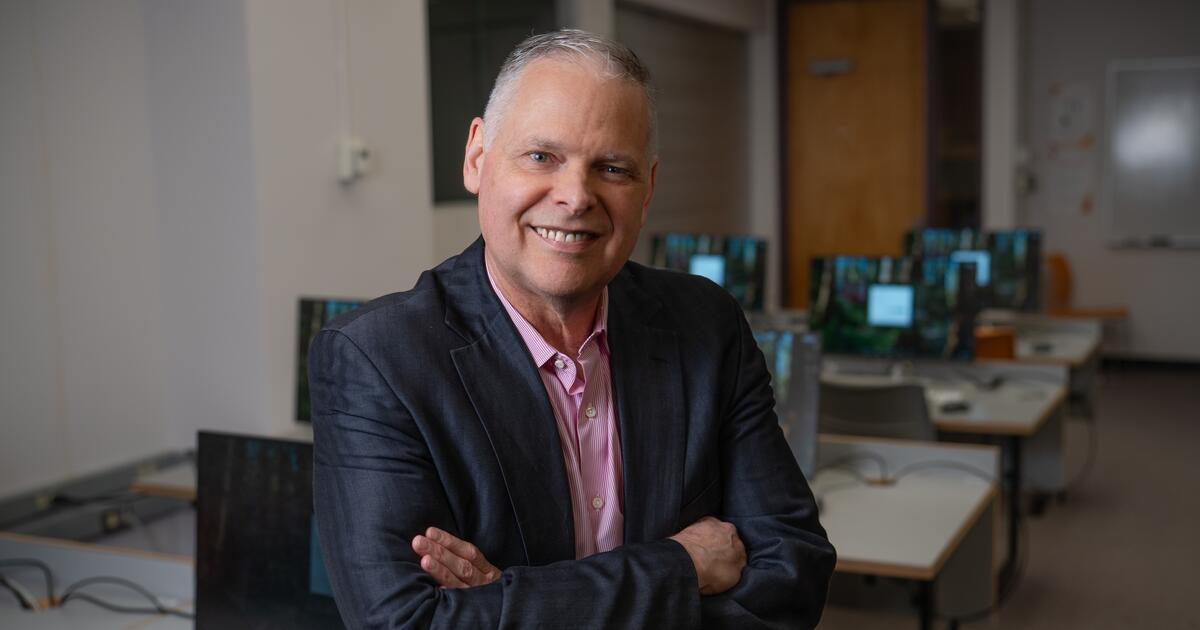
As Canada faces growing uncertainty in a changing international order, a new research chair at the University of Calgary will examine how intelligence can help policymakers respond to emerging security challenges, strengthen alliances and protect Canada’s interests.
“We can no longer assume the security arrangements of the last 60 years will continue unchanged,” says Dr. Peter Jackson, MA’91, PhD, the Eddie Goldenberg Research Chair of Canada in Intelligence and Security in a Changing Global Order in the Faculty of Arts. The Chair is part of a new Government of Canada initiative to recruit world-leading researchers to Canada.
Shifting Canada-U.S. relations, uncertainty over the future shape of NATO and changing global power dynamics create difficult choices for Canada’s future security policy. Jackson’s research is geared toward helping Canada navigate those choices through better intelligence, stronger policy connections and a deeper understanding of international relations. Understanding how intelligence partnerships evolved between Canada, the United States and NATO offers important clues for navigating today's changing security landscape.
“History doesn’t repeat itself, and it’s not a reliable, precise guide to the future. But it’s the only guide we have,” says Jackson.
Jackson, who is from the Calgary area and earned his MA in history from UCalgary, weaves the historical context into every aspect of his research. He points out that understanding historical experience can give governments the best foundation for responding to present-day challenges. Intelligence, Jackson says, shouldn’t be treated as simply a technical exercise.
“When we think about intelligence, we also need to think about how past decisions shape current policy, how alliances have evolved over time, how policymakers interpret intelligence through existing assumptions and beliefs, and how culture can influence national security decisions,” he says.
For Jackson, those questions are particularly relevant as Canada navigates a rapidly changing security environment.
The Chair will examine the role of intelligence in the emerging geopolitical order and how it can help inform Canada's national security policy. The program will explore how governments understand threats, build alliances and adapt to these new security challenges.
While Jackson has worked extensively in Europe for the past 30 years, he says he’s excited to come back to Canada and to focus on the Canadian security and intelligence experience.
Two projects planned for his tenure will explore specific aspects of the Canadian context: The evolving security environment in the Arctic, one of the most strategically important regions for Canada’s future security; and expectations and understandings of intelligence within Canadian public opinion.
The proposed Arctic Observation Unit will collect and analyze open-source intelligence across the web to identify strategic activity in the Arctic, to help inform public discussion and government policy.
According to Jackson, the project will deploy some of the new data technologies to scrape the web and parse and organize data to look for signals of strategic activity and strategic intent in the Arctic to inform public policy debates and government policy.
He will work closely with the Centre for Military, Security and Strategic Studies (CMSS), where he will be a Fellow, to combine UCalgary’s existing expertise on the Arctic security.
“Dr. Jackson is an internationally recognized scholar of intelligence studies,” says Dr. Robert Huebert, PhD, professor in the Faculty of Arts and CMSS director. “His expertise will complement CMSS’s existing strengths in Arctic and international security, reinforcing the University of Calgary’s position as a leading centre for research and teaching in international security, intelligence and Arctic affairs, both in Canada and internationally."
The second project will explore the public’s understanding of intelligence, security and the role of intelligence agencies in a democracy. Using Canada-wide surveys, Jackson will explore how Canadians understand what intelligence is, what it should be, what it should and can do, all to lift levels of understanding of intelligence and its role in security policy.
Jackson argues that questions about intelligence, security and democratic accountability shouldn't be confined to government agencies alone. Understanding how Canadians view these issues will help inform future public discussions about security policy.
“I think this will be a fun project, but also an important contribution, and one that will be useful to Canada’s wider national security policy,” he says.
What is interesting about Jackson’s approach is not that he’s studying AI, it’s that he’s putting today's AI revolution in historical perspective. By examining how earlier technological breakthroughs transformed intelligence gathering and analysis, he hopes to better understand both the opportunities and limitations of emerging technologies.
AI and large language models, Jackson says, can help researchers work with data in a more systematic way to identify patterns, but it cannot replace the human aspect of the work in intelligence and security. These elements remain essential to understanding another country’s intentions and actions.
“AI can’t replace cultural awareness or nuanced judgements concerning the intentions of other actors,” he explains. “AI can help us organize and manage larger quantities of information, but it can’t replace cultural sensitivity or our capacity to empathize with other human beings.”
For a proud Calgarian and Canadian, Jackson is excited to be coming back to Canada at a crucial moment in the history of Canadian foreign security policy. He was particularly drawn to the work done at CMSS, its connections to high-level policy discussions in Ottawa and across Canada, and the opportunity to plug in to networks that he wouldn’t have access to on his own.
And, while his work will play an important role in Canada’s future, connecting researchers, policymakers and intelligence practitioners across Canada, Jackson is excited to bring the next generation of experts into the conversation as part of his Chair, and to build further capacity with graduate student, postdoctoral scholars and other emerging scholars in the field, from across all disciplines.
“Canada is facing some difficult challenges when it comes to intelligence and security,” says Jackson. “I felt almost obliged, as a Canadian, to do what I can by bringing what expertise I have to the University of Calgary and to Canada, and through this project to help build a strong network of expertise that will support the country in security, intelligence and public policy for years to come.”
Related Stories
 Canada
Trump, after bipartisan backlash, says Pentagon won't livestream execution of Fort Hood shooter
34 minutes ago
 Canada
President Trump says “Canada will end up being the 51st state”
34 minutes ago
 Canada
Claims that Canada interfered in U.S. midterms are ‘noise,’ former diplomat says
34 minutes ago
 Canada
U.S. watching for Canadian ‘interference’ in midterms, Hoekstra says
1 hour ago
 Canada
Official: Canada records first
1 hour ago
 Canada
Major projects CEO faces B.C. First Nations’ frustrations over lack of consultations
2 hours ago
 Canada
As Americans play ‘power game,’ draft document shows Canada
2 hours ago
 Canada
Prince Harry and Meghan cheered as they make first joint appearance since returning to U.K.
2 hours ago