
Nvidia Aims to Raise $20 Billion to Continue AI Chip Production

Nvidia Aims to Raise $20 Billion to Continue AI Chip Production
Artificial intelligence (AI) chipmaker Nvidia is reportedly planning to raise $20 billion through a U.S. bond issuance.
The company has not accessed the investment-grade bond market since raising $5 billion 2021, a source familiar with the matter told Reuters in a report published Monday (June 15).
The bond is comprised of seven tranches of notes, maturing as late as 2056, the report added, citing a term sheet seen by Reuters. A Nvidia spokesperson told the news outlet that the company wants to use the proceeds for general corporate purposes, such as the repayment and refinancing of outstanding notes.
The report also pointed out that Big Tech firms have shown no plans to slow their spending on AI projects, with total investments expected to exceed $700 billion for 2026, compared to around $400 billion in 2025.
According to the report, Meta filed in October for its largest bond offering of up to $30 billion, while Google recently revealed plans to sell Japanese yen-denominated bonds for the first time.
Reuters noted that although Nvidia has not been constructing large-scale data centers, it does make the chips used in those centers, and is thus witnessing strong demand from companies seeking to train and run increasingly advanced AI models.
Advertisement: Scroll to Continue
To keep up with the fast-moving industry, the report added, Nvidia has spent heavily to develop the most advanced processors, rolling out a new family of chips every year, each with greater AI capabilities than its predecessor.
In other Nvidia news, PYMNTS wrote last week about the launch of Cosmos 3, an open world foundation model for physical AI trained using 20 trillion tokens of multimodal data — including almost one billion images, 400 million real and synthetic videos, audio and action data from humans and robots.
The model is designed for machines that need to understand the physical world before acting in it. Nvidia founder and CEO Jensen Huang noted during the product’s launch that “the big bang of physical AI is just around the corner thanks to breakthroughs in multimodal reasoning language, vision and world models.”
“The distinction matters for anyone building or deploying physical AI,” PYMNTS wrote. “An LLM learns from text. A world foundation model learns from physical environments: how objects move, collide, fall and interact over time.”
Cosmos is different from a video generator, the report added, in that it doesn’t only generate realistic scenes, “it predicts what a robot or vehicle should do next within them.”
Related Stories
 AI News
Roles and Responsibilities Framework for Artificial Intelligence in Critical Infrastructure
15 minutes ago
 AI News
Utah governor's ‘pro
15 minutes ago
 AI News
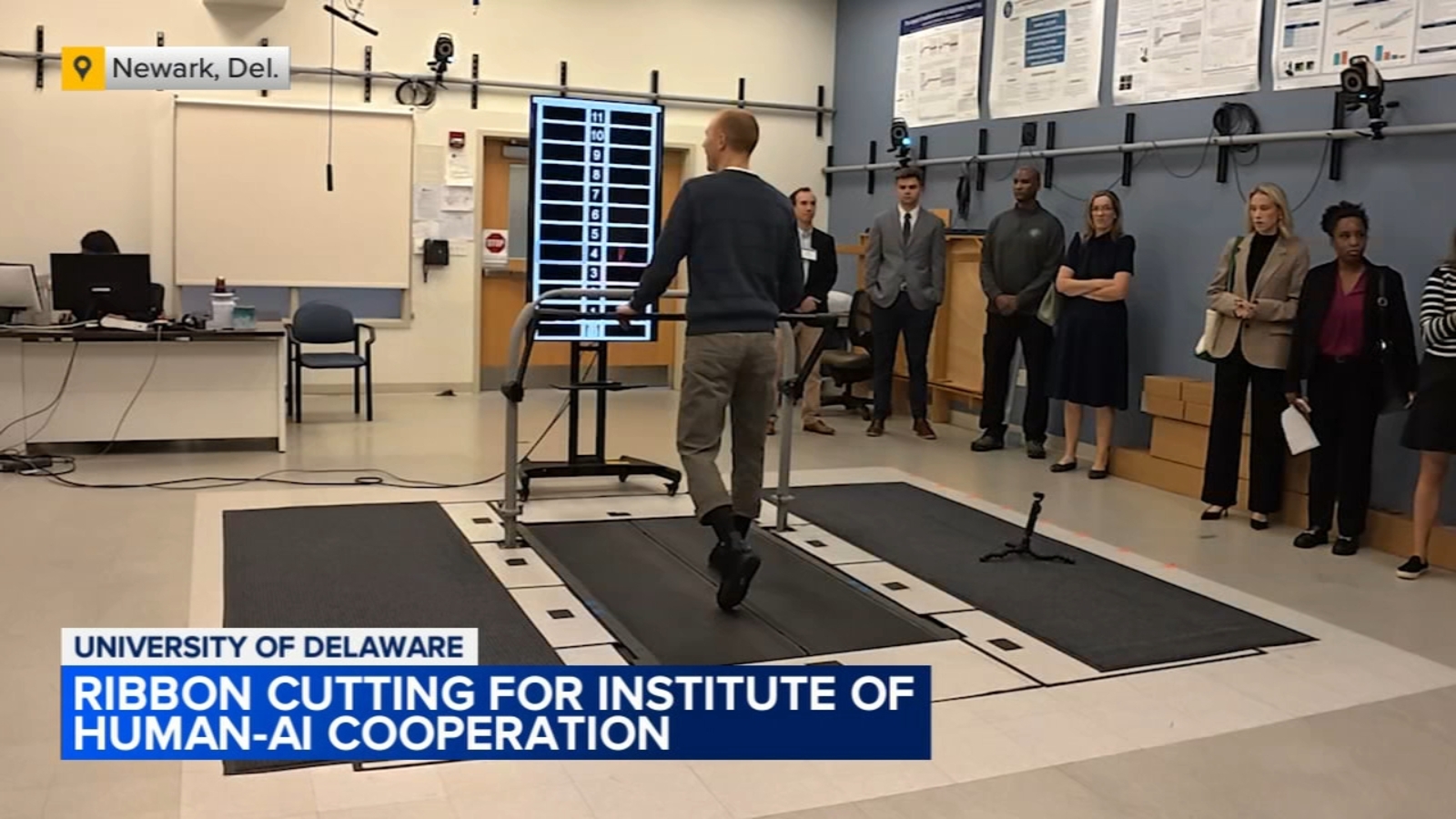
University of Delaware launches AI institute focused on mobility and rehabilitation care
15 minutes ago
 AI News
HPE supercharges ProLiant servers with AMD’s EPYC 9006 processors
1 hour ago
 AI News
How Packaging Engineers Can Unlock AI’s Superpowers
1 hour ago
 AI News
Anthropic is giving startups a free year of Claude Team and $1,000 in credits
2 hours ago
 AI News
Few CHROs say they feel very confident they can manage AI
2 hours ago
 AI News
ChatGPT is getting a lot more visual, with the launch of a new interface
2 hours ago