
Montreal police racism allegations revive concerns in Montréal
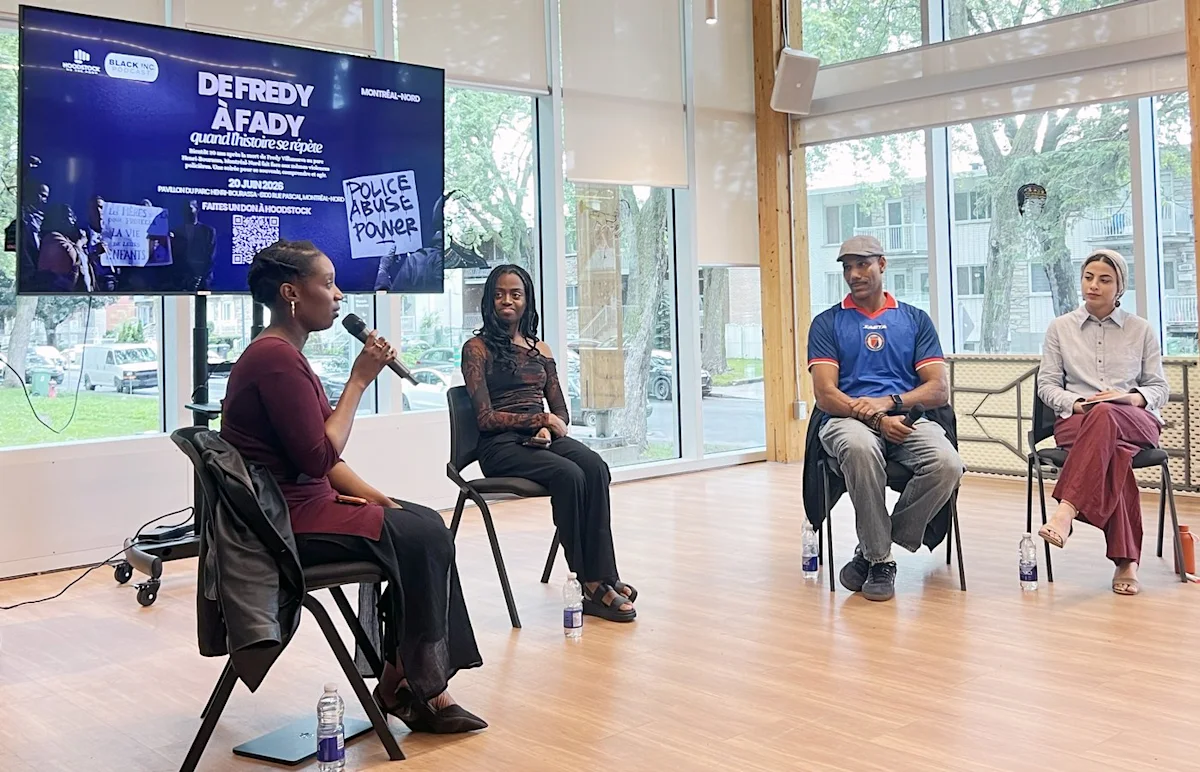
MONTREAL — Nearly 17 years after the police shooting of 18-year-old Fredy Villanueva sparked unrest in Montréal-Nord, activists and lawyers gathered Saturday to discuss recent allegations of racist behaviour involving Montreal police officers and what they mean for the community.
The discussion took place at the pavilion in Parc Henri-Bourassa, near the site where Villanueva was killed in August 2008, and came just over a week after Montreal police dismantled a night patrol unit in the borough amid allegations of racist and discriminatory conduct.
For speakers at the event, the allegations echoed concerns raised after Villanueva's death about racial profiling and police conduct.
"We had been enduring this violence for a long time," said Will Prosper, a co-founder of Hoodstock, a community organization created in the wake of Villanueva's death that organized Saturday's panel.
Prosper, who was 18 when Villanueva was killed, said the protests that followed the shooting were fueled by years of frustration with police in the neighbourhood.
He said many residents see the latest allegations as part of a longer history of strained relations between police and the community.
On June 12, police leadership announced that 14 officers had been reassigned and two others suspended. Montreal police chief Fady Dagher has said files involving the suspended officers have been forwarded to prosecutors, who will determine whether criminal charges are warranted.
La Presse and Radio-Canada reported that among the allegations are claims that officers cut the hair of racialized citizens and kept it as "trophies." Dagher has said the reports are among the allegations being investigated.
Villanueva's shooting sparked riots and looting in the borough, and participants in Saturday's panel said questions about racial profiling and police accountability continue to resonate nearly two decades later.
"What would Fredy say to Fady today?" asked Cassandra Exumé, Hoodstock's general coordinator and moderator of the discussion, referring to Villanueva and Dagher.
Dardia Joseph, lawyer and assistant director of the Saint-Michel legal clinic, said young people who come to the organization seek legal advice and support following encounters with police, including cases involving allegations of racial profiling.
Joseph said some youths seek help after repeated police stops or interactions they felt were marked by inappropriate attitudes, and often ask "whether the treatment they received was normal."
The allegations have also drawn a response from elected officials.
On Friday, Montreal mayor Soraya Martinez Ferrada gave a radio interview with Radio-Canada's Tout un Matin, noting how her husband, who is Black, has been stopped by police five or six times in the past year "for nothing."
Martinez Ferrada called for a public inquiry into systemic racism in Montreal, saying she would also support a moratorium on arbitrary street checks.
"We owe it to ourselves to name the issue, to not be afraid of speaking about systemic racism and racial profiling," she said.
Quebec Premier Christine Fréchette said Friday she is open to launching a public inquiry into the allegations involving the Montréal-Nord patrol unit, but stressed she wants to wait for the results of the criminal and internal investigations already underway.
The allegations have also prompted concerns from within the police service. Earlier this week, a committee representing Black employees of the Montreal police force said some officers fear reprisals for reporting racism and misconduct within the department.
Fernando Belton, lawyer and executive director of the Saint-Michel legal clinic, said the most recent allegations symbolize a pivotal moment for the community.
"We've been repeating the same things for years," he said Saturday.
Belton said the response to the allegations could influence whether concerns about racial profiling, police accountability, and relations between police and residents are finally addressed.
"What happened in Montréal-Nord has to become a barrier, to say: never again," he said.
This report by The Canadian Press was first published June 20, 2026.
-- with files from Erika Morris
Charlotte Glorieux, The Canadian Press
Related Stories
 Canada
Panel Laughs in Jennings’ Face Over Trump Wealth Excuse
1 hour ago
 Canada
How to throw a holiday party on a budget
1 hour ago
 Canada
Engineering firm Sener celebrates 10 years in Canada
2 hours ago
 Canada
France open to defence deals with Canada despite its push for arms autonomy: envoy
2 hours ago
 Canada
A new airport facility will speed up vital deliveries to Canada’s northern communities
2 hours ago
 Canada
Canada Life lets Gen Z save short term while employer match stays for retirement
3 hours ago
 Canada
Prime Minister Carney speaks with President of the United States Donald J. Trump
3 hours ago
 Canada
How a loophole in Canada's species-at
4 hours ago