
Canada, U.S. both roll back welcome mat for international students
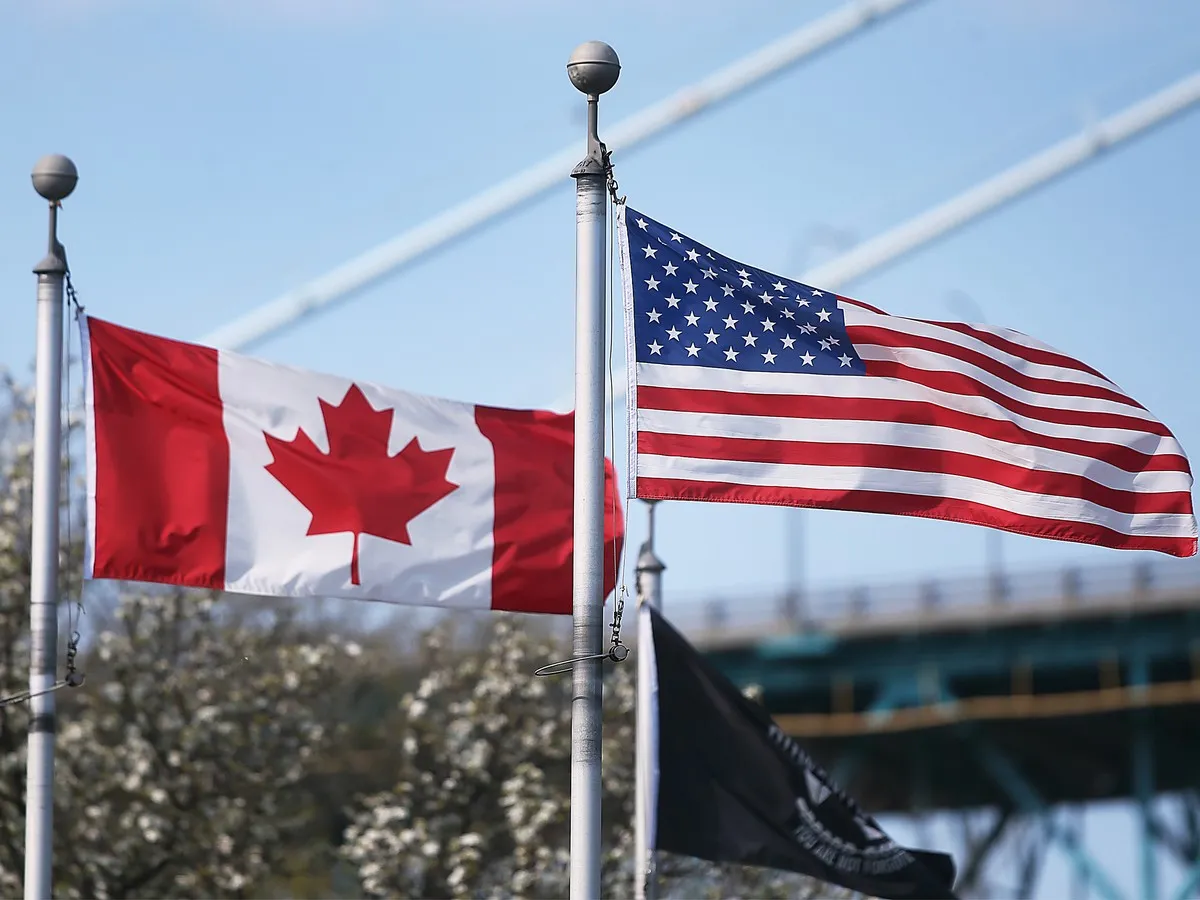
Stricter immigration policies, tightening visa allowances and political rhetoric have impacted international enrolment in both Canadian and U.S. universities.
The United States still hosts the most international students globally, but both Ottawa and Washington have signalled in recent years that they are less open to foreign students.
“Since 2025, the State Department has layered mandatory social-media vetting onto every student visa applicant; paused and then thinned out interview appointments; and abruptly revoked hundreds of current students’ visas,” said Loren Locke, a business immigration attorney and former U.S. Department of State consular officer. “Each of those alone would give a prospective student pause.”
Ottawa’s eventual lowering of resident permits, after years of soaring admissions, has had a similar chilling effect, said Larissa Bezo, president and CEO of Canadian Bureau for International Education.
“There’s a perception that Canada had kind of closed its door to students because of the decision to put a ceiling on the number of students that would be welcomed,” she said.
The decline has been sharp. The United States saw a 17 per cent drop in new international student enrolments last year, with the steepest declines at the graduate level. The Institute of International Education’s “Spring 2026 Snapshot” showed that international applications for this past year fell for 59 per cent of U.S. institutions, and that 63 per cent of them expected a decline in international enrolment this coming autumn.
Fanta Aw, executive director and CEO of NAFSA: the Association of International Educators, said she anticipates a drop of up to 30 per cent in 2026.
“I think international students are getting the message that the U.S. is not a welcoming place given all the difficulties and challenges of getting visas and everything else,” she said.
Prime Minister Mark Carney said in June that international student arrivals in Canada had dropped 60 per cent, underscoring the impact of the new caps. Overall, study permit holders only dipped from about a million to just under a million, but Bezo noted that applications fell nearly 30 per cent between 2024 and 2025. Permit-approval rates also fell from roughly 60 per cent in 2023 to the mid-30s to low-40 per cents by the end of last year, pointing to smaller incoming student cohorts.
In the U.S., visa application concerns and travel restrictions were the top factors cited by schools reporting declines, according to the IEE. That generally aligns with Department of State visa issuance data showing a 36 per cent decline in student visas for 2025.
“Among the things that students would consider the biggest barrier is the visa issuance first,” said Aw.
“Many (from places), like China, India, and many other countries, are reporting that they’re not even able to get visa appointments to apply for a student visa to come for the fall.”
Other factors include anti-immigration rhetoric from the Trump administration; threats to eliminate Optional Practical Training, a program allowing international students to work in the U.S. for a year; and moves to end the “Duration of Status” for these students to remain in the U.S. for the length of their studies, instead capping it at four years.
Related Stories
 World
World
World Championships: Key Takeaways
31 minutes ago
 World
World
Neave and Boughen lead FIM Flat Track World Championship charge into Scheessel
1 hour ago
 World
World
The Latest: Regional powers seek off
1 hour ago
 World
World
Ratko Mladić, the ‘Butcher of Bosnia’, dies aged 84
1 hour ago
 World
World
Regional powers seek off
2 hours ago
 World
World
Nepal’s catastrophic floods kill more than 350, with over 1,300 missing
2 hours ago
 World
World
World shares are mostly lower after Wall Street retreats following economic updates
2 hours ago
 World
World
Kenya’s world record holder Sawe withdraws from Berlin Marathon
3 hours ago