
Why Early Global Hiring Is Becoming A Superpower For High

Launching a startup has never been easy, but today’s founders face one of the most unforgiving business environments in decades. Globally, around 90% of startups fail, with nearly half closing before their fifth anniversary.
Against this backdrop of intense competition and constant volatility, founders are increasingly turning to a powerful, often underutilized lever to tilt the odds in their favour: building international teams from the earliest stages of growth.
Seeking International Talent At Speed
What was once a step reserved for established businesses is now a foundational strategy for ambitious newcomers. Data from global hiring platform Teamed reveals that startups are expanding internationally at an accelerated pace, changing what rapid scaling looks like.
Cofounder Tom Price-Daniel says: “High-growth startups are going international three times faster than they did three years ago. Leading companies now expand to more than three countries within their first six to 12 months of international hiring, compared to 18 to 24 months historically.”
Overcoming Regional Skill Shortages
For ambitious founders, the logic is simple. The fastest-scaling startups are no longer constrained by the talent available in their home market. International hiring removes regional skills shortages, accelerates recruitment and brings broader market insight, local expertise and round-the-clock operational capacity across time zones.
For fintech compliance firm Flagright, the decision to build a distributed global team was driven directly by the nature of its work. Founded in 2022 by Baran Ozkan and Madhu Nadig to help financial institutions combat fraud and money laundering, the company now employs more than 50 people across San Francisco, London, Singapore and Bangalore. Its founders recognised that while their clients operate worldwide, effective compliance is rooted in deep local knowledge.
“You cannot build serious infrastructure for banks, fintechs and payment companies across multiple jurisdictions if every product, customer and commercial decision is filtered through one market’s assumptions,” says Ozkan. “We need people who are close to the regulatory environments, customer expectations, payment behaviors and operating realities our clients face.”
Agility And Clarity Needed For Growth
Ozkan points out that the primary challenge of global hiring is not sourcing talent across borders, but preserving the agility and clarity required to grow successfully. “Time zones can slow decisions if ownership is unclear,” he says. “Meanwhile, cultural differences can affect how people escalate issues, challenge assumptions or communicate risk. Distributed teams need stronger operating discipline than co-located teams.”
For Ozkan, those extra layers of discipline are more than worthwhile. He adds: “Someone who’s worked with financial institutions in Singapore, London or the U.S. will often spot different risks.”
The cost structures of international recruitment vary dramatically between markets, creating both complexity and opportunity, as Raj Bharya, founder of engineering consultancy Ingeni Solutions, discovered firsthand. “In Italy, for example, a base salary of £100,000 would actually work out as a cost of £142,000 for us, if you include employment contributions,” he says. “However, in Romania this same salary would cost us a total of £102,000.”
That £40,000 annual difference can fund an additional role, a material advantage for any growing business; though Bharya is clear that budget is never the deciding factor. “We have always prioritized talent and cultural fit,” he says. “It’s not just about whether you can do the job; it’s about how you do the job - your approach, character and values - regardless of whether you live in the U.K. or overseas.”
Ingeni originally planned to build a domestic U.K. team, but shifted course as it served clients across China and the U.S. Today it has 15 employees in five countries, a move driven both by access to skills and operational logic.
“We wanted hires who loved exploring and finding solutions for the challenges that engineering presents to support companies navigating the ever-changing regulatory landscape,” Bharya explains. “In the U.K., individuals who met our criteria were few and far between. However, we received countless applications from people living in countries like Italy and Romania where engineering is a much more established and popular career.”
Raising The Standards Of Work Quality
Advances in remote working have accelerated this shift further, reducing the overheads of physical office space and location-linked costs that come with building a team in a single hub. For other businesses, though, the motivation is entirely separate: raising the standard of work itself. Seamus Begley, founder and CEO of creative brand agency Studio of Possible, argues that limiting recruitment to commuting distance is now an unnecessary constraint.
“We wanted the best people for the work, regardless of where they happened to live,” he says. “Technology has fundamentally changed what is possible, so it no longer makes sense to limit your thinking to one city or one country.”
Cultural Cohesion Is A Challenge
Since launching in 2020, the agency has grown to ten team members based across Ireland, the U.K., Asia and the U.S. While time zones are often cited as the biggest hurdle, Begley says technology has largely solved that problem; the real challenge is cultural cohesion. “It means being far more intentional about communication,” he says. “You can't rely on people overhearing conversations in an office; expectations need to be clear; decisions need to be documented, and feedback needs to happen quickly.”
For creative work, the diversity itself is a core asset, guarding against the risk of groupthink. “Different markets, different experiences and different perspectives lead to better conversations and, ultimately, better ideas,” adds Begley. “The best creative work rarely comes from everyone agreeing; it comes from constructive challenge, and we believe our work is stronger because it isn't viewed through a single geographical or cultural lens.”
For startups operating in an increasingly competitive market, global hiring is becoming less of a growth strategy and more of a competitive necessity. But as founders are also discovering, success depends as much on building the right operating model as hiring the right people.
Three Common Mistakes To Avoid In Global Hiring
Related Stories
 World
World
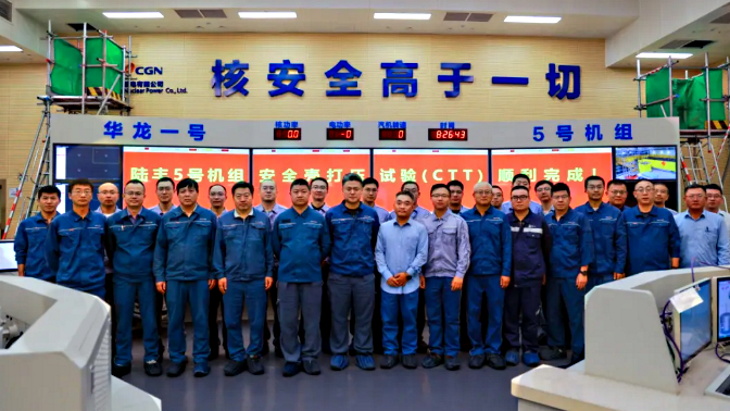
Containment tests completed at Lufeng unit 5
38 minutes ago
 World
World
I live in the ‘coolest neighbourhood’ in the world. It’s not as great as you’d think
38 minutes ago
 World
World
Trump to meet acting Venezuelan president in New York
1 hour ago
 World
World
Trump banning CNN, MSNOW and Politico from the White House
1 hour ago
 World
World
England vs Sri Lanka: Harry Brook and Jos Buttler lead hosts to top of rankings
2 hours ago
 World
World
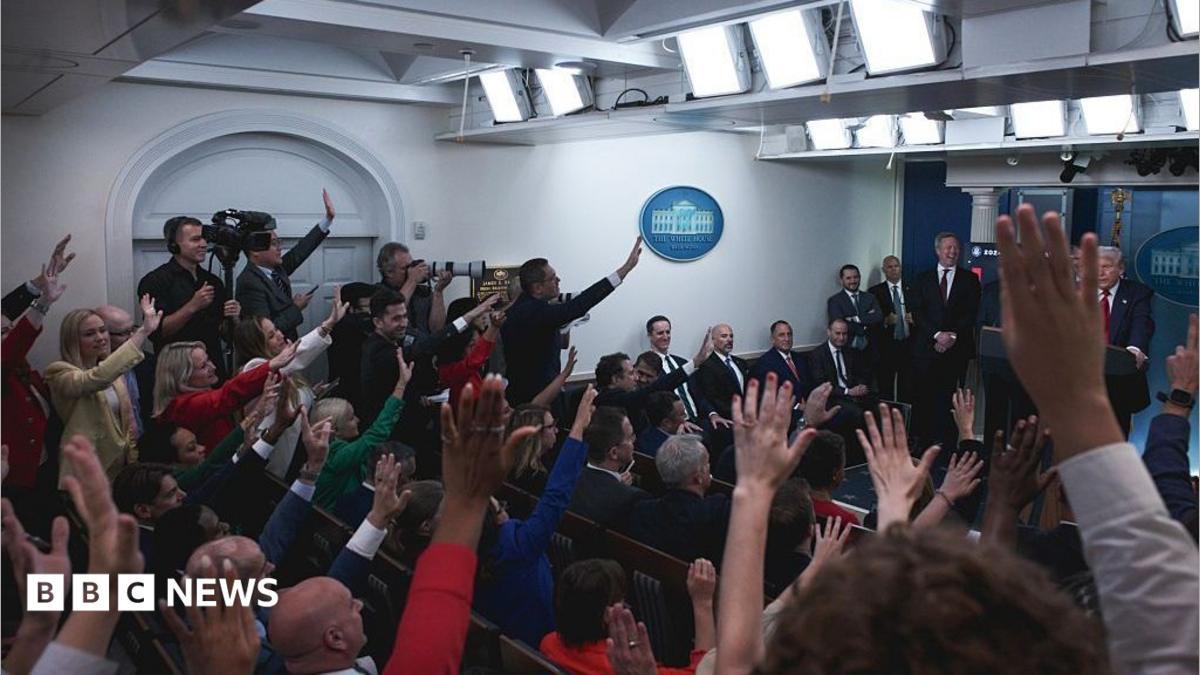
CNN, MS NOW and Politico say reporters denied White House access after Trump banned some media outlets
2 hours ago
 World
World
World Series of Darts Finals: Luke Littler wins last
2 hours ago
 World
World
A Super El Niño will significantly affect global marine life
2 hours ago