
Startups seeking to stand out in the bar category
KANSAS CITY — When it comes to snacking, formulations with simple and recognizable ingredients are becoming key drivers for consumers. Food and beverage manufacturers are launching snacks such as chips, yogurts, beverages and cereals formulated with nutritional and functional ingredients; however, these snack formats often lack the convenience consumers crave.
Chips lead to crumbs and messy fingers. Liquids cause spills and stains. Consumers are turning to a snacking format notable for its cleanliness and portability: bars.
“Bars really combine nutritional credibility with everyday convenience, and there’s built-in portion control because a bar naturally really delivers a defined calorie and macro load,” said Sally Lyons Wyatt, executive vice president and global adviser for Circana, Chicago. “They also have portability. There’s no prep for a bar, so they fit seamlessly into on-the-go routines or just sitting at your desk.”
The malleability of bars provides manufacturers with freedom to add “better-for-you” ingredients into a product’s formula.
“Protein, fiber, collagen and probiotics can all be concentrated into a compact form without really requiring refrigeration or preparation,” Lyons Wyatt said.
Additionally, bar packaging tends to have “high-impact real estate” to clearly broadcast the ingredients used in each bar’s formulation.
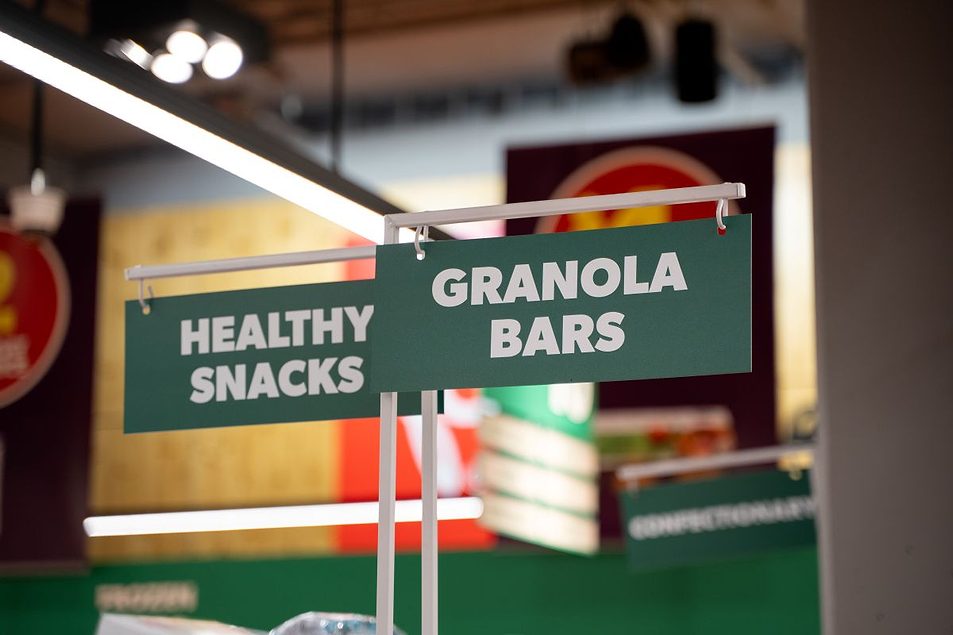
The convenience of bars empowers the category to expand across multiple subcategories, including granola bars, health-focused functional bars, dessert bars and frozen novelty bars.
“The bar category offers really low friction entry with a high innovation upside, which is why you can have a flexible platform,” Lyons Wyatt said.
The combination of traits has brought bars to the forefront of consumer snacking habits, fueling a surge in sales and volume over the years.
Sales volume of nutritional health bars has shown a year-after-year increase since 2023, according to Circana. In 2024, the category grew unit sales by 1.1% to 830,375,348 units. In 2025, the category saw a significant jump of 11% to 913,923,587 units.
Lyons Wyatt said the growth also is supported by consumers being willing to pay higher prices for nutritional foods.
On the other end of the bar spectrum, breakfast and cereal-focused snack bars have experienced a steady decline in volume since 2023. In 2025, the subcategory dropped by nearly 7% to 491,462,749 units.
As bars become less of a “sweet treat” and more of a vehicle for meeting health goals, Lyons Wyatt sees the bar category evolving entirely.
“I would say bars really aren’t a category anymore; they’re more of a nutrition platform, and it’s because bars sit in that intersection of food and functionality,” she said.
With bars, manufacturers can utilize the format to insert their products into previously unexplored territory within the category. Startup companies are utilizing this flexibility to join the bar conversation with potentially disruptive innovations.
Snack manufacturer Truly Good Foods entered the bar category in March with its Golden Hour line. The bars are available in four flavors: berry vanilla, banana bread, cherry chocolate and apple cinnamon.
Each bar is formulated with whole ingredients such as fruits, seeds, oats and chocolate.
Lisa Smith, vice president of sales and marketing, said the surge in consumer interest in convenient functional foods led to the integration of bar products in Truly Good Foods’ portfolio.
“Consumers want convenience, but they’re no longer willing to sacrifice quality of ingredient transparency to get it,” Smith said. “There’s also been a big move towards permissible indulgence and functional snacking, products that feel like a treat but still serve a purpose, whether that’s energy, satiety or clean ingredients. Bars sit right at the center of all of that.”
Additionally, the company is using the bars as an entry point into new formulations. Although Truly Good Foods is “nuts about snacking,” typically utilizing nuts as a primary ingredient for its products, the Golden Hour line is the first in the company’s portfolio to be formulated without nuts and manufactured in a nut-free facility.
“From a portfolio standpoint, it fills a gap in a way that’s not just incremental, but truly strategic,” Smith said. “It allows us to expand our reach without moving away from what we stand for — just broadening how we deliver it. And bars, as a format, give us the perfect vehicle to do that in a way that’s scalable, convenient and relevant to today’s consumer.”
Smith said the Golden Hour line differentiates itself in the category through “ingredient quality, flavor experience and approachability.”
“We’re not trying to be the most extreme on protein or the most niche on functionality,” Smith said. “We’re focused on delivering a bar that people actually want to eat — something that feels elevated but still accessible. We’re sitting right in that sweet spot — clean ingredients, great texture and flavors that feel a little more thoughtful and curated.”
Takeaways entered the bar category with the launch of its flagship savory snack bars.
The snack bar’s protein derives from cheese and puffed milk protein. The bar is available in varieties such as white cheddar, cheese pizza and pepper jack.
The Venice, Calif.-based bar startup was launched to provide a salty snack that could satisfy indulgent cravings.
“We’re seeing that salty snacks sales are declining, but I don’t think we stopped craving salt,” Baxter said. “I think that consumers just want more macro dense, portable snacks, which is why we’re seeing this growth in protein bars and why we’re seeing it in meat sticks.”
Baxter said she chose bars for the format of her Takeaways products largely due to their convenience and portability, as the bars could be eaten on-the-go.
Baxter was aware she was entering a category packed with legacy brands and startups; however, she noticed most bars in the category — whether functional or indulgent — were sweet.
“Once you’re in the category, you really understand that there are pretty key players that play different roles,” Baxter said. “I think there are pretty clear standouts once you really examine the different niches that people crave, so I don’t think it’s all that crowded when you’re in it.”
With Takeaways, she feels she is launching a new niche.
Instead of trying to compete with other bar brands, Baxter is shifting her focus on filling space in the salty snack category. A survey conducted by Baxter found 70% of people would purchase Takeaways without changing their sweet bar behavior, instead deducting snack consumption via chips.
“We’re competing more with legacy snacks than we are with bars,” Baxter said. “On the bar shelf, I think we stand out with savory flavors. We’re as indulgent as a brownie, and we have a theory that cheese is the savory chocolate.”
Additionally, Baxter has adopted a format intended to “look different from sweet protein bars,” with a long and thin design.
TofuGo also is targeting consumers with a craving for savory with its flagship tofu-based snack bars.
In a similar vein to Takeaways, TofuGo was brought to market to provide a snack option that was not sweet or “overly processed” with a unique core ingredient.
“The bar category is still mostly sweet,” said Caroline Dai, founder of the Seattle-based company. “We think there’s room for something different and another option for people who want something savory and more grounded in whole foods.”
Dai said bars felt like the best entry point for the company because the category lacked innovation and was mostly filled with sweet bars. With TofuGo, she hopes to reach people who want more “variety in their snacks.”
“Bars felt like the easier format for TofuGo because everyone understands them,” Dai said. “We just approached it differently by making it savory and using tofu as the base.”
The snack bars contain 12 grams of protein. Dai said the bars derive their protein from tofu, staying away from protein isolate and powders.
“We wanted to create a simple, real snack rather than something engineered,” Dai said.
The snack is available in Asian-inspired flavors such as soy barbecue and spicy chili with Sichuan peppercorn.
Jessica Kwong is energizing the bar category with her bar startup, Moka Energy, Rochester, NY.
Launched in 2026, the startup intends to combat the “inconvenience” of an afternoon cup of coffee by providing a portable snack formulated with caffeine. The startup’s bars are formulated with ground coffee beans.
Kwong understands that there are caffeine and energy bars on the market, but said the company’s bars are “not just another caffeinated energy bar.”
“We’re not just a convenient way to get a snack, which is a bar, or a convenient way to get coffee specifically, if you’re looking for that experience of natural caffeination or that coffee flavor,” Kwong said. “We’ve transformed coffee itself into an edible format.”
Additionally, the co-founder and chief executive officer felt the caffeine category was heavily beverage-focused, while the subcategory of caffeine-infused snacks and bars “didn’t really have a favorable eating experience.”
Moka Energy bars are available in vanilla latte, dark roast and caramel cappuccino varieties.
Related Stories
 Technology
When Tech Companies Die, What Happens To The Products They Leave Behind?
2 days ago
 Technology
Two Finns supplying Russia with missile tech worth tens of millions
2 days ago
 Technology
Drones with pepper spray, four
2 days ago
 Technology
Micron Technology stock pre-market at EUR 800.50: memory storage - ad
2 days ago
 Technology
TAIEX Ends at 4
2 days ago
 Technology
ZAWYA: Technology, start-ups can double India
2 days ago
 Technology
Czech government to consider CZK 1 billion fund for startups
2 days ago
 Technology
GDIN Supports Eight Startups at CEATEC 2026 in Japan, Opens Door to Local Investor Collaboration
2 days ago