
AI-generated stories rated better quality than human

From Homer’s Odyssey to Agatha Christie’s crime fiction, humans have produced plenty of tales to grace the bookshelf. But research suggests artificial intelligence may now be providing some competition.
In a study published in the journal Judgment and Decision Making, 1,682 adults were asked to read one of six short stories, three of which were written by humans and three by ChatGPT. Each AI story had a similar theme to one of the human-authored works.
The team told participants whether their story was written by a human or AI, but this information was not always correct. The researchers then asked participants to rate how absorbing and engaging they found the story, and its quality.
Participants who read an AI-generated story rated it as more absorbing and of higher quality than those who read a story written by a human. However, participants gave higher ratings to stories they had been told were written by people.
Dr Deena Skolnick Weisberg, a senior author of the research from Villanova University in Pennsylvania, said: “AI systems can already generate short stories that are seen as being at least as good as – if not better than – human-written stories. We should update our views of AI’s abilities accordingly.”
However, Weisberg, who is herself a creative writer, said that did not mean writing should be left to AI, noting that novels produced by tech were probably going to be different from those written by humans.
“We may need to make room for AI-generated novels, and for AI/human co-written novels, but that doesn’t mean that there’s no longer space for us to appreciate the process of human creativity,” she said.
“Humans write as a form of creative self-expression or to challenge ourselves, or to make sense of our experiences. The fact that AI can generate human-like stories doesn’t change any of that.”
The results also suggest attitudes to AI matter: participants with more positive attitudes toward AI gave higher ratings to stories they were told were produced by ChatGPT than those with a less positive outlook.
The researchers carried out two further experiments in which 905 adults were given two of the six short stories – both on the same theme and only one of which was penned by a person. They were then asked to guess which was written by a human and which by AI.
In one experiment, about 40% guessed correctly, a result that is worse than chance, while in the other experiment 52% guessed correctly.
“There is no general evidence that participants were able to distinguish human-written from AI-generated stories,” the authors write.
The researchers found that while participants’ self-reported expertise with fiction was not linked to how accurately they guessed, greater expertise with AI systems was.
“AI writing has a particular style that we can learn to recognise with practice – just as we can learn to recognise different human authors’ unique styles,” Weisberg said.
Weisberg suggested that the preference for stories labelled as being written by humans was linked to a desire for authenticity, but that people actually preferred AI-generated stories because they were easier to read and digest.
However, Luke Kennard, a professor of film and creative writing at the University of Birmingham, who was not involved in the work, emphasised that AI was highly contentious.
“Because we’re human, we tend to personify AI and imagine it as some kind of glowing robot with a benign and neutral face, when it’s really just predictive code based on a massive stolen database of actual writing, physically based in vast, expensive and destructive datacentres with catastrophic repercussions for the surrounding communities,” he said.
Kennard also stressed that AI was not a “tool” similar to spellcheck or a thesaurus, but an existential threat.
“Of course it’s capable of spitting out a coherent and even enjoyable poem with the right prompting and finessing. Given that it’s been trained on thousands of years of human work, it would be embarrassing if it wasn’t,” he said. “I suppose the question we should be asking is: is it worth it? And the answer is absolutely, categorically, it is not.”
Related Stories
 AI News
Egypt trials smart irrigation and artificial intelligence technologies to optimise water use in agriculture
32 minutes ago
 AI News
L&T Finance Ltd. Launches The Second Edition Of 'Pitch Point,' A Competition For AI Startups Ahead Of RAISE' 26
1 hour ago
 AI News
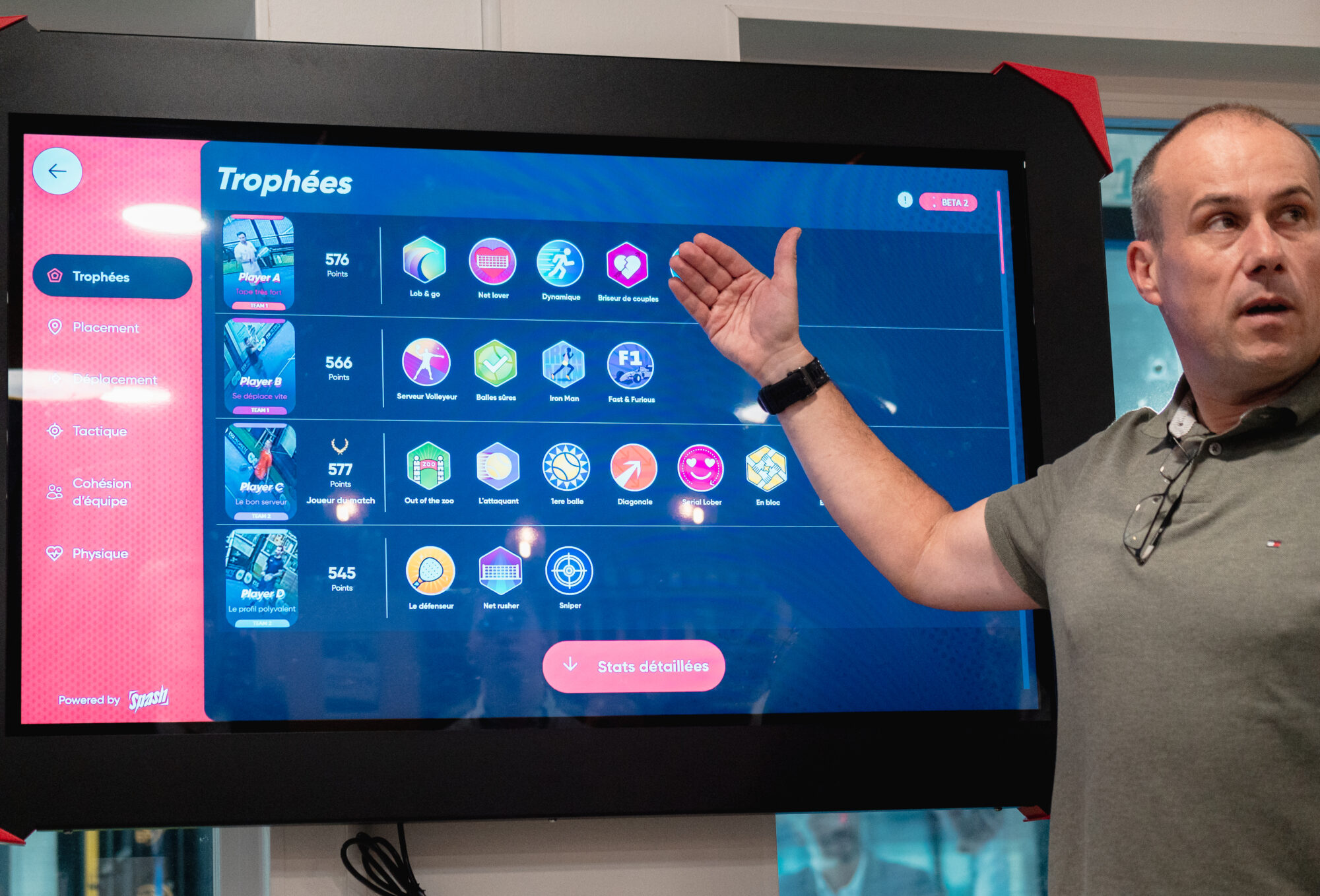
SPASH raises 2 million euros: artificial intelligence at the heart of its strategy for padel clubs
1 hour ago
 AI News
AI can’t just be built. It must be taught.
1 hour ago
 AI News
UC Santa Barbara taking a ‘base camp’ approach to artificial intelligence
1 hour ago
 AI News
Latest News In AI Chips
2 hours ago
 AI News
Britain steps up national defences against growing AI risks
2 hours ago
 AI News
Microsoft President Warns AI Is Less Regulated Than Milk, Washing Machines as He Pushes Governments Towar
2 hours ago