
’We can’t deal with it in Canada’: Some women turn to Mexico for endometriosis care
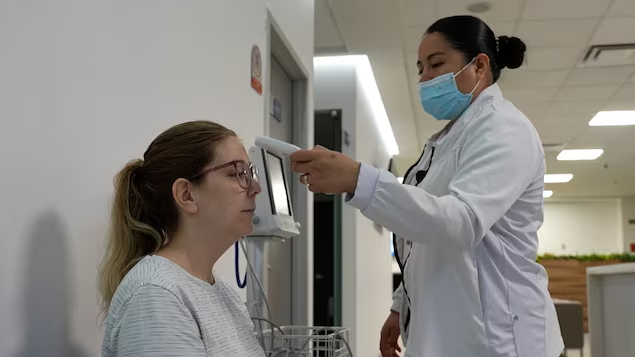
Noelle Menu, 37, a Calgary resident, undergoes pre-surgery exams at the EndoGlobal treatment centre in Tijuana, Mexico. Some Canadian women suffering from endometriosis are heading south for care because they feel their health-care system has failed them. (Alessandro Molator/CBC)
Photo: (Alessandro Molator/CBC)
Jorge Barrera (new window) · CBC News
Noelle Menu, 37, says the pain began to darken her reality at a pivotal moment in her life — once she and her husband decided to try for kids, when she was 26.
She stopped taking her birth control, which she had been on for a long period, and said she began experiencing pain she'd never had before.
The pain came to define and limit her life, she said, and it seemed nothing could relieve it. She suffered through delays in diagnosis, as well as emergency room visits, a hysterectomy and being placed on waitlists stretching years to see specialists and receive treatment.
At that point, it was literally destroying my life, she said, and to hear it’s about three to four years to see somebody here, I was just so emotional, so devastated.
Soon, she realized: We can’t deal with it in Canada.
So Menu and her husband pulled from their savings and went into debt to seek private treatment at EndoGlobal in Tijuana, Mexico, which cost about $35,000 including airfare, a multi-day hotel stay and other costs.
It’s a journey some Canadian women suffering from endometriosis are taking because they feel their health-care system has failed them.
The condition affects one in 10 women, and Canada is doing a poor job at providing them care, according to a November 2025 report by the House of Commons health committee (new window) — and in addition to causing undue pain, the lost productivity due to the disorder costs the Canadian economy some $2.5 billion a year.
Endometriosis is a chronic condition where tissue similar to the lining of the uterus begins to grow and spread to other parts of the body. This tissue thickens and breaks down according to a woman's menstrual cycle, and can cause severe inflammation, scarring and pain during periods.
It can take an average of five years to be diagnosed with endometriosis in Canada, the parliamentary committee found, while some people have waited for up to 20 years before doctors linked their pain to the disease.
Even after that, it can take, on average, between six to 18 months to see a specialist and up to 24 months for surgery, it said.
It can be difficult to diagnose because its symptoms can resemble other conditions, and the level of reported pain sometimes doesn't match detectable tissue growth.
WATCH | Similar issues in P.E.I.:
Islanders with endometriosis say it's taking too long to get medical care
April 23|Duration1:58Some people on P.E.I. living with endometriosis say they've been waiting a long time to get the specialized treatment they need. For some, it’s been years. CBC's Gwyneth Egan has more.
The report found that gender bias plays a significant role in those issues — along with a taboo around discussing menstrual issues, it is often assumed that this kind of pain is just part of being a woman.
Menu, a supply-chain systems adviser, said she was forced to reduce her workday in half because of the pain. Sometimes, she could barely make it through to the evening.
This disease is just debilitating for some women, and I really wish there was more awareness around it and that doctors would take us women seriously.
Days before her flight, she told CBC News, It’s hard to be so hopeful just because of the previous surgeries I’ve had, but I’m feeling a lot more hopeful this time.
Dr. Jorge Zavala is one of the founders of EndoGlobal, and he says endometriosis mimics cancer in the way that it spreads, without being as destructive.
Zavala said doctors generally lack awareness about the condition, which is why diagnoses can take so long.
As a doctor, if you’re not trained in something, you’re not going to be able to diagnose it. It could be poking your eye, but if you are not trained to see it, you’re not going to see it, said Zavala.
Vanessa Papiernik, 42, says it took about 30 years for her to arrive at her diagnosis — and it came with a cancer scare.
Papiernik, a veterinarian in Victoria, said she suffered through nine months of significant and debilitating pain until she landed an appointment for a colonoscopy.
I was purely in survival mode, said Papiernik.
She would take Advil, put on maternity clothes because of the bloating and strap a heating pad around her waist to go to work.
I would push the pain aside, but as soon as I got home, I would realize, 'Wow, this is very dangerous, what I’m going through right now.'
Her colonoscopy found a mass. For two weeks as she waited for the biopsy results, she feared it was cancer; her sister had died from colon cancer 10 years earlier. However, the results showed it was endometriosis that had infiltrated through the layers of her colon.
She was referred to a centre in Vancouver, but faced a one-year wait to see a specialist, plus another year for surgery, said Papiernik.
Living like this for two years was just not an option for me, she said.
She eventually booked a trip to the same centre as Menu, landing the same week the Calgary woman was scheduled for her own procedure.
There were more than 30 Canadian women receiving treatment there within the same timeframe, said Papiernik.
We need to really come face to face with the fact that this is, to some extent, it’s discrimination against women, said Dr. Nicholas Leyland, president of Obstetricians and Gynaecologists of Canada.
If this were happening with the same degree of pain in a male, it would have been fixed a long time ago.
Leyland said that there are not enough specially trained gynecologists in Canada to deal with the complex surgical issues, and that the condition requires a multidisciplinary approach to care, including psychologists and physiotherapists.
The House of Commons report’s top recommendation called on Ottawa to develop a national action plan on endometriosis to deal with the gaps and barriers that hinder awareness, diagnosis and treatment.
The federal government responded (new window) saying that Statistics Canada would (new window) gather data on conditions like endometriosis; the agency has been collecting responses since Sept. 28 and will do so till Jan. 15, 2027.
The Canadian Institute of Health Research has also invested $4.9 million in endometriosis research between 2020 and 2025, Ottawa said.
Shortly before her procedure, Menu said doctors in Mexico found a large mass that threatened to block her bowels and send her into septic shock. She said she was two weeks away from emergency surgery.
For me to hear that I could have been in emergency surgery and my specialist appointment [in Canada] was a 30- to 40-month wait…. It makes me so mad, said Menu, in a late-September interview with CBC News after her surgery.
With the help of her husband, Menu took a walk around the post-surgical floor, which has about 14 beds.
Most of her neighbours were Canadian women. They greeted each other as they passed.
I was just so grateful that they were able to find everything, said Menu.
I’m on the other side of it now. I’m really happy for that.
Related Stories
 Canada
Agents search U.S. Rep. Omar’s Washington home in criminal probe as she vows she won’t ‘be silenced’
1 hour ago
 Canada
NATO general sets out tough military response to any ‘foolish’ Russian attack
1 hour ago
 Canada
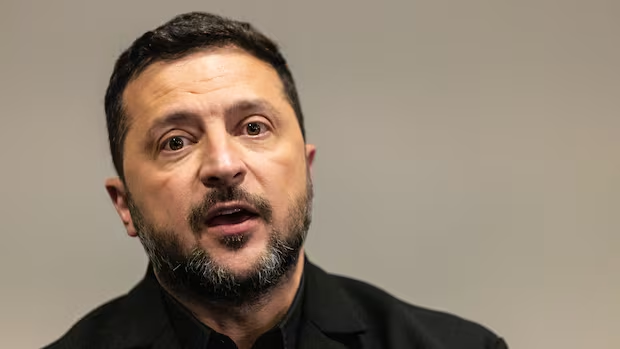
Zelenskyy urges U.S. to pressure Moscow to respect 'energy ceasefire' as attacks continue
1 hour ago
 Canada
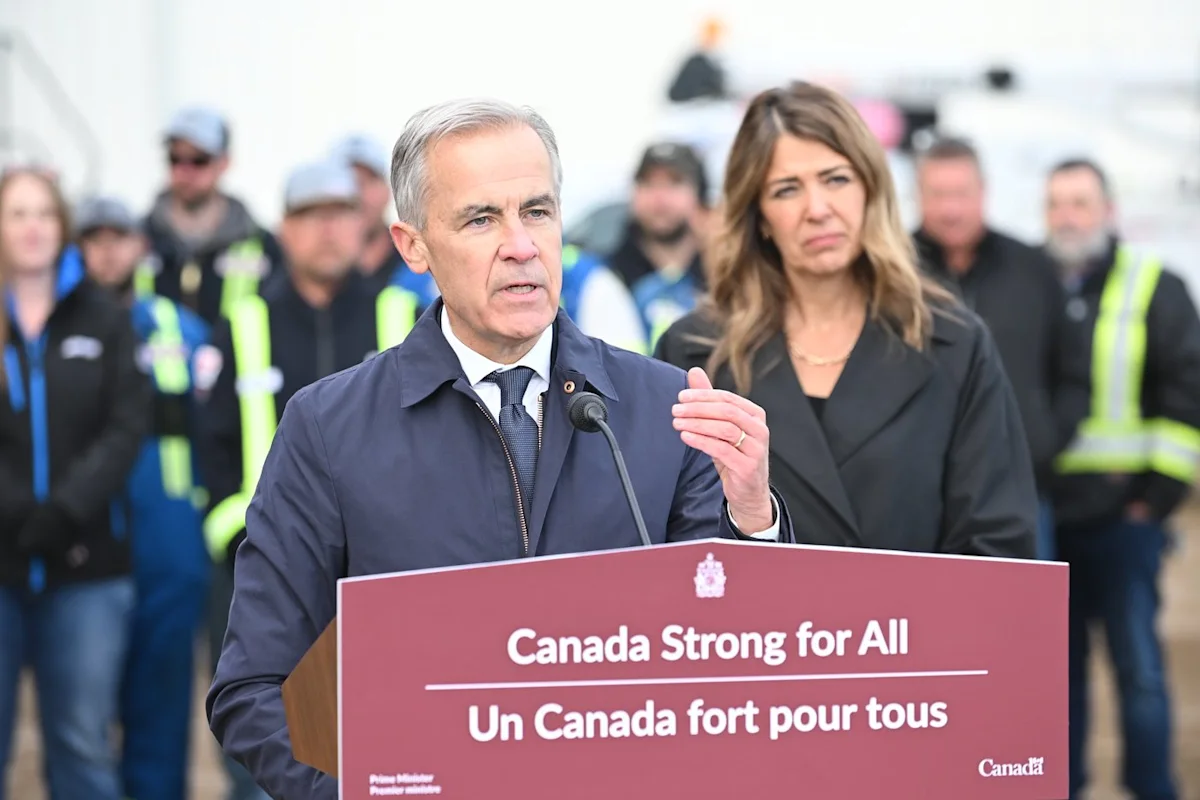
Prime minister's Thanksgiving message addresses Alberta separation referendum
1 hour ago
 Canada
1 dead in collision between motorcycle and SUV in Ottawa
1 hour ago
 Canada
CBC Atlantic journalists among finalists for RTDNA's Best Canadian Local News Awards
1 hour ago
 Canada
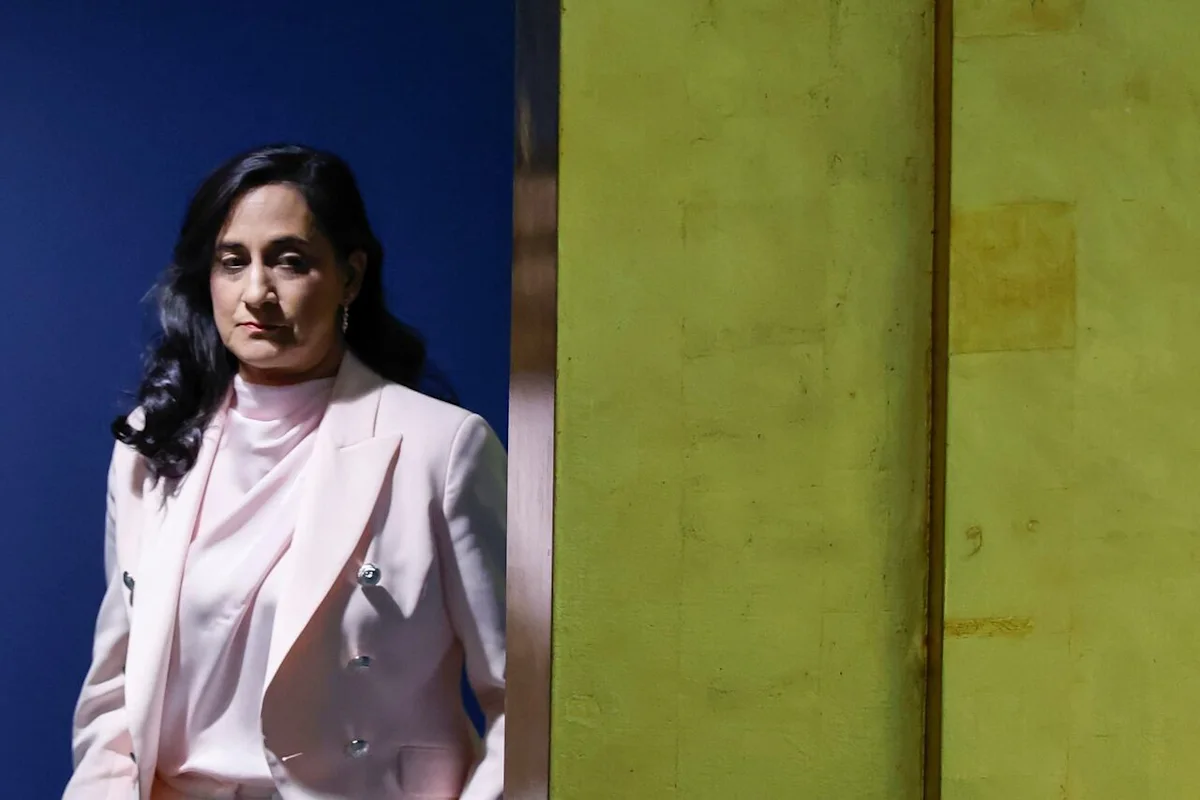
Canada, U.K. allies vow action after RAF Fairford terror plot
1 hour ago
 Canada
Carney’s Thanksgiving message directed at Alberta ahead of separation referendum
2 hours ago