
You’ve Europeanised your professional tech stack. Now what about everything else?
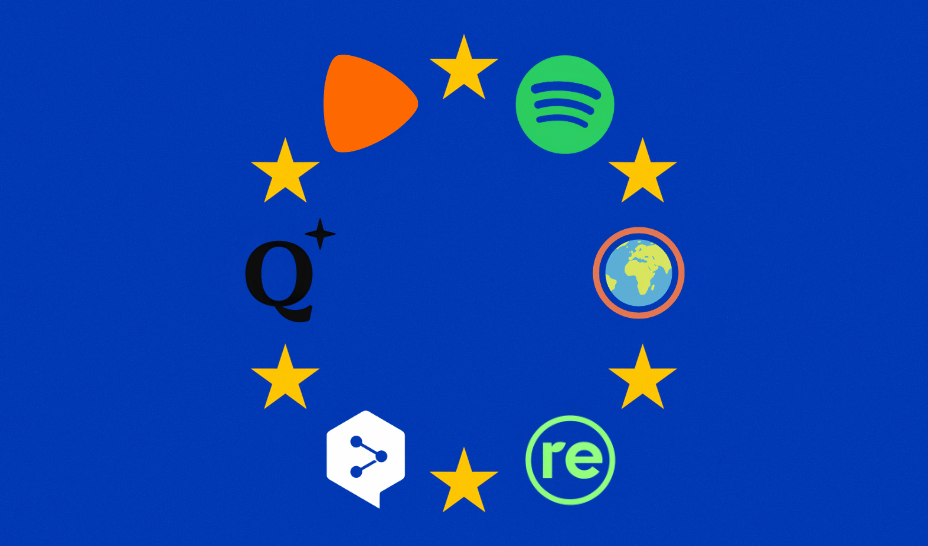
Last week, we looked at European alternatives to the American software powering the working day. But US tech does not disappear when you clock out. From music streaming to maps, messaging, shopping and social media, some of our most routine digital habits still run through American platforms.
Thankfully, this is where switching becomes slightly more fun. Moving an enterprise cloud workload can involve months of migration planning. Changing where you stream a questionable 2000s playlist is considerably less dramatic.
As with our previous list, “European” needs some clarification. A company can be founded or headquartered in Europe while relying on infrastructure, investors or technologies from elsewhere. Open-source projects make things even messier. So this is a collection of European-origin alternatives rather than a certification that every byte, shareholder and server rack is exclusively European.
With that caveat out of the way, here are 10 of the everyday Big Tech habits you and could start swapping today.
Replacing Amazon or ebay is difficult because they have spent decades making themselves the internet’s miscellaneous cupboard. Need a laptop cable, a book, dishwasher tablets and a novelty mug delivered tomorrow? One click will do it.
Europe does not have an obvious one-for-one consumer marketplace equivalent with the same breadth. But below are some options
Music is one category where Europe can hardly complain about a lack of alternatives. Some of the biggest names in streaming were built on this side of the Atlantic, ranging from mass-market services to platforms aimed squarely at audiophiles.
Editor’s Note: While Spotify’s global corporate structure has prompted debate over how European the company remains, its parent company is still incorporated in Luxembourg, and its main operating company remains Swedish. It also has a US subsidiary, Spotify USA Inc., incorporated in Delaware; but given its continued ties to Europe, we still consider it part of the European tech ecosystem.
Few apps have become as instinctive as Google Maps. Need coffee, a train, an address or proof that the restaurant really is “only five minutes away”? Out comes Google. Europe has several mapping alternatives, although they approach the problem differently.
Changing a search engine is probably the easiest migration on this entire list. There are no databases to export, no colleagues to retrain and no six-month integration roadmap. The biggest challenge may simply be remembering that the address bar can do something other than Google.
Europe is well stocked when it comes to translation services – primarily due to our rich linguistic variety. Machine translation is a field where European companies and institutions have developed several genuinely useful options rather than simply producing ideological substitutes that require users to accept a worse experience.
Instagram – with one important catch
Finding a genuinely European Instagram-scale social network is hard. Network effects matter enormously when the product is literally the network.
LinkedIn has become so dominant in professional life that “I’ll add you on LinkedIn” now functions somewhere between networking strategy and basic social etiquette. Not to mention its where most of you find our content.
Messaging is where switching becomes socially complicated. A private messenger is only useful when the person you want to message is also there – which is why WhatsApp’s biggest competitive advantage may simply be that everyone’s family group already exists on it.
Europe nevertheless has a surprisingly broad selection of alternatives.
Replacing X/Twitter (I still hate saying ‘X’) is less about finding another centralised website with a different billionaire at the top and more about understanding the Fediverse: interconnected social platforms where different servers can communicate using common protocols.
YouTube may be the hardest entertainment platform on this list to challenge. Its real advantage is not merely video hosting; it is the enormous library of creators, tutorials, reviews, music, explainers and people showing you how to beat that boss in Elden Ring (too specific?).
Still, Europe has alternatives worth knowing.
None of these changes will suddenly give Europe complete technological sovereignty, but consumer habits matter. The products people use privately influence what they expect at work, which companies acquire users, where developers build integrations and which technologies eventually become defaults.
And unlike ripping out years of cloud infrastructure, trying a different search engine, music service or map app can be done before lunch.
For European tech, there are worse places to start.
Related Stories
 Technology
Lagos Innovates backs startups, targets more tech jobs
1 hour ago
![[PRNewswire] 2026 JETOUR Technology Experience Day Set to Begin](https://www.the1news.com.tamilzha.com/storage/news/news_1791858651_9o226JUmmG.jpg) Technology
Technology
[PRNewswire] 2026 JETOUR Technology Experience Day Set to Begin
2 hours ago
 Technology
Japanese Shares Drop on Tech Selloff
3 hours ago
 Technology
NSW prison staff want drone guns to stop contraband drops
4 hours ago
 Technology
Building solutions for changing needs
5 hours ago
 Technology
Eztia Expands 10
5 hours ago
 Technology
FSU Discovery Days: IGNITE Tallahassee Open House welcomes visitors for behind-the-scenes look at high
5 hours ago
 Technology
Local business founder discusses importance, safety of tech recycling
6 hours ago