
‘People take your business more seriously’: Why IP is a hot ticket for growth
Fast-growing Aussie businesses are, as you’d expect, very busy. So it’s no wonder that most tend to file intellectual property under “things we’ll deal with later”.
But research from the Australian IP Report 2026 shows it deserves a lot more thought, and a place much earlier in the conversation. Why? Because there’s a consistent relationship between registered IP and business performance for startups working to attract investment and scale.
The report also explains how businesses use IP as part of a broader strategy to manage risk, support business growth and compete in uncertain global environments. In Australia, that encompasses registered trade marks, patents, design rights and plant breeder’s rights, which each offer different avenues of protection (see IP Australia’s Protect the ideas that power your business resource to identify the forms of IP that are relevant to your business).
For startups, trade marks, patents and design rights offer unexpected benefits, especially if you protect yourself early. Protection at an early stage of commercialisation can be an important step towards capitalising on IP (for example, licensing), preventing competitor imitations in markets you want to work in, and increasing investor value for fundraising.
Trade marks protect the signs that distinguish you in the market – think words, logos, slogans, colours, even sounds. Patents protect how something works – the functions or features of a new, inventive and useful device, substance, method or process. Design rights protect the overall visual appearance of new and distinctive physical products, like pieces of furniture or technology.
US studies have shown that a startup’s first patent is associated with a 47% increase in its chances of securing VC funding within three years, as well as a 76% increase in its chances of securing a loan.
Holding more trade marks at the point of first VC investment is linked to greater long-run sales and employment, along with a higher likelihood of a successful exit through acquisition or IPO.
Patents and trade marks can also increase investors’ estimates of a startup’s value by around 20% (in certain industries), especially during early development and the initial financing rounds, according to international studies.
The latest Australian IP report highlights that first engagement with patents and trade marks coincides with increases in income and productivity. Australian firms with registered trade marks tend to have higher income and productivity than comparable firms without them. Similar improvements are seen after businesses are granted their first patent.
For firms in design right-intensive industries, holding registered or certified design rights is linked to higher productivity, R&D spend and exports. The report found design applications hit a record high, surging 7.1% year on year and actual design registrations jumping by 9.9%.
There is an important caveat in that these findings show correlation, not causation. Registering a trade mark, for example, won’t manufacture growth on its own. That being said, the consistency of the association suggests IP is a meaningful indicator of businesses positioned to grow – and a signal the market appears to read.
“A registered trade mark is a valuable business asset, and it can provide you with a really great competitive advantage,” says IP Australia’s Brooke Larnach on The IP Australia Podcast. “It gives you exclusive rights to use, license or even sell your trade mark, and it does provide legal protection against infringement.”
Signalling credibility to investors
For clean-energy company Livium, that signal has been core to how the business is perceived.
“One of the things about having a patent and IP generally is that people do take you as a serious business, and it gives them confidence about whether to invest or whether to work with you,” says Livium CEO Simon Linge.
Livium is in charge of Australia’s market-leading lithium-ion battery recycling operation, with patents protecting processes across recycling and lithium extraction. Given it’s in a capital-intensive sector where investors juggle technical risk as much as market opportunity, patents provide external validation that the technology is truly novel.
Watch more about Livium’s IP journey:
Creating an IP strategy across multiple rights
Textile recycling company BlockTexx sets itself up with a different model – a model where several types of IP work together.
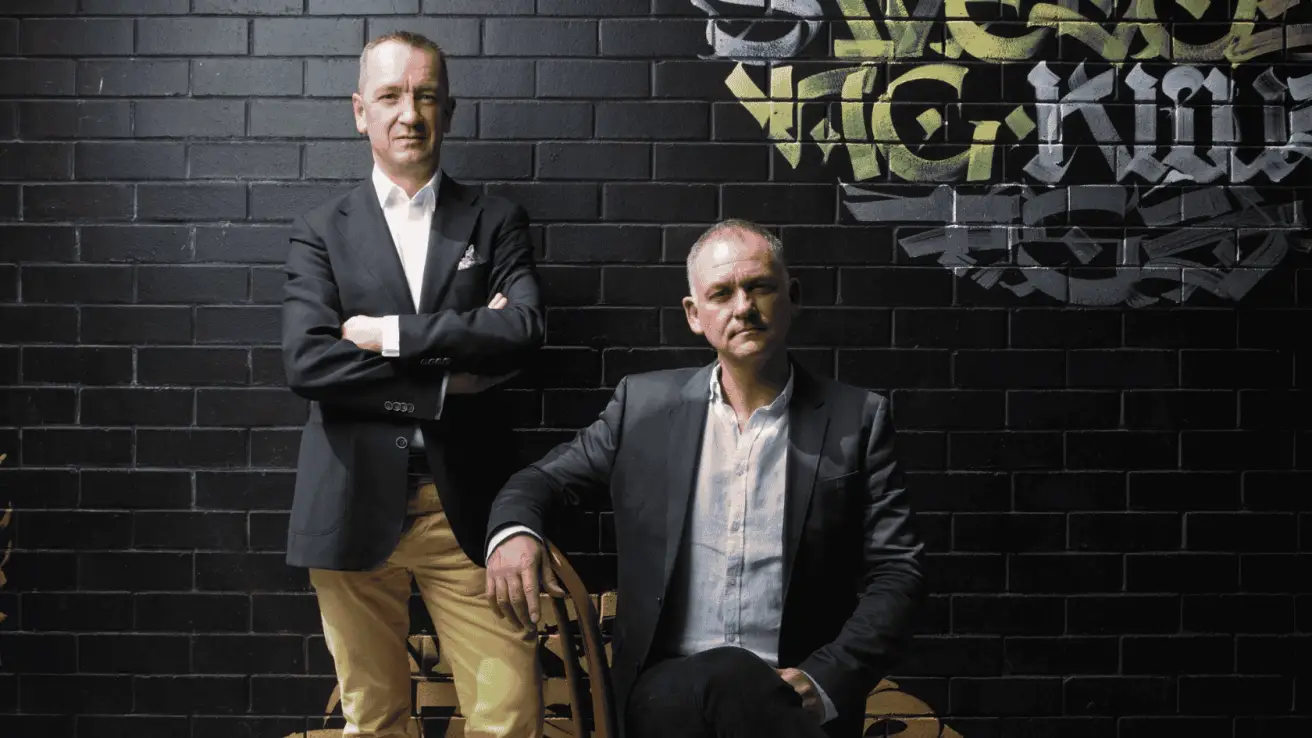
The clean-technology business, co-founded by Graham Ross and Adrian Jones, developed a chemical separation process that pulls cotton and polyester apart in blended fabrics – a waste stream that has long defeated conventional recycling.
That process sits behind patent protection, while five registered trade marks cover BlockTexx, PolyTexx, CellTexx, TraceTexx and its consumer campaign, Give a Sheet for the Planet.
“Often the word patent comes up when you look at external fundraising or even grant funding,” Ross says. “Some investors are really focused on you having a patent, while others just want to know that you are underway with your patent understanding.”
He also frames IP as evidence of business maturity rather than merely legal protection. Patents demonstrate “that you have thought about what you’re trying to build, how do you protect it and to ensure that you’re not infringing in somebody else’s patents”.
For founders weighing up whether to handle registration themselves, his advice is sound: “If you’re an early-stage founder without the experience, I would advise that you go and seek the right amount of expertise.”
Choosing the right IP protection
Different IP rights protect different things, and some businesses use more than one type of protection. IP Australia’s free Choosing the Right IP tool will help you find which protections best suit your business. If a brand name or logo is on your roadmap, the free TM Checker tool lets you check availability before you commit. Trade mark registration lasts 10 years with unlimited renewals, starting from $250 for a single class of good or service.
Patent protection lasts up to 20 years, and can take several years and sometimes thousands of dollars to obtain. A provisional application is a low-cost way to secure an early filing date while you develop your invention, with fees starting from $100. However, to seek full patent protection, you must file a complete patent application within 12 months of filing your provisional application.
Meanwhile, a registered design right costs from $200 and lasts up to 10 years. The Australian Design Search tool quickly lets you search images or products related to your design to help confirm your design is unique.
For both patents and design rights you must keep your ideas confidential before you apply. A non-disclosure agreement (NDA) could be used to help protect sensitive information that needs to be shared with others. You can generate an NDA via this free tool.
Finally, founders should also think carefully about ownership. If IP is created with co-founders, contractors, researchers or other collaborators, ownership arrangements should be agreed and documented early. Clear ownership can help avoid disputes later and provides greater certainty for investors and commercial partners.
Explore different types of IP, protection options and digital tools at IP Australia’s Business Resources hub.
Related Stories
 Business
Women Are Closing the Startup Gap While Capital Still Flows to Men
44 minutes ago
 Business
Mesa School of Business raises ₹110 crore to expand its portfolio of programmes for the AI era
1 hour ago
 Business
Canadian entrepreneur leads pitch competition, funds student startup ideas at Wharton club event
2 hours ago
 Business
PH investing map seeks to close funding gap for women founders
3 hours ago
 Business
Roman Abramovich aides falsified paperwork to disguise assets and dodge tax, records suggest
6 hours ago
 Business
Portuguese startup wins pitch contest in San Francisco
9 hours ago
 Business
This Miami startup thinks your home should have a signature scent
10 hours ago
 Business
Russia
14 hours ago