
'You've arrived in the prettiest town in Canada': This Nova Scotia gem is turning heads around the world
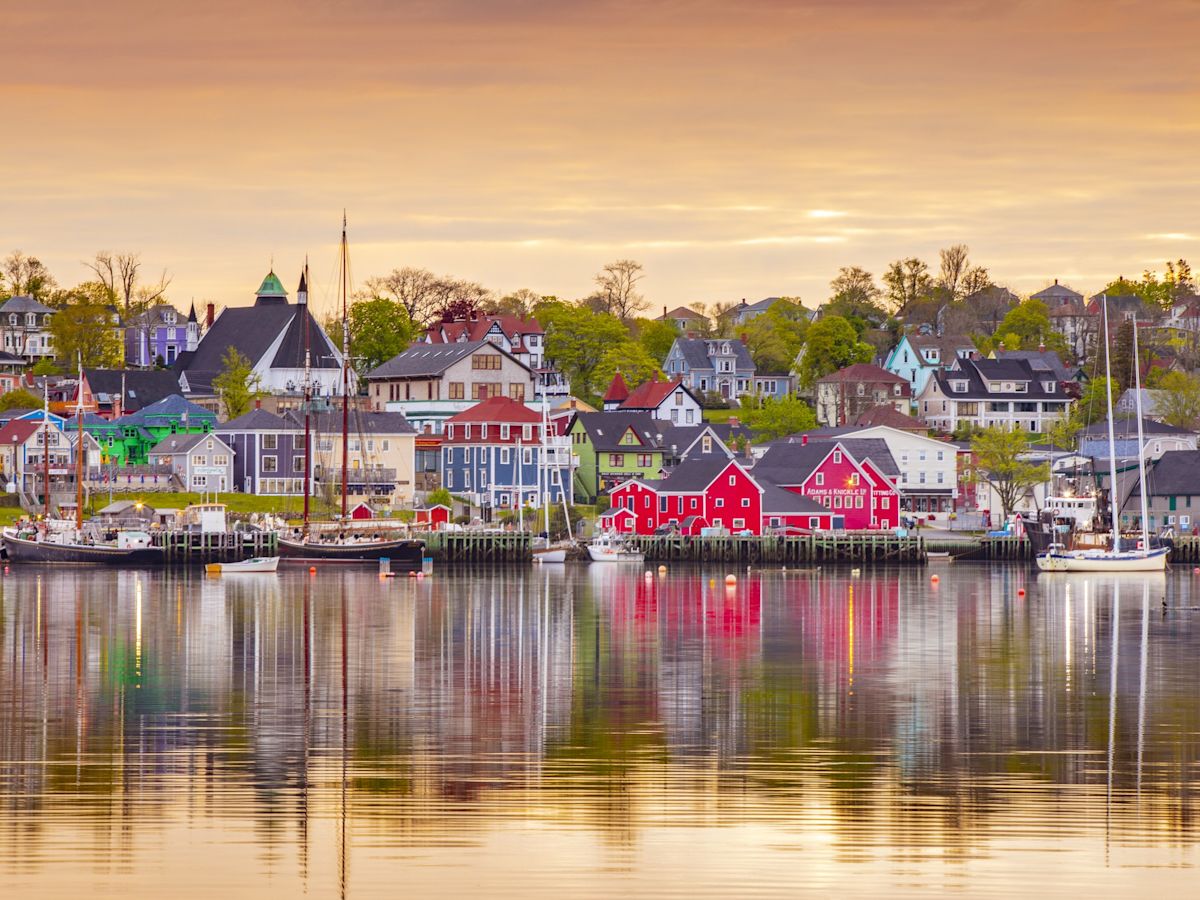
Few places in Canada look like they've been lifted straight from the pages of a storybook more than Lunenburg, Nova Scotia.
Rows of brightly painted wooden buildings tumble down toward a harbour where fishing boats bob alongside the iconic Bluenose II. Salt hangs in the air, lobster traps line the docks and narrow streets wind through a town that has barely changed in over 270 years.
That postcard-perfect maritime charm has just earned the Eastern Canada town global recognition, with Condé Nast Traveler naming Lunenburg one of the 20 most beautiful towns in the world.
If you cross paths with tour guide Robert Ripley on one of Lunenburg's streets, he'll tell you the postcard view only tells part of the story. "It's my favourite place on Earth," Ripley said in an interview with Yahoo News Canada.
For 18 years, Ripley has been showing visitors around Lunenburg, introducing thousands of people to the Nova Scotia town he has come to love as his own. He didn't grow up here. The town, he says, adopted him.
The recognition puts a global spotlight on one of Canada's most historic seaside communities, known not only for its colourful waterfront but also for its remarkably preserved UNESCO World Heritage-designated Old Town.
While Canada's mountain peaks and surf towns on the West Coast often top travel lists, Lunenburg feels like stepping through a portal into another century, where brightly painted homes, salty sea air and one of the country's most picturesque harbours have barely changed over generations.
Beyond the postcard view: 'More than just the waterfront'
For many first-time visitors stepping off tour busses or cruise ships, the instinct is to head straight toward the harbour.
The hillside of colourful wooden homes perching down to the Atlantic has become one of Canada's most recognizable coastal scenes. It was even featured on the back of Canada's $100 bill for years, earning it the nickname "the $100 view."
But Ripley believes the true magic of Lunenburg begins when visitors look beyond the scenic waterfront.
"Lunenburg is more than just the waterfront," he said. "It's the architecture, it's the people, it's the history."
For Ripley, understanding the town means understanding the story of a community that weathered enormous change. Once home to a population of more than 5,000 people, Lunenburg was built around the fishing industry, with generations of families making their living from the sea. After the collapse of the cod fishery and the federal moratorium in the early 1990s, the town's population declined sharply, settling at roughly 2,000 residents today.
Ripley's own walking route begins at the top of the hill, at the Lunenburg Academy, a striking white building with a red mansard roof that opened in 1895 and served as the town's public school until 2012.
Lunenburg Academy, a historic landmark that opened in 1895 and served as the town's public school until 2012. The striking white building with a red mansard roof is now a National Historic Site. (Image credit: Robert Ripley)
From there, he leads visitors downhill through the Old Town, where history appears around nearly every corner.
He points out the oldest house in Lunenburg, a grey wooden home with a red door dating back to 1754, before stopping at St. John's Anglican Church, built in 1753.
Eventually, the walk reaches the harbour and the ships that helped define Lunenburg's story, including the Bluenose II, a ship synonymous with Canadian history and appearing on the dime.
For Ripley, the magic is not just in seeing these places. It is understanding why they survived.
"People like to go inside these places," he said. "They like to look at the architecture."
Lunenburg's ability to preserve its past is what earned it UNESCO World Heritage status in 1995.
Ripley said the designation recognizes something unique — the town's original plan has remained intact for nearly three centuries.
Historic map of old town Lunenburg. (Nova Scotia Archives Map Collection)
"If you were to look at a map of Old Town Lunenburg today, that map is exactly the same as it was 273 years ago," he said.
Susan Corkum-Greek, the MLA for Lunenburg, has lived and worked in the community for decades and has watched the town's popularity grow from a beloved local destination into an international draw.
However, she is quick to push back against the idea that Lunenburg is simply a sleepy, picturesque Atlantic village preserved for visitors.
"It's a working town," Corkum-Greek said in an interview with Yahoo News Canada.
It is a distinction she believes is at the heart of Lunenburg's appeal. The town's beauty is not something built overnight for tourists, she says. It is the result of generations of residents caring for a place they have inherited.
Nova Scotia Opportunities and Social Development Minister Susan Corkum-Greek speaks at a news conference in Halifax, on Wednesday, June 10, 2026. THE CANADIAN PRESS/Devin Stevens
That matters because many of the colourful buildings tourists photograph are not museum pieces. They are privately owned homes and businesses, maintained by people who live there year-round, she explained.
"People work hard to own and maintain these homes," Corkum-Greek said. "It's really personal."
She describes a community where residents take enormous pride in caring for their properties, even while battling the relentless Atlantic weather.
"If you're walking through the streets here, you see houses that are very well kept, where there's a potted plant on the front step," she said.
But Corkum-Greek believes Lunenburg's appeal goes deeper than architecture.
"In a world that is right now very heavy, a lot of chaos, war in some places in the world, people are longing for a simpler time," she said.
It is still a small town and people will walk past you on the street and say, ‘Good morning,’ You are not from here, so you are a stranger, but it is an authentic welcome.
That sense of hospitality, she says, is what separates Lunenburg from a place built only for tourists.
"It is not a resort. It is not a theme park," she said. "It is a town where that pride of place is very real."
A town finding itself on the world stage
As Lunenburg gains global recognition, its biggest draw could be the very thing that cannot be manufactured — authenticity.
Ripley says the town has never been busier, with tour buses filling the waterfront and visitors arriving from across the country to experience its historic streets.
"Canadian tourism within Canada, at least to the East Coast, is way up," he said.
After years of welcoming international visitors, Ripley has noticed a shift in who is filling the streets of Lunenburg. Visitors from Quebec, Ontario and Western Canada have become an increasingly common sight, while the number of American tourists has dropped significantly.
He says many Canadian visitors have told him they are choosing to explore their own country instead of travelling south.
"We used to vacation in the United States, and we don't want to go there anymore," Ripley recalled hearing from some visitors.
The hidden story behind Lunenburg's rainbow-coloured homes
The vivid colours of Lunenburg are not just decoration, Ripley explains. They are part of the town's maritime DNA.
Walking through Old Town Lunenburg feels like moving through a painter's palette. Blue houses sit beside yellow ones. Red doors stand out against weathered wooden shingles. Five-sided dormers, known locally as "Lunenburg bumps," jut out from rooftops, a distinctive feature designed centuries ago to bring more light into homes.
Five-sided dormers, known locally as "Lunenburg bumps," are a signature feature of the town's historic architecture. The Scottish-inspired design was created centuries ago to bring more light into homes. (Image credit: Robert Ripley)
Ripley said the bright colours have long been a defining feature of East Coast fishing communities.
"Most of us are fishermen. We get a lot of fog," Ripley recalled one fisherman telling him when he asked why homes were painted such vivid colours.
"When we come back to shore, we want to be able to find our houses."
The unofficial mayor's favourite part
After 18 years of leading tourists through Lunenburg, Ripley could recite its history in his sleep, yet he says the town hasn't lost its magic for him.
He says his connection to Lunenburg has moved well beyond tourism. He became involved with St. John's Anglican Church, eventually becoming a licensed lay minister, and has developed friendships with residents who now greet him by name when he walks through town.
"People will come out to their front door and say hello, call me by name," he said.
Robert Ripley, a longtime Lunenburg tour guide known by locals as the town's "unofficial mayor," has spent 18 years introducing visitors to the Nova Scotia community. (Image credit: Robert Ripley)
Then he pauses to explain what keeps him coming back. "I just find it therapeutic."
The spirit of Lunenburg's residents is the one thing tourists snapping photos can never quite capture, Ripley said.
The harbour can be photographed. The colourful houses can be photographed. The old churches, wooden ships and historic streets can all be photographed.
The feeling of being greeted by a stranger, of walking downhill toward the salty water while rainbow-coloured houses rise around you, or of sitting down to eat freshly-caught seafood beside a working harbour is harder to package.
As Ripley likes to tell his visitors when he kicks off his tour, "you've arrived in the prettiest town in Canada."
And when the tour comes to a close, he said, tourists tend to agree.
Related Stories
 Canada
Wrong turn leads CBSA to catch kidnappers of Ontario teen: police
55 minutes ago
 Canada
PM Carney touts ‘fertilizer independence’ as Trump says U.S. will keep buying Canadian potash. Live updates here.
56 minutes ago
 Canada
Could Canadians handle a 32
56 minutes ago
 Canada
23 guns seized in GTA firearms trafficking investigation with cross
1 hour ago
 Canada
Trump administration says most refugees accepted in 2027 will be White South Africans
1 hour ago
 Canada
Ontario farmers looking for help amid record diesel costs
1 hour ago
 Canada
Suspect in Belleville, Ont., shooting is dead, SIU says
1 hour ago
 Canada
AFN chief warns Carney against ’abusing’ majority to pass new major projects bill
1 hour ago