
You don’t need your own license on day one: How FinTech founders can launch faster in the EEA (Sponsored)
For founders building the next neobank, business account, payment product, or embedded-finance proposition, the first major obstacle is often not the idea. It is everything required to turn that idea into a regulated, functioning financial product.
Accounts need infrastructure. Money needs payment rails. Customers need onboarding. Transactions need to be monitored. Someone needs to operate the ledger, integrate payment providers, and give customers an interface they will actually want to use.
For an early-stage FinTech, obtaining its own regulatory license can be an important long-term milestone. But does it need to be the first milestone?
Increasingly, the answer is no.
A growing infrastructure ecosystem allows FinTech founders to separate two challenges that were once tightly connected: launching a financial product and becoming a fully licensed financial institution themselves.
With a technology layer such as Crassula combined with regulated business banking infrastructure from an Electronic Money Institution such as Narvi, a startup can build and launch a proposition under a licensed partner framework while validating its market, acquiring customers, and deciding what regulatory structure makes sense for the next stage of the business.
Crassula provides the product and orchestration layer, while Narvi provides regulated BaaS capabilities, accounts, and payment infrastructure.
For startups in particular, this model addresses another critical constraint: time and capital are limited, and the product is likely to evolve.
The traditional FinTech launch problem
Imagine you have identified a clear opportunity.
Perhaps SMEs in a particular industry need better business accounts. Maybe your marketplace wants to embed accounts and payments directly into its platform. Or perhaps you see room for a specialised financial product for cross-border companies.
Your customers do not particularly care how the infrastructure underneath it works. They care that they can open an account, see their balance, send and receive money, and manage their finances reliably.
For the founder, however, delivering that experience can mean coordinating several different layers.
There is the customer-facing application. The ledger and account architecture. KYC and compliance workflows. Payment connectivity. Reconciliation. Back-office operations. Security. APIs. And, depending on the business model, a regulated institution is able to provide the underlying financial services.
Building every layer independently can turn a product validation exercise into a large infrastructure project.
That creates an uncomfortable situation for an early-stage company: a founder may have to commit significant time and resources before discovering whether enough customers actually want the product.
Licence first, or product first?
The question is not whether regulation matters. In financial services, it clearly does.
The more useful question for founders is whether obtaining their own licence is necessary for the first version of the business.
There are situations where owning a licence can become strategically important. It can provide greater control over the operating model, economics, and product roadmap.
But businesses at the validation and growth stages have another route: working with a regulated provider whose infrastructure and permissions can support the intended proposition.
Narvi, for example, is a Finnish-authorised Electronic Money Institution and provides Banking-as-a-Service capabilities through its API. Its infrastructure includes IBAN accounts and European payment capabilities, while its EMI framework supports operations across all EEA countries.
That does not mean a startup can simply ignore regulation. The product, customers, geography, and use case still have to fall within the provider’s regulatory framework, compliance requirements, and risk appetite.
In practical terms, this means the startup initially operates using Narvi’s regulated infrastructure rather than under its own e-money licence. Customers are onboarded through the processes and compliance framework required by Narvi.
What changes is who has to build the regulated infrastructure from zero on day one.
The second challenge: technology
Solving the licensing side does not automatically create a FinTech product.
A regulated provider may give a business access to accounts and payment capabilities via APIs, but founders still need to turn those capabilities into a usable customer experience.
That is where the technology layer comes in.
Crassula provides white-label digital banking infrastructure covering areas including core banking, account and ledger functionality, web and mobile interfaces, a back office, payment orchestration and integrations with financial service providers.
The platform is designed so companies can configure and brand an existing banking technology stack instead of developing each component independently.
In simple terms, the roles can be separated like this:
For a founder, this changes the nature of the project.
Instead of asking, “How do we build a financial institution from scratch?”, the first question can become, “What is the smallest regulated product we can launch to prove customers want this?”
Startups need a different kind of infrastructure partner
Early-stage FinTechs do not operate like established banks.
Their requirements can change quickly. Their initial transaction volumes may be relatively small. Their product roadmap can change after the first conversations with customers. And they usually cannot justify the same infrastructure budgets as a mature financial institution.
That means startups need more than technology. They need infrastructure partners that understand how startups actually build.
This is an area Crassula has deliberately focused on.
Alongside working with established financial businesses, Crassula works with FinTech startups and offers a startup-friendly commercial model designed to make launching a financial product viable at an early stage, rather than requiring the economics of an established financial institution from day one.
With Crassula’s existing technology stack and the appropriate regulated partner infrastructure in place, a FinTech product can be launched in around four weeks, depending on the product scope, compliance approval and required integrations.
But speed to the first launch is only part of the equation.
A startup’s first product is rarely its final product.
A company might initially need EUR accounts and SEPA payments, then discover that its customers need another payment method, KYC provider, card program, FX capability or other financial service.
Rather than expecting founders to predict every infrastructure requirement before launch, Crassula’s approach is designed around adaptability. As the product develops and new customer requirements emerge, additional providers and integrations can be introduced.
For founders, that can be more important than having every possible feature available on day one.
The objective is to get the right first product into customers’ hands, learn from real usage and expand the infrastructure alongside the business.
What an infrastructure-first launch could look like
Consider a startup building a financial product for European SMEs.
Rather than first developing a ledger, customer portal, operations dashboard and multiple payment integrations, while simultaneously pursuing its own regulatory authorisation, the company can start with existing infrastructure.
Crassula can provide the configurable product environment: branded web and mobile experiences, core functionality, back-office tooling and orchestration.
Narvi can provide regulated BaaS infrastructure for accounts and payments under its EMI framework, subject to approval of the specific business model and customers.
The startup can then concentrate its resources on the parts that are actually differentiated: whom it serves, what problem it solves, how the experience differs from existing alternatives and how it will acquire customers.
This creates a fundamentally different launch path:
Idea → infrastructure and compliance setup → launch in weeks → acquire customers → learn → integrate additional services → scale.
Idea → build infrastructure → pursue own licence → integrate providers → launch → discover whether customers want it.
For an early-stage company, the difference is significant.
Every month spent before launch consumes capital without generating customer feedback. Infrastructure costs have the same effect. A startup-friendly technology and BaaS model therefore is not simply an IT decision. It can affect the company’s runway and its ability to reach product-market fit.
Launching fast does not mean thinking short-term
Using external infrastructure should not mean ignoring future architecture.
A founder should understand what happens if transaction volumes increase significantly, the business expands into new markets, or the company eventually decides to operate under its own licence.
That is why modularity matters.
Crassula operates as an orchestration layer that can connect to licensed entities and different financial service providers, rather than requiring the FinTech proposition to be built entirely around one proprietary banking stack.
For startups, this creates an important strategic possibility: use infrastructure to reach the market first, then increase ownership of the stack where it makes commercial sense.
Obtaining your own licence can therefore become a growth decision rather than necessarily an entry requirement.
What founders should ask before choosing this route
Speed and price matter, but they should never be the only selection criteria.
Before partnering with a BaaS or technology provider, founders need to understand exactly how the proposed setup works.
Which entity provides the regulated services? Which countries and customer types can it support? Who is responsible for customer onboarding and ongoing compliance? Which payment schemes are available? What happens if the business enters a higher-risk vertical?
Founders should also think beyond launch.
Can another provider be integrated if customers require a new service? Can the infrastructure adapt as the product changes? What happens when volumes grow? And how portable is the technology if the startup eventually obtains its own licence?
The answers should be clear before launch. We can help with this.
In FinTech, infrastructure is part of the business model, not just an IT decision.
Build the differentiator, not everything underneath it
The European FinTech ecosystem has matured considerably.
Founders no longer necessarily need to build every piece of banking technology themselves, and they do not always need to make obtaining their own licence the first step of the company journey.
Crassula and Narvi illustrate how the stack can be divided.
Narvi supplies regulated financial infrastructure, accounts and rails. Crassula supplies the technology and product layer that sits on top.
For startups, the combination addresses four of the biggest constraints at the beginning of the journey: regulatory infrastructure, technology, time and cost.
A founder can start with a leaner commercial setup, aim to bring a product to market in around four weeks, learn from real customers and add new integrations as the proposition develops.
The result is another path from idea to market: launch using established regulated and technical infrastructure, test the proposition, adapt quickly and build deeper ownership as the business matures.
For an early-stage FinTech, that can change the fundamental question from “How do we build a bank?” to something much more valuable:
“What financial product do our customers actually want us to build?”
This article was created in collaboration with Crassula and Narvi.
About Crassula: Crassula is a white-label Banking-as-a-Service software platform. We provide the technology layer that enables companies to launch digital banking products: neobanks, e-wallets, crypto-wallets, payment platforms, and card issuing and management programmes. See LinkedIn.
About Narvi: Narvi Payments is A Nordic regulated EMI (Electronic Money Institution). Narvi has built its own core banking technology which allows for better banking experience for users and allows us to provide API first banking services for full businesses to play and integrate payments into the modern digital world. See LinkedIn.
Related Stories
 Startups
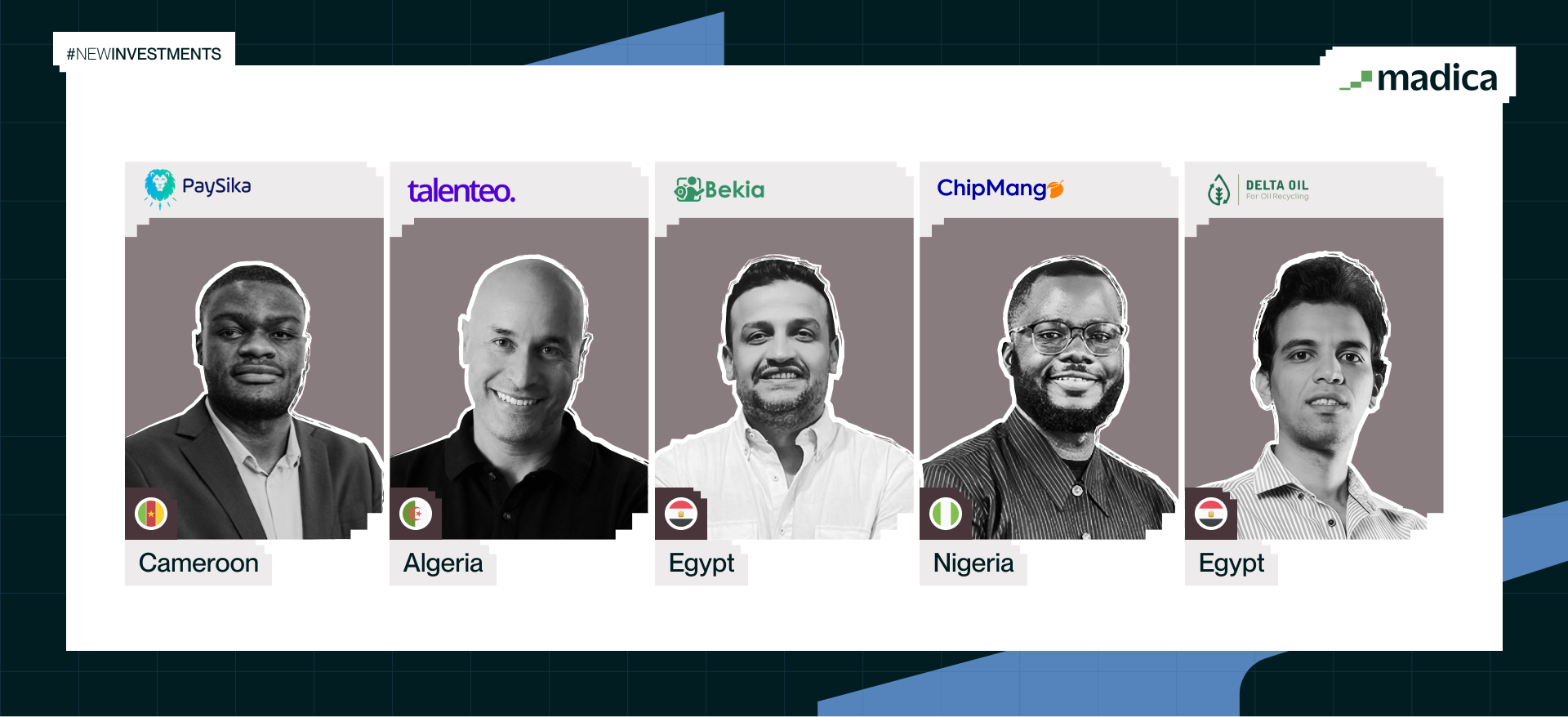
Madica invests $200,000 in five African startups, enters Algeria and Cameroon
2 hours ago
 Startups
Helsinki’s Zero raises €8.93 million with backing from Lovable and Supercell founders to make CRM history
2 hours ago
 Startups
Hong Kong Boosts Tech Startup Funding to Develop Unicorns
1 day ago
 Startups
Startup Catalytic Fund to Mobilise $260 Million for Digital Startups
1 day ago
 Startups
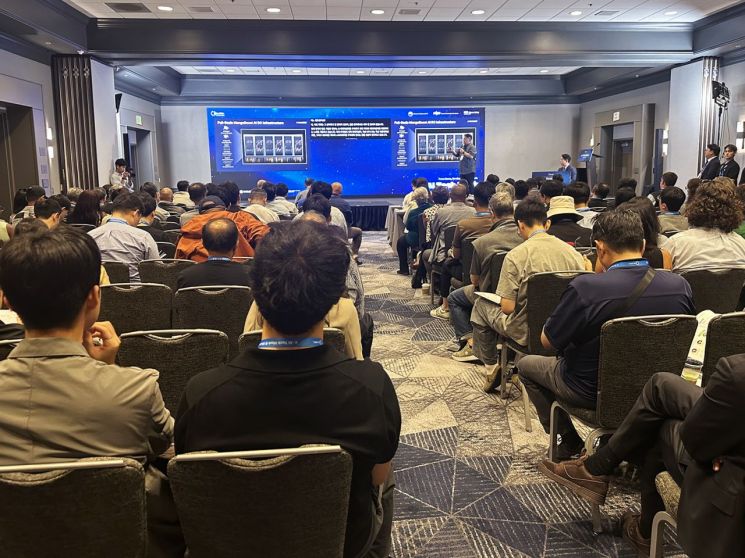
Korean Venture Firms Matched with Silicon Valley VCs... Korea Investment Corporation Hosts IR Event
1 day ago
 Startups
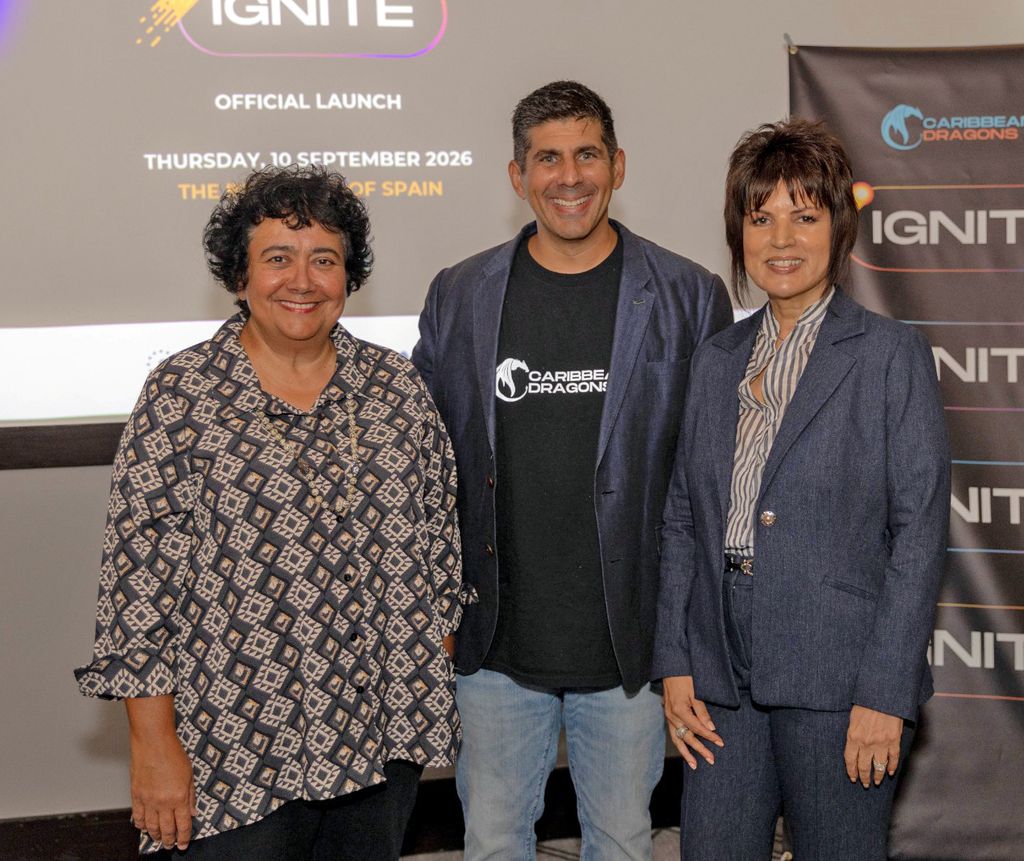
‘Region’s startups need venture capital boost’
1 day ago
 Startups
AI Just Helped Healthtech Startups Mint Twice as Many Unicorns in 2025
2 days ago
 Startups
Furo’s founders left Silicon Valley
3 days ago