
‘Region’s startups need venture capital boost’
andrea.perez-sobers@guardian.co.tt
Caribbean entrepreneurs need more than pitch competitions and short-term programmes if the region is serious about producing companies capable of creating jobs, attracting investment and diversifying their economies.
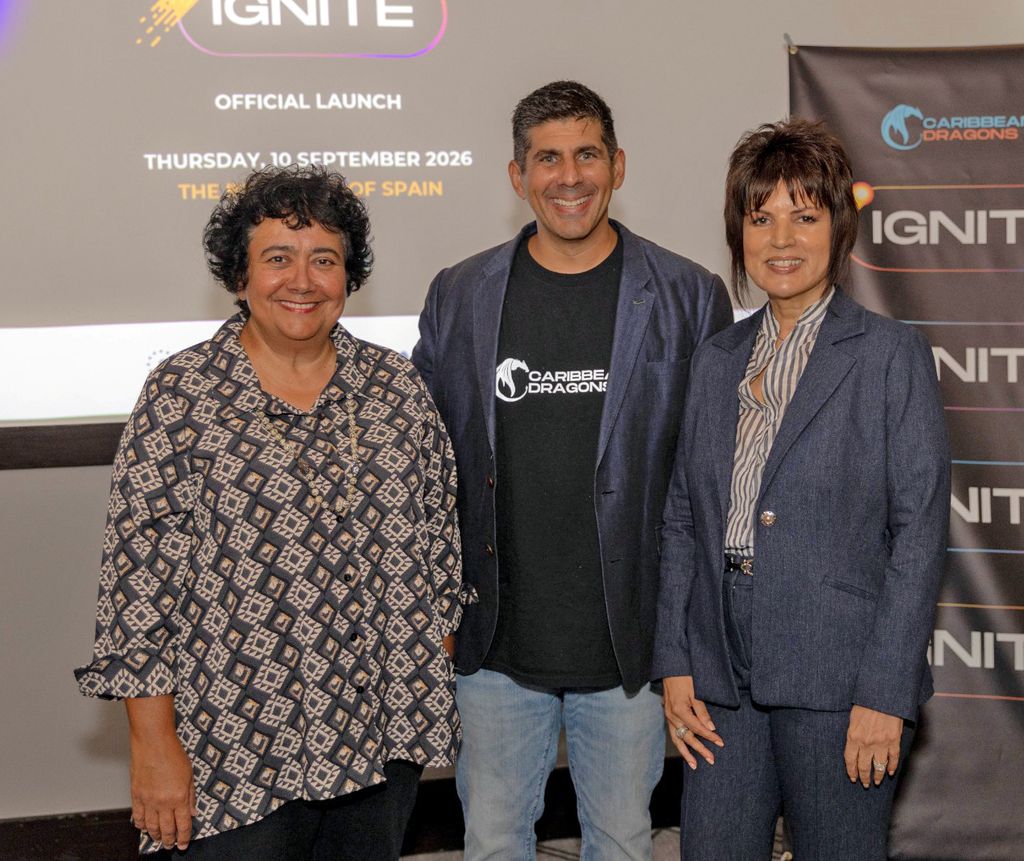
That is the thinking behind the expanded Ignite 2026 programme being developed by Caribbean Dragons, which has moved from community meetups and occasional founder events into a structured capacity-building programme covering training, coaching, a summit and six months of mentorship.
The programme will culminate in the Ignite 2026 summit in November and has already attracted a cohort of 170 startups, which will progress through the programme over the next eight months.
For Caribbean Dragons co-founder and director Marc Persaud, the shift represents a major change in the organisation’s three-year journey and is intended to create a more sustainable pipeline of high-growth businesses.
“So I started with a capstone that happens every year, and made it the capstone of a much larger, longer, broader programme of capacity building for founders,” Persaud told Business Guardian on Thursday evening.
The programme now includes classes every Thursday night, a coaching week, the summit and six months of mentorship. Persaud expects the current structure to be built over the next 12 to 18 months.
The expansion has been supported by CaribEquity, which Persaud credits with giving Caribbean Dragons greater capacity to organise its work.
“In the three years, this is definitely a revolutionary year for us, it’s a big year,” he said.
Previously, the organisation’s activities included community meetups, an ambassador network, webinars and podcasts. The new structure, he explained, is designed to make those activities more organised and deliver greater impact.
The scale is also changing. Persaud said community co-build sessions previously attracted about 50 entrepreneurs at a time, three times a year. Under the new programme, the 170-startup cohort will be followed each year for the next three years.
Outside the core Catalyst programme, he expects another 50 to 100 entrepreneurs a year to be reached through webinars, podcasts, hackathons and other activities.
Capital remains the fuel
While founder education and mentorship are important, Persaud believes the Caribbean cannot build a high-growth startup ecosystem without developing the region’s capacity to finance those businesses.
That means attracting investors, but also teaching investors how venture capital works.
“We need investors on two levels. We need investors to run programmes like this. And then the fuel really for high growth companies is capital,” Persaud said.
Venture investing is still relatively unfamiliar across the Caribbean. Persaud distinguishes it from the private equity activity that is more established in the region, arguing that more work is needed to develop investor expertise around backing high-potential startups.
That includes helping investors understand the different risk and time horizons involved in venture investing, as well as developing private venture capital funds and other appropriate investment vehicles.
Persaud wants the Government and the private sector to make it easier for capital to flow into startups.
He is calling for tax incentives for high-net-worth individuals and family offices to invest in startups, alongside vehicles such as venture capital funds or special purpose vehicles that can be registered and managed easily in local jurisdictions.
On the founder side, he wants continued investment in entrepreneurial support organisations, incubation projects and other facilities that provide startups with the resources needed to scale.
Regulatory reform is another priority, particularly in highly regulated industries such as fintech.
“For us as an organisation?” Persaud said when asked about the challenges Caribbean Dragons face. “So I think the first thing is we’re a bunch of volunteers.”
That creates its own challenge: developing a sustainable business model for an organisation that is trying to build the wider entrepreneurial ecosystem.
Persaud wants organisations such as CaribEquity, the Caribbean Development Bank and the World Bank to focus not only on individual entrepreneurs but also on the ecosystem builders supporting them.
He argued that the economic impact can be significantly greater when support is directed towards businesses with the potential to grow rapidly.
“You can help one person with a small business as a cottage industry. But if you help a high-potential, high-growth business, that person is going to employ 15, 20, 30 people in the next year,” he said.
The objective, therefore, is not simply to help more people start businesses. It is to help businesses capable of scaling, employing more people and contributing more significantly to economic output.
Sophia Nadura, a board director and investment adviser to a number of climate funds and a mentor to entrepreneurs, is among those supporting Ignite.
Nadura brings experience across law, consumer goods, innovation, energy and corporate strategy. A Trinidadian who has built and scaled her own innovation consultancy, she previously worked with companies including Nestlé, Dole and Wahaha in China, before spending five years at BP helping to co-create its global electric vehicle charging business.
She now describes herself as being in the “return” phase of her life, after years of learning and earning internationally.
“I believe in life. You have three phases: learn, earn and return. I’m in the third phase of my life, which is called return,” Nadura chuckled.
She is drawn to Ignite for its role as a connector within the innovation ecosystem.
She believes T&T does not suffer from a shortage of talent but does need stronger connections between founders, banks, investors, multinationals, corporates and service providers.
“Ignite is a unique ecosystem because it’s not trying to do everything, but it’s trying to be the glue,” she said.
For Nadura, that ecosystem-building role is particularly important as Trinidad and Tobago seeks to diversify beyond its traditional dependence on oil and gas.
She believes the country can draw on its industrial base while developing new businesses in areas such as consumer goods and new energy.
But she is also urging corporations to rethink what it means to support startups.
The first step, she believes, is becoming a startup’s customer.
“How can I make these young companies, how can I be their first customer?” Nadura asked.
A corporate purchase can provide far more than revenue. It can give a young business validation, improve cash flow, provide a recognised customer reference and help open doors to future investors.
Nadura also wants companies to allow employees to spend time engaging with entrepreneurs so they can better understand the challenges of building a business.
The third area is capital, although she does not believe every form of corporate support has to involve equity investment.
Working capital assistance, overdrafts, preferential terms and longer payment periods can all help young companies manage cash flow while they grow.
She also sees an opportunity for corporate venturing, where larger companies invest in, partner with or eventually acquire smaller high-potential businesses.
Vashtie Dookiesingh, senior specialist with Inter American Development Bank Lab, also sees ecosystem development as a critical part of the work.
IDB Lab uses non-reimbursable grants to support projects designed to strengthen innovation ecosystems, including training, advisory services and connections for innovative companies.
Its investment activities also include venture capital funds, private equity placements and lending.
In T&T, Dookiesingh said the organisation has so far focussed on lending, including financing for fintech and micro and small businesses.
IDB Lab recently provided financing to Odelebao, a locally developed e-commerce facilitator that handles services including collection, consolidation, delivery and payments.
Dookiesingh became involved with Caribbean Dragons after seeing its earlier, less formal activities, including pitch competitions and founder meetups.
She saw value in building a community around entrepreneurs and giving founders opportunities to learn from each other.
“When the CaribEquity, which is a Caribbean regional programme, came on stream, they invited what they call business support organisations that really could make a difference within their countries to apply in T&T,” she explained.
Two organisations were selected in T&T: Caribbean Dragons and the University of T&T, which is launching an artificial intelligence lab to help small businesses use AI.
Dookiesingh believes innovation and technology can have an impact beyond individual companies.
She pointed to an IDB-supported telemedicine initiative in Guyana, where technology is being used to connect remote communities with healthcare services. A subsequent proposal for medical drones could reduce the time required to transport medicines and medical supplies to remote health posts from as much as two days to about 90 minutes.
For Dookiesingh, that illustrates why innovation ecosystem investment matters.
The challenge for this country is now to turn its pool of capital, talent and corporate expertise into greater investment in the real economy.
She argues that significant amounts of capital already exist locally, but much of it is invested conservatively or placed overseas.
“There is, I think, a lot of capital here in T&T,” Dookiesingh said. “I mean, we have a lot of money sitting down, earning very little.”
Investing in startups carries risk, she acknowledged, but believes successful businesses can generate returns while creating employment and opportunities across the wider economy.
Related Stories
 Startups
AI Just Helped Healthtech Startups Mint Twice as Many Unicorns in 2025
7 hours ago
 Startups
Furo’s founders left Silicon Valley
2 days ago
 Startups
Copenhagen’s Seed Capital closes €130 million Fund V to back Nordic startups from Seed to Series A
2 days ago
 Startups
Furo’s founders left Silicon Valley
2 days ago
 Startups
G Elias partners with Lagos State Employment Trust Fund for a masterclass on startups & their legal environment
2 days ago
 Startups
How Reg CF Equity Crowdfunding Actually Works for Startups Under $5 Million
3 days ago
 Startups
Cozen O’Connor Hires Sheppard Startup, VC Member Kahn in Miami
3 days ago
 Startups
AI unicorn startups attract record venture capital in 2026
4 days ago