
Who pays for Canada’s tariffs on U.S. goods? Experts break down the real cost
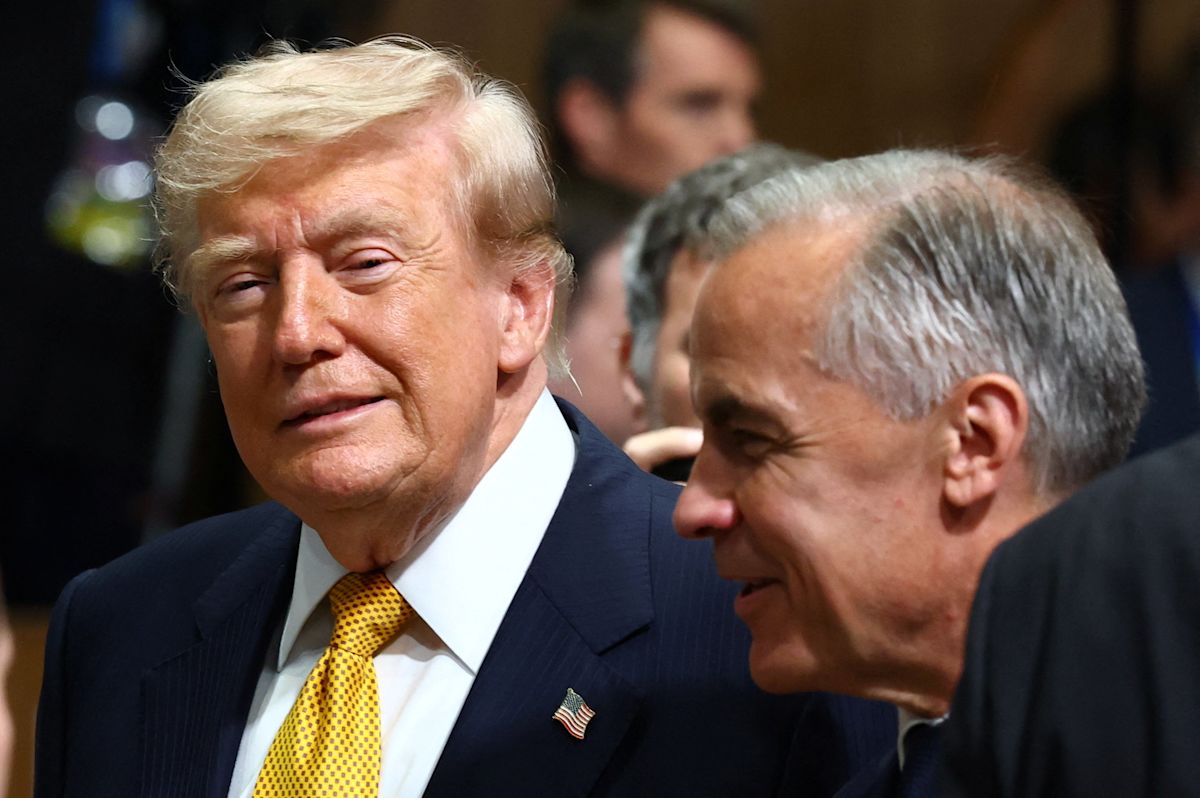
Canada's latest tariffs are aimed squarely at the United States. That doesn't mean Americans are the only ones footing the bill.
Ottawa's new counter-tariffs took effect Sept. 8, covering $27.6 billion worth of U.S. imports at rates of 15, 25 and 50 per cent. Steel and aluminum, dairy products, appliances, agricultural equipment, pulp and paper, plastics and electronics are among the goods targeted. Existing tariffs on U.S. autos also remain in place.
The measures are meant to match U.S. tariffs on Canadian goods. But once a tariff reaches the border, the cost can work its way through Canadian businesses, and, eventually, to shoppers.
The bill doesn't necessarily land at the checkout
Peter Morrow, an economics professor at the University of Toronto, says evidence from other countries suggests U.S. exporters generally don't absorb the cost themselves.
"The most credible evidence that we have is that exporters bear none of the incidence of tariffs," Morrow told Yahoo News Canada.
What happens after that is less straightforward.
"To what degree the tariffs are split between Canadian importers, retailers, and consumers is unclear," he said.
"The best evidence that we have from other countries is that much of the tariffs show up in lower profits for importers and retailers with less than half of the tariff showing up in higher on-the-shelf prices."
Canadian businesses are already showing that pattern.
Statistics Canada reported last month that 27.4 per cent of businesses had passed tariff-related cost increases on to customers over the previous year. Another 37.7 per cent said they had absorbed the increases instead. The remaining 34.9 per cent of businesses did not experience any cost increases due to tariffs.
A 25% tariff doesn't mean a 25% price hike
Canada has some recent history to draw from.
A Bank of Canada study of the 2025 counter-tariffs found that prices of tariffed goods eventually rose about 6 per cent relative to unaffected products — roughly one-quarter of the 25 per cent tariff. Researchers estimated the episode added around 0.3 percentage points to consumer inflation.
That doesn't tell Canadians exactly what will happen this time. The current tariffs cover different products and rates.
Morrow expects goods still sourced from the U.S. to see more noticeable increases.
"I think that the most likely outcome is that the price of these narrowly defined goods — if still bought from the U.S. — will go up between 10-20 per cent," he said.
Consumers who switch to Canadian or European alternatives could see smaller increases, he added.
For businesses, it comes down to alternatives
The calculation looks different for companies that rely on U.S. suppliers.
Tara Vinodrai, a professor at the University of Toronto's Institute for Management and Innovation, said the first hit lands with the Canadian company bringing the product across the border.
"Very technically, when a Canadian company buys a U.S. good that's now been tariffed, they pay more," she told Yahoo News Canada.
After that, she said, "those costs get pushed down the line, whether it's to a wholesaler or a retailer, or like ultimately a consumer."
How much a business can avoid that cost depends heavily on whether it can find another supplier.
Vinodrai called it the "substitutability question" — whether a company can pivot to Canadian or other non-U.S. sources. That adjustment can take time and varies widely by industry.
The federal government's tariff-remission process acknowledges the same problem, allowing companies to seek relief where needed inputs cannot reasonably be sourced in Canada or from another country.
The longer the trade war lasts, the more behaviour changes
Morrow is less worried about the tariffs causing a major inflation shock than about what prolonged uncertainty does to spending.
"I am much more concerned about consumer and business confidence than I am inflation due to these tariffs," he said.
The Bank of Canada has raised a similar concern, warning that uncertainty around Canada-U.S. trade could cause businesses to delay hiring and investment.
"The longer a mutually destructive trade war persists, the less likely businesses and consumers are to make large scale investments and purchases."
For Canadians, that means the cost of retaliation may not show up as one dramatic jump at the cash register. Some will be absorbed by businesses, some passed on through higher prices, and some may show up later in decisions not to hire, invest or spend.
Related Stories
 Canada
Captain Alphonso Davies, goalkeeper Max Crepeau to miss Canada's World Cup homecoming games
17 minutes ago
 Canada
Restaurants are implementing these strategies to survive the trade war as tariffs eat their bottom line
46 minutes ago
 Canada
Union warns workers paying price of Canada
46 minutes ago
 Canada
Missing B.C. skyrunner 'remains among the mountains,' family says after search
46 minutes ago
 Canada
Calgary man charged for alleged YouTube threat to kill Carney, RCMP says
1 hour ago
 Canada
Carney says Canada will pursue ‘unique economic alliance’ with EU amid US trade spat
1 hour ago
 Canada
Trump’s latest round of 50% tariffs on Canadian goods now in effect
1 hour ago
 Canada
Chief says Canada blocking effort to take back control of child and family services
1 hour ago