
Where cyclosporiasis cases stand in Canada as U.S. parasite outbreak rages
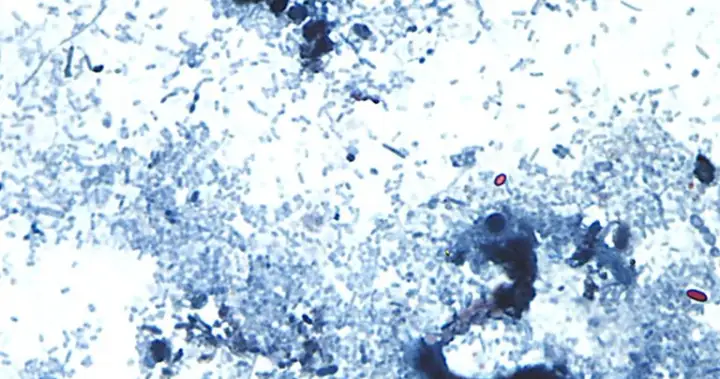
Cases of cyclosporiasis — a parasite that causes watery diarrhea — are being identified across Canada but officials say they are not seeing links to the widespread outbreak in the U.S.
Cyclosporiasis is an illness of the intestines caused by a parasite called cyclospora, which is only spread through eating food or drinking water that contains the parasite.
The symptoms of cyclosporiasis include watery diarrhea, abdominal bloating and gas, and loss of appetite.
Health officials in Quebec have informed Global News that “an increase in cases of cyclosporiasis has been observed in Quebec in 2026.”
A total of 107 cases have been identified as of July 11, compared with 30 cases in 2025 for the same time period, which health officials also state “is not at all on the same scale as the outbreak reported in the state of Michigan,” where 3,762 total cases have been reported.
“As in previous years, the majority of Quebec cases would be linked to an exposure that occurred during travel, mainly to Mexico. As of today, less than five cases have reported travel to the United States,” said a spokesperson for Quebec’s Ministry of Health and Social Services (MSSS).
In B.C., 93 cases have been reported this year, with a health official telling Global News that “cases of cyclospora are reported in B.C. every year” and “most cases are related to travel.”
The levels are being monitored “closely” given the outbreak in the U.S. but are considered “typical,” a spokesperson for the B.C. Centre for Disease Control.
B.C. also “sees an increase in non-travel related cyclospora infections due to eating contaminated, imported raw produce” every spring and summer, the health official stated.
“We have not linked individual B.C. cases to a specific product or country of origin. Many of our cases are travel-related, but may not be necessarily connected to the current U.S. outbreak.”
Alberta health officials have confirmed six cyclosporiasis cases in the province this year to Global News, with one case being reported on Wednesday.
“Five of these cases were identified within the past six weeks, and all had illness onset dates within the period reported by the U.S. CDC (May 1 to July 9). Four of the five cases were associated with recent travel to Mexico, while none involved travel to the United States,” said Jaye Lang, press secretary for the province’s Primary and Preventative Health Services.
“We are investigating all cases through routine surveillance activities, including reviewing travel histories, food exposures and other potential links to ongoing outbreaks.
“While Alberta cases are being assessed against the cyclospora outbreak under investigation in the United States, no connections have been identified to date, and investigators have not identified a common food source or food establishment associated with the Alberta cases.”
Global News confirmed that the Northwest Territories, Nova Scotia, New Brunswick, Saskatchewan and Prince Edward Island have seen no cyclosporiasis cases this year, according to provincial government health officials.
Health officials in Yukon did not reply to multiple inquiries.
Nunavut health officials confirmed five lab-confirmed cases this year, stating to Global News that “there is no evidence to suggest that the case identified in Nunavut is linked to any ongoing foodborne outbreak or to imported fruits or vegetables from the United States.”
In addition, two cases were reported to Public Health Ontario in March, officials there said.
Manitoba health officials have also reported one case this year that is currently under investigation.
As of July 13, 1,645 lab-confirmed cases were reported in the U.S. across 34 states, with 141 people hospitalized, according to the Centers for Disease Control and Prevention (CDC). They became sick “after eating food in the United States.”
More than 5,100 potential cases are currently undergoing further analysis to confirm the illness as domestically acquired cyclosporiasis.
As of July 1, the CDC reported 145 cases of cyclosporiasis being acquired across 17 states from May 1 through June 16.
The Public Health Agency of Canada told Global News that while no Canadian cyclosporiasis outbreaks are currently being investigated, “there is usually an increase in cyclospora infections acquired in Canada linked to consuming fresh fruit and vegetables imported from other countries during the spring and summer.”
In addition, the Canadian Food Inspection Agency says it is not considering restrictions on fresh produce imports from the U.S.
Related Stories
 Canada
Connor’s late goal lifts Winnipeg Jets to 3
38 minutes ago
 Canada
Family overjoyed after beloved pet bunny Biscuit, who was stolen from Markham fair, safely returned
38 minutes ago
 Canada
Calgarians' quality of life declining amid affordability concerns: survey
1 hour ago
 Canada
Ottawa, Alberta highlight military defence partnership ahead of referendum
1 hour ago
 Canada
Elon Musk says Quebec, Alberta and Saskatchewan should separate from Canada
1 hour ago
 Canada
Canned, frozen vegetable merger cancelled after Competition Bureau push
2 hours ago
 Canada
Federal update on MAID legislation
2 hours ago
 Canada
Average asking rent down 2.9% in B.C. in September, marking 2 years of decreases: report
2 hours ago