
The ‘World Series earthquake’ that caused highways to collapse
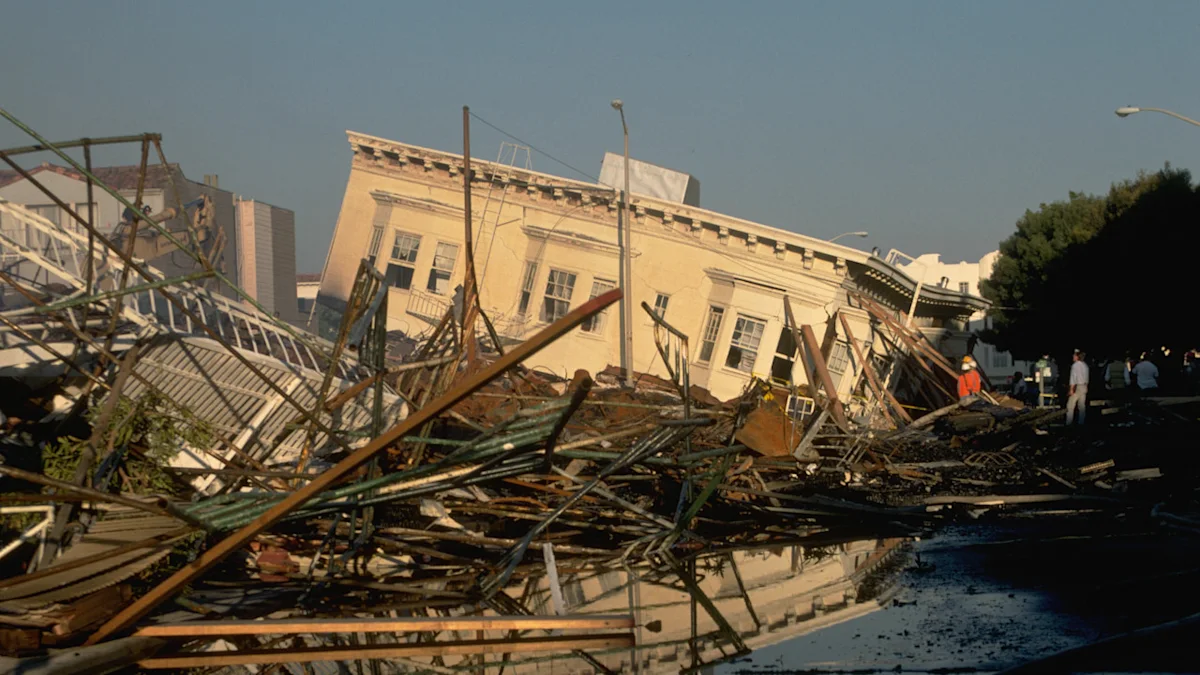
"I'll tell you what, we're having an earthquake!"
Veteran sports broadcaster Al Michaels was the first person to break that news to the world out of San Francisco's Candlestick Park on Oct. 17, 1989.
Before he could finish the sentence, the powerful magnitude 6.9 earthquake severed power and communications throughout California's Bay Area.
Loma Prieta, also known as the World Series earthquake, remains one of the most significant disasters to strike the region in modern history.
RELATED: The Great Quake of 1906 nearly wiped San Francisco off the map
A rupture within the San Andreas Fault network occurred at 5:04 p.m. local time near the Loma Prieta Peak, unleashing a powerful earthquake centred about 90 km southeast of downtown San Francisco.
Strong to severe shaking rattled the Bay Area for nearly 30 seconds. Numerous buildings collapsed, especially near the epicentre and on the soft ground of San Francisco's Marina District.
A pancake-style collapse occurred along a section of a double-decker highway in Oakland called the Cypress Street Viaduct, a tragedy which was responsible for most of the disaster's 63 fatalities.
Farther south, a section of the upper deck of the Bay Bridge also collapsed, killing one person and severing a vital artery for travel throughout the region.
DON'T MISS: How to safely react when an earthquake strikes
Baseball may have prevented an even higher toll.
The earthquake struck just half an hour before two local teams -- the San Francisco Giants and the Oakland Athletics -- were scheduled to face off in Game 2 of the World Series.
A significant number of local residents settled in for the game instead of commuting, likely preventing even heavier traffic on highways that ultimately suffered damage.
News crews already in town to cover the game were able to use backup equipment to quickly take to the air and begin reporting on the earthquake and its aftermath.
State legislators created the Seismic Hazards Program in the aftermath of this disaster. The program is designed to increase preparedness, reduce risk, and harden building codes in communities along active faults, as well as in areas vulnerable to liquefaction, landslides, and tsunamis.
Header image of damage in San Francisco courtesy of the USGS.
Related Stories
 World
World
World Cup demolition sparks French coach’s desperate NRL plea
1 hour ago
 World
World
Japan PM Takaichi sends offering to Yasukuni Shrine
1 hour ago
 World
World
Denmark Open: ‘We Don’t Want to Stop Here’
2 hours ago
 World
World
Houthi strikes on Saudi Arabia show the Yemeni rebels' growing strength
2 hours ago
 World
World
New report shows spike in civilian casualties amid Russian strikes
3 hours ago
 World
World
Media: White House spokesperson steps down after 5 days
4 hours ago
 World
World
Putin touts military gains over Ukraine | NHK WORLD
4 hours ago
 World
World
Ukrainian Film Festival kicks off in Tokyo | NHK WORLD
4 hours ago