
The impact of artificial intelligence on the youth: The role of parents

It is obvious that parents have the primary responsibility of protecting their children from the potential harm that artificial intelligence or AI can inflict on the youth. We have to be realistic, however, to take into account that, as Pope Leo XIV wrote in “Magnificent Humanity,” “it is difficult for parents by themselves to resist the influence of business models that monetize attention and time.” Parents must look for partners among enlightened businesspeople, nongovernmental organizations (NGOs), educational institutions and associations of families who can help shape far-sighted policies that are needed to oppose the immediate commercial interests of platforms, concentrated in a few hands (e.g. OpenAI, Anthropic, Google DeepMind, Meta AI, xAI and Mistral AI) when they can conflict with the well-being of minors.
More important than the needed legislation, as discussed in the previous article, the Pope says that “it is also necessary to teach children, adolescents and young people how to recognize manipulation, defend their dignity and respect that of others in digital environments.”
The proactive role of parents in guiding and monitoring the use of social media by their children, especially teenagers who may be more AI-savvy than the adults, cannot be overemphasized. This is so because of the realistic warnings of some of the AI stakeholders that a proposed social media ban for minors may actually pose some security and privacy risks. As reported in this paper (July 2), Wayvent Innovations, Inc. President Emmanuel Caguimbal said that infrastructure to bypass age restrictions is already a “mainstream reality for the Filipino youth.” Translation: teenagers can run circles around their unknowing parents unless the youth are actually helped to develop the virtues of prudence, chastity, and others that are needed to avoid the harmful effects of social media.
Let’s learn from the experience of Australia.
According to AIFirst Chief Executive Officer Carlo Almendral, in the days leading to the implementation of the law limiting access to social media for youth under 16, VPN downloads nearly tripled, and three months later, around 70% of under-age users still maintained their social media accounts.
It could even be worse in the Philippines because of the booming mule market for rented or sold IDs used for verification purposes. Furthermore, Information Security Officers Group President Luis A. Jacinto said that restricting access is “an impractical solution” for preventing real world violence. While he noted that VPN costs might be a barrier for those in the lower-income brackets, the ban will ultimately be unable to achieve its intended goals. With age restrictions, savvy young users will likely just move towards less regulated spaces, which could lead to more dangers.
Another danger that could arise from requiring age and identity verification, which would involve submitting government-issued IDs to private social media companies is the creation of a “serious data governance problem” as this would widen cybercriminal attacks’ surface, citing data leaks involving government agencies.
It is encouraging to note that in an otherwise permissive society, three in five Americans favor stronger oversight of social media firms as a recent poll conducted by Reuter/Ipsos found out.
There is also some good news from Australia, the pioneer in restricting social media use among those under 16 years. On Aug. 6, Facebook and Instagram owner Meta said that it had taken down more than 750,000 accounts it suspected were held by Australians aged under 16 and promised more action in the face of possible regulatory intervention. The company also announced that it had deactivated 462,000 suspect Instagram accounts and 294,000 suspect Facebook accounts from just before the Australian social media ban went live in December to June, up from 331,000 Instagram accounts and 173,000 Facebook accounts it said it had removed by January. When there is a will, there is a way!
Parents cannot totally eliminate the risks of social media, but they can greatly reduce them by helping children develop strong character, judgment, and self-control before they are given unrestricted access. Research consistently shows that the family environment and the quality of parent-child relationships are among the most protective factors. The following values are especially important:
1. Self-discipline and self-control. Teach children to control technology rather than be controlled by it; encourage delaying gratification, limiting screen time, and balancing online activities with school, sports, reading, and, most important of all, family life.
2. Critical thinking. Teach them not to believe everything they see online; show them how to fact check (even adults need this reminder); help them distinguish fact from opinion, identify misinformation, and recognize manipulation by influences and algorithms.
3. Respect for human dignity. Encourage children to be truthful online and avoid creating false identities, spreading rumors, or plagiarizing others’ work.
4. Honesty and integrity. Again, encourage children to be truthful online and avoid creating false identities, spreading rumors, or plagiarizing others’ work.
5. Humility. Teach children that personal worth does not depend on likes, followers, or viral posts; humility reduces the pressure to seek constant online validation.
6. Prudence (good judgment). Teach children to think before posting; and to understand that what goes online can remain there permanently and may affect future education and employment.
7. Resilience. Help children cope with criticism, rejection, and comparison; their self-esteem should come from their character and relationships, not social media popularity.
8. Empathy and kindness. Encourage them to consider how their words affect others; empathy is one of the best antidotes to cyberbullying.
9. Responsibility. Children should understand that digital freedom comes with accountability; they are responsible for protecting their privacy and respecting that of others.
10. Love of learning and meaningful hobbies. Reading, music, sports, art, volunteering, and outdoor activities provide healthier sources of fulfillment than endless scrolling.
11. Strong family relations. Children who enjoy talking with their parents are more likely to seek help when they encounter problems online; shared meals, conversations, and family activities are powerful protective factors.
12. A moral and spiritual foundation. Families that cultivate virtues such as compassion, gratitude, forgiveness, and service to others often help children develop an identity that is less dependent on social media approval; for religious families, regular prayer and participation in their faith community, like regular attendance at Masses for Catholic families, can reinforce these values.
In addition to teaching values (especially by example), parents can establish clear habits:
• Delay access to social media until children demonstrate sufficient maturity, especially before 16.
• Keep phones and tablets out of bedrooms at night.
• Have regular screen-free family time.
• Know which platforms children use and discuss their online experiences without being overly punitive.
• Model healthy technology use as parents.
Ultimately, the goal is not merely to protect children from social media but to form young people of strong character. A child who possesses self-control, wisdom, compassion, resilience, a strong sense of identity, and a concern for the common good is far less likely to be harmed by social media and more likely to use technology as a tool for learning, creativity, and genuine human connection. n
(Read Parts 1 and 2 here: The impact of artificial intelligence on the youth — https://tinyurl.com/23f4e4v4 and The impact of artificial intelligence on the youth: Restricting social media — https://tinyurl.com/2638ezga.)
Bernardo M. Villegas has a Ph.D. in Economics from Harvard, is professor emeritus at the University of Asia and the Pacific, and a visiting professor at the IESE Business School in Barcelona, Spain. He was a member of the 1986 Constitutional Commission.
Related Stories
 AI News
MI5 tackling more state threats than during Cold War, warns intelligence chief
9 minutes ago
 AI News
Natural language security queries at Orca Security using Amazon Bedrock
13 minutes ago
 AI News
In Partnership with the German Modern Consulting Group MOSECON.. TRENDS Launches Research Project in Frankfurt on “Artificial Intelligence, Political Violence and Hybrid Warfare”
13 minutes ago
 AI News
Leadership in Digital Health: How to Transform Hospitals Through Technology, Data, and Artificial Intelligence
14 minutes ago
 AI News
IMF warns about major economic risks and a ‘disorderly’ rise in bond yields
1 hour ago
 AI News
Independent school pioneering AI says teaching comes first, tools second
2 hours ago
 AI News
The French approach to Artificial Intelligence: how Paris is safeguarding its technological sovereignty through the Nvidia
2 hours ago
 AI News
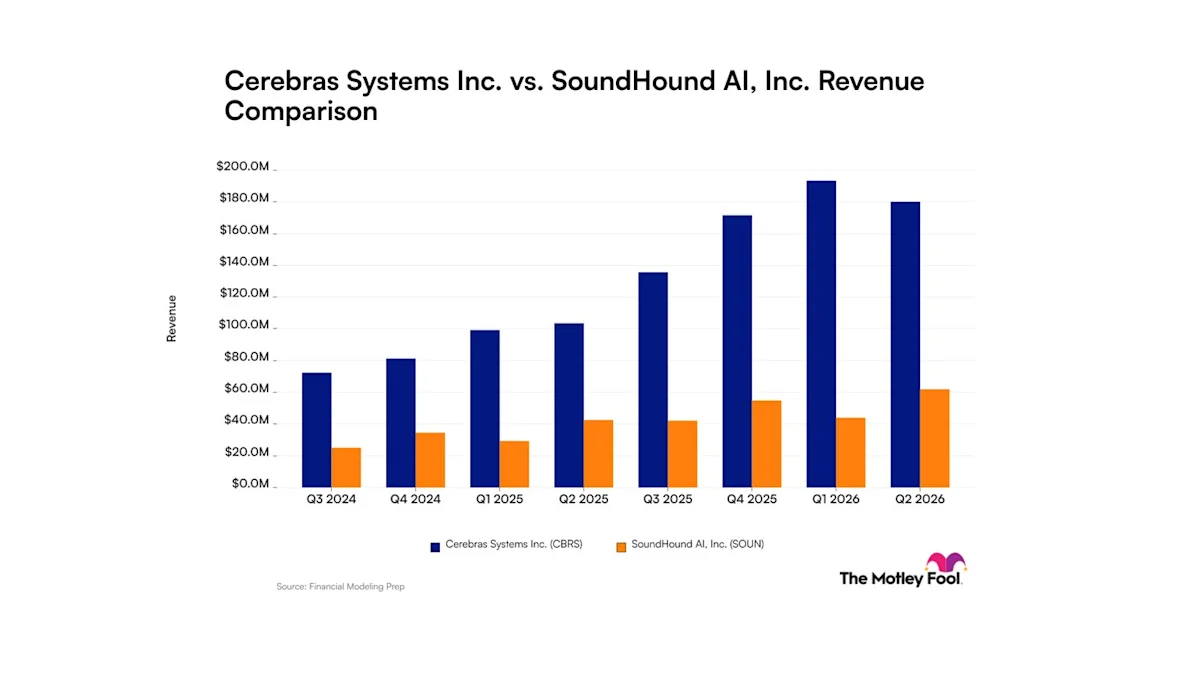
Cerebras Systems vs. SoundHound AI: Here's What Revenue Trends Tell Investors About These Artificial Intelligence Companies
3 hours ago