
Surveillance technology is inevitable. Or is it?
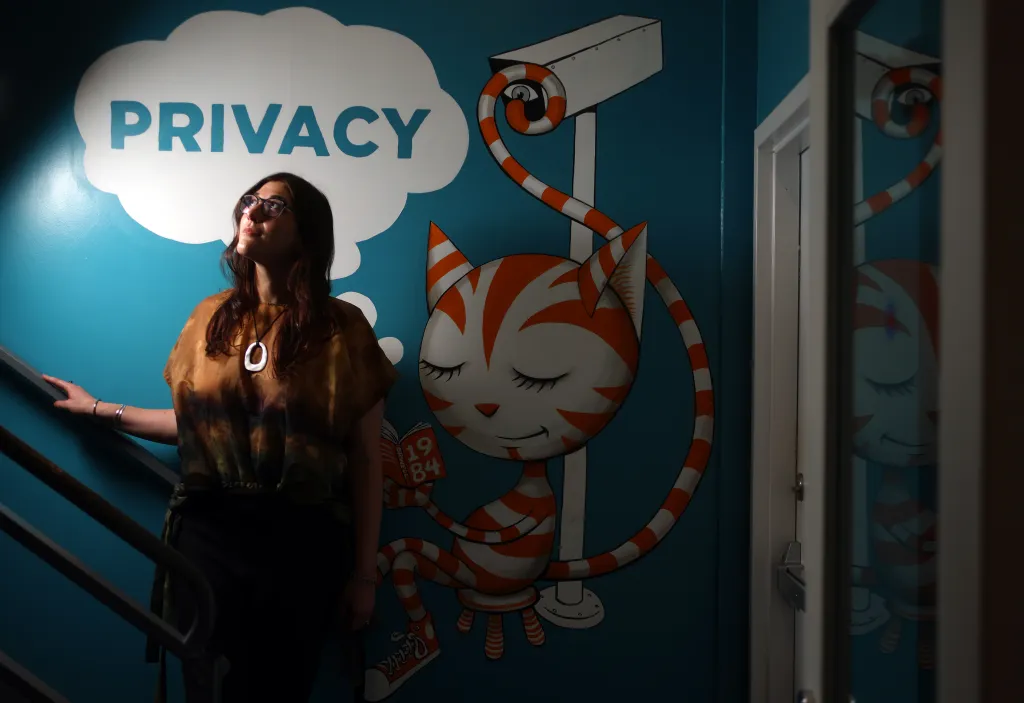
From doorbell cameras to automated license plate readers, the speed of adoption of surveillance technologies has inspired awe from law enforcement and angst from privacy advocates. But the embrace of these tools may be slowing in Silicon Valley, as the first to adopt may become the first to drop the technology.
Bay Area municipalities, including Mountain View, Santa Clara County and El Cerrito have canceled or changed contracts and dropped automatic license plate readers that collect data in public space in response to the public’s growing concerns about privacy as news reports of unmanaged data sharing and improper access to data pile up.
RELATED: Alameda County extends Flock Safety contract amid worries over surveillance network
Supporters of the technology market it as innovative, invaluable and inevitable — a reputation that civil liberties attorneys, including Lisa Femia of the Electronic Freedom Foundation, question in court. The Electronic Freedom Foundation has filed lawsuits against the San Jose Police Department, in addition to the Department of Homeland Security and the State Department, over a “vast surveillance apparatus” they say uses artificial intelligence to target individuals critical of the Trump administration.
This interview has been edited for clarity and space.
Q: Surveillance technology, especially Flock Safety cameras, has proliferated since 2020. What are the forces that have facilitated the fast adoption of this tech?
A. In 2020, we saw increased crime rates. One of the first things you see a lot of government officials turn to in times like that is more tools for law enforcement. I think that is part of it.
I do think there is also aggressive marketing on the part of companies like Flock. We see them reaching out to local law enforcement, offering meetings and talking points. It’s been a perfect storm for rapid proliferation: an aggressive marketing push from these private surveillance tech companies, coupled with public interest in reducing crime and the technology to make these mass surveillance tools getting better.
Q: During the Super Bowl this year, the response to an ad for Ring cameras seemed to mark a changing point in the way people think of this technology. The ad was framed as ‘You can find your neighbor’s dog if it gets lost.’ The reaction online was, ‘Why is my neighbor always watching me through this camera?’ It seemed like a major change in the public’s perception of these cameras.
A: A lot of people, at least previously, thought of cameras as similar to how your local mall’s security camera system. ‘This is a camera,’ or ‘I have my one Ring camera, and this just goes to my system. This is me and my security system.’ The notion it connects to a larger, cloud-based database that can be integrated with other tools and then shared with law enforcement, integrated with cameras that are not your own, didn’t quite occur to people. The companies got so excited with the ability to share this data that perhaps they almost lost touch with how people would react. People responded negatively to the notion their cameras are hooking into a larger network. It doesn’t make them feel safer.
Q: Has adoption of this technology come from citizens pushing for this or is it authorities, whether that’s city officials or law enforcement, who ask for it?
A: For the most part, it’s definitely coming from city officials, from law enforcement, and from companies like Flock themselves that are aggressively marketing their product to government officials. I think that a lot of citizens are very unaware of the surveillance technology that’s being adopted. We’ve seen a movement over the past couple of years to have more community oversight of this, but even then, it’s been a little far removed from people’s day-to-day lives. I don’t think I’ve seen a large, grassroots push for more surveillance technology. I think there probably are a lot of people who might have a neutral opinion, but that’s not the trend we’ve seen in adoption.
Q: Flock Safety has stated that it will record data, but it will not share that data with law enforcement without a warrant. But are there risks of constant surveillance? What is there to worry about?
A: Something like automatic license plate readers, for example, are measuring people’s movements around the city or around the state. Every time you pass one of these cameras, it records your precise location information and time. It’s saving this information for months, a year or potentially indefinitely, depending on the jurisdiction. This allows anyone with access to this information to piece together where you go, who you see, where you spend the night, where you go to work, where you go to the doctor and if you go to a protest. Depending on how many cameras there are and where they are, it can be extremely, extremely revealing.
We’ve heard multiple stories around the country of police officers abusing this system to track ex-partners or people they have a personal feud with. Immigration enforcement has obviously been a catalyst for a lot of the anti-surveillance pushback we have seen over the past year or two.
Q: Who has access to the data that’s captured?
A: For a company like Flock, for example, part of their business model is that they are a massive sharing network. It is not just your local officials, such as your local law enforcement, which has this system. It automatically hooks into Flock’s larger network. If your local law enforcement is sharing with other law enforcement agencies in a statewide network or in a nationwide network – which is against the law here in California, but is quite common elsewhere, and the rule has been broken multiple times in California – then that data is going out to just countless other law enforcement agencies.
You now have to be sure that not only is your local law enforcement agency not misusing the system, say by sharing that information with immigration enforcement, but that every other law enforcement agency with access to that data is also not doing so. Sometimes these are law enforcement agencies across the country you have no connection to.
Q: You mentioned that we are beginning to see public pushback against this widespread adoption of surveillance technology. What does that pushback look like, and what could it look like as this movement against surveillance technology grows?
A: I think we’re in a very early stage of mass public pushback to surveillance. It was more under the radar before. But when you see, say, federal immigration enforcement pulling out their phones and taking biometric scans of people’s faces to match them up against government databases, it suddenly starts to feel very Big Brother. Or when you see reports of your local law enforcement agencies doing searches of their Flock data and sending that to ICE, it suddenly becomes very top-of-mind how this data could be used to harm you or harm people you care about or vulnerable groups that you care about.
We have seen pushback in the South Bay, especially. A lot of Flock contracts have been rejected there. That is partly because the data sharing was just unmanageable. Many law enforcement agencies didn’t even know how many other agencies they were sharing with. This means that the data could end up in the hands of immigration enforcement. We’ve seen a lot of people show up to city council meetings, big groups doing grassroots organizing against this and a real push to get involved in the procurement process at the local level.
Q: There seems to be this idea among a lot of Silicon Valley CEOs that these technologies – whether it’s surveillance technology or artificial intelligence – are all inevitable. Is it really inevitable?
I think the inevitability argument is a marketing argument. There is a way that we can confuse lack of political will with inevitability, but those are not actually the same thing. And if we have a mass movement pushing to say, ‘Cease adopting advanced new surveillance technologies,’ the political will can grow. Nothing is an inevitability.
I hear a lot of privacy nihilism from people, like, ‘They already have our data, they’re already surveilling us.’ That’s its own version of an inevitability argument. I think there’s a real misunderstanding of data and its sensitivity. Every day you are producing more data and more information about yourself. The fact theses companies or the government already has a lot of information on you doesn’t mean that they necessarily can and will get every bit of information about you going forward.
You can always turn the spigot off.
Hometown: Washington, D.C. Education: Princeton University (AB); NYU School of Law (JD) Previous Legal Job: Associate at Hogan Lovells US LLP Previous Pre-Law Job: Manager of Public Policy at the National Italian American Foundation
Favorite thing to do in Bay Area: Fresh oyster crawl along Tomales Bay. Uncommon Interest: History of voting rights and constitutions. Special Talent: I can instantly identify almost any pasta shape. Biggest risk: I moved to Kampala, Uganda for a summer to work at an Ugandan free expression and media rights organization. While there I traveled solo around Uganda, went on a couple amazing safaris, and whitewater rafted down the Nile River. Miss about East Coast: Late night restaurant meals and my family.
Related Stories
 Technology
When Tech Companies Die, What Happens To The Products They Leave Behind?
2 days ago
 Technology
Two Finns supplying Russia with missile tech worth tens of millions
2 days ago
 Technology
Drones with pepper spray, four
2 days ago
 Technology
Micron Technology stock pre-market at EUR 800.50: memory storage - ad
2 days ago
 Technology
TAIEX Ends at 4
2 days ago
 Technology
ZAWYA: Technology, start-ups can double India
2 days ago
 Technology
Czech government to consider CZK 1 billion fund for startups
2 days ago
 Technology
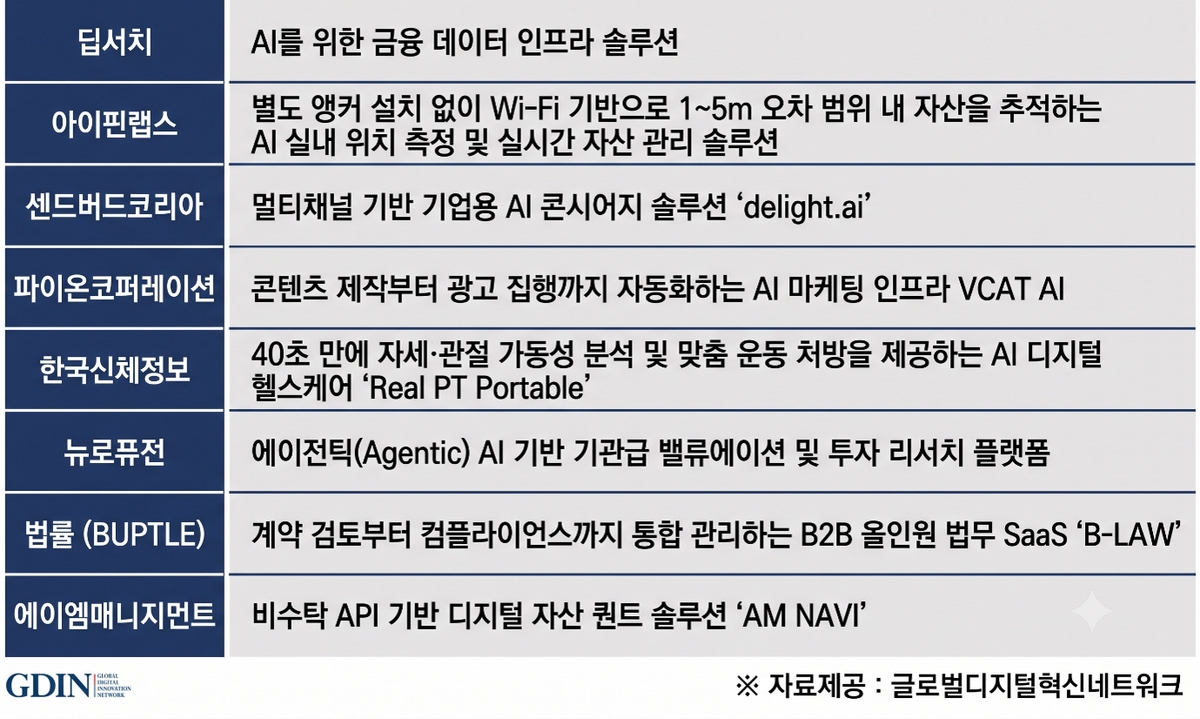
GDIN Supports Eight Startups at CEATEC 2026 in Japan, Opens Door to Local Investor Collaboration
2 days ago