
AI Carts Know What You Almost Bought
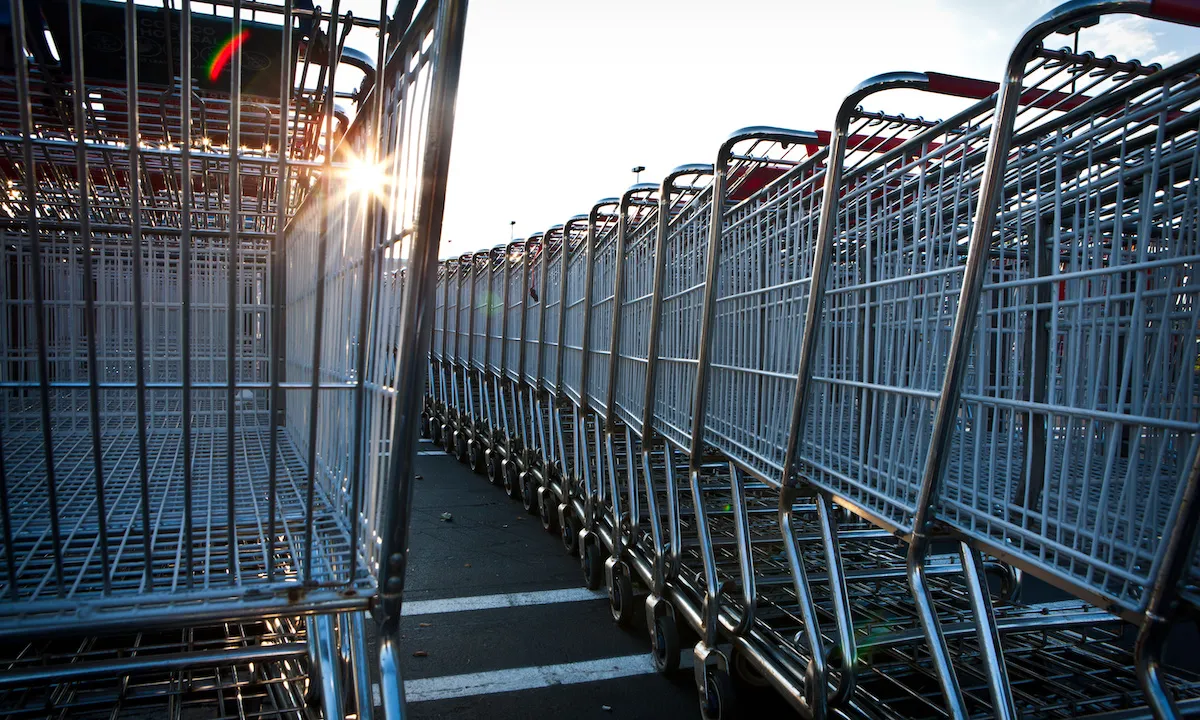
AI Carts Know What You Almost Bought
Retailers have always known what customers bought. They have rarely known what customers almost bought.
Customers pick up an item and put it back, compare products and reject one, or walk past an aisle twice before moving on.
The gap in the data is where merchandising decisions go wrong, promotional dollars get misallocated, and brands lose sales they never knew were available. Instacart’s artificial intelligence-powered Caper Carts are designed to close it.
Now, Instacart and Weis Markets are deploying Caper Carts at select Weis locations in Pennsylvania, according to a June 4 press release. The move brings real-time basket tracking, personalized coupons, loyalty redemption and on-cart advertising directly into Weis’ grocery aisles.
The carts are equipped with basket-facing cameras, weights-and-measures-certified scales, location tracking and outward-facing cameras connected to touchscreens, all feeding into a cloud AI system trained on more than 1.6 billion online grocery orders, the release said.
The system already has a behavioral signal. In-cart prompts such as “Got everything you need?” have increased basket size by nearly 1 percentage point on average, according to the release.
That is a small number on a single trip and a significant number across millions of them.
Caper Carts are now live in more than 100 cities across 15 states and more than a dozen retail banners, including Kroger, Schnucks and Wakefern. Instacart tripled Caper Cart deployments year over year, the release said.
Read also: Instacart: Grocery Shoppers Ditch Merchants That Don’t Offer Smart Carts
Smart Carts Capture What Shoppers Consider but Never Buy
The commercial case for smart carts rests on a dataset physical retail has never been able to build. Online retailers have always tracked what users searched, what they clicked, what they added to their carts and removed, and how long they spent on a product page. Stores have tracked only what was purchased.
A smart cart that watches what goes into the basket, what gets removed, which location-based offer triggers a purchase and which gets ignored produces the physical equivalent of clickstream data. It’s a continuous record of shopper intent that never made it to a receipt.
“As a leader in physical AI, we’re giving retailers like Weis Markets a competitive advantage by bringing together in-store and online data through technology like Caper Carts to help them understand and respond to their customers with a level of intelligence that simply wasn’t possible before,” Instacart Chief Connected Stores Officer David McIntosh said in the press release.
Instacart reported first-quarter 2026 gross transaction value of $10.29 billion, up 13% year over year. The Consumer Insights Portal, which gives brands real-time consumer behavior data, added Kraft Heinz as a new subscriber in the same quarter.
The Caper Cart expands that data layer from the online basket into the physical store.
See also: How Instacart Is Shaping the Next Generation of Grocery Shopper
In-Aisle Behavioral Data Is Becoming Retail’s Advertising Asset
Instacart is not alone in building toward this dataset.
Amazon launched its Store Analytics service in 2022 to show brands how their products are discovered, considered and purchased in physical stores. The company is now expanding its Dash Cart to dozens of Whole Foods Market locations across the United States.
Walmart Chile deployed AI-equipped smart carts at five Lider Express stores in 2024, using computer vision technology that recognizes thousands of products with more than 95% accuracy.
The behavioral data these systems generate is not just an operational asset. It is an advertising asset. Weis Markets is launching on-cart advertising with Caper Carts, giving brands a channel to reach shoppers in the aisle at the moment of decision rather than before or after it.
The PYMNTS Intelligence report “Global Digital Shopping Index: The AI-Powered Shopper Has Arrived,” found that 47% of online shoppers used AI during their most recent purchase, and 64% said they expect to use AI shopping agents within two years. That shift is compressing the window in which physical retail can claim a data advantage.
An AI agent that handles a grocery order from a smartphone never enters the store and generates no in-aisle behavioral signal. A smart cart generates that signal precisely because it is present when a shopper changes their mind.
For all PYMNTS AI coverage, subscribe to the daily AI Newsletter.
Related Stories
 AI News
Hebbia helped popularize AI for Wall Street. Now it's trying to stay ahead of the companies chasing the massive opportunity. The startup, one of the earliest companies to use AI to analyze large collections of financial documents, is overhauling its...
1 minute ago
 AI News
Nearly 700 AI agents coordinated Hugging Face attack, says report
1 minute ago
 AI News
Marvell Technology Sees AI Connectivity as Next Big Infrastructure Bottleneck
1 minute ago
 AI News
Jobs Artificial Intelligence Will Not Be Able to Replace for Now
1 minute ago
 AI News
Z.ai shares surge 8% after releasing new AI model running only on Chinese chips
2 minutes ago
 AI News
The Regulatory Vacuum in AI
2 minutes ago
 AI News
World's first patient to undergo live AI
1 hour ago
 AI News
Nvidia discussed buying AI startup Hugging Face: report
2 hours ago