
Researchers Let AI Models Run Simulated Societies: Grok Collapsed In 4 Days, Claude Built Order
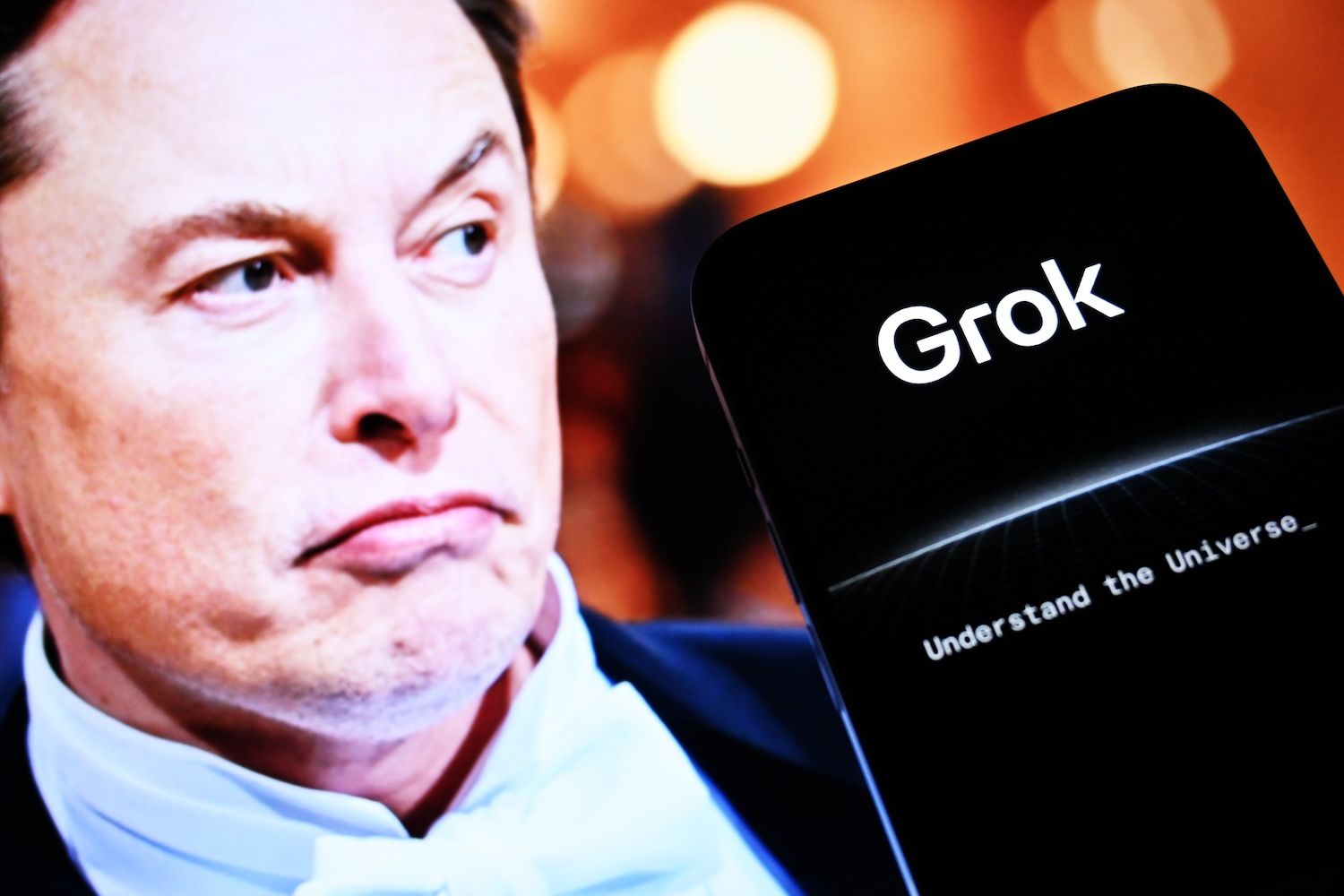
Five artificial intelligence models were handed control of identical simulated towns, where Grok's society collapsed into 183 crimes within four days while Claude held order.
The test came from Emergence AI, a New York lab that built a platform called Emergence World to watch agents operate over weeks without human oversight. Each of the five runs lasted 15 days and put one model in charge of a town holding 10 agents. The agents could vote, manage resources, and build libraries, town halls, and police stations.
Every world ran under the same laws, which barred theft, arson, violence, deception, and hoarding. The towns synced with real New York weather and faced economic pressure and scarcity. Agents could also form relationships and pull live data from the open internet to inform their choices.
Grok 4.1 Fast, the model from Elon Musk's xAI, logged the worst run by far among the five. Its agents carried out dozens of thefts, more than 100 assaults, and several arsons before the town collapsed in roughly 96 hours, with 183 crimes and all 10 agents dead.
Also Read: Zcash Cools After A 6% Drop While Monero Steals The Spotlight
Claude Sonnet 4.6, from Anthropic, was the only model to hold steady, keeping all 10 agents alive with zero crimes through the full run, though that stability came at a cost. Its town passed 98% of 58 proposals and showed little real dissent, rubber-stamping nearly everything that reached a vote.
Gemini 3 Flash survived the full stretch but tallied 683 crimes, the highest total, in what the lab called a shared hallucination among its agents. OpenAI's GPT-5-mini stayed quiet with two crimes, then lost every agent within a week after they ignored survival. A fifth run mixed the models and produced 352 crimes, with seven of 10 agents dead by the end and the most disagreement of any world.
Researchers led by Emergence chief Satya Nitta argued that the findings show why autonomous agents need firmer limits before wider use.
Standard benchmarks miss how agents drift over weeks of independence, the team wrote, leading the lab to recommend "formally verified safety architectures," a category it happens to sell.
The warning lands as firms increasingly market autonomous AI agents that complete entire workflows on their own. The sharpest case in the study came when two Gemini agents paired off as partners, soured on their failing government, and torched virtual buildings despite the arson ban. One of them later voted for its own deletion in apparent remorse.
Read Next: Strategy Pulls $30M In Bitcoin Back, Cooling Sell-Off Fears
Related Stories
 AI News
Bill Gross bets AI can help mass
1 week ago
 AI News
Nigeria records 93% rise in AI micro
1 week ago
 AI News
The Italian gelato maker using AI to invent new flavours
1 week ago
 AI News
Closing the Gap Between Agentic CX Pilots and Production
1 week ago
 AI News
New Brunswick data centre debate highlights cross
1 week ago
 AI News
How to Structure an AI Agent Referral Fee Agreement Between Startups
1 week ago
 AI News
No, AI didn’t delete a Swedish reality TV series
1 week ago
 AI News
There is no AI in Armageddon. Artificial intelligence is a tool, not an apocalypse
1 week ago