
Police in Montreal are using AI plate
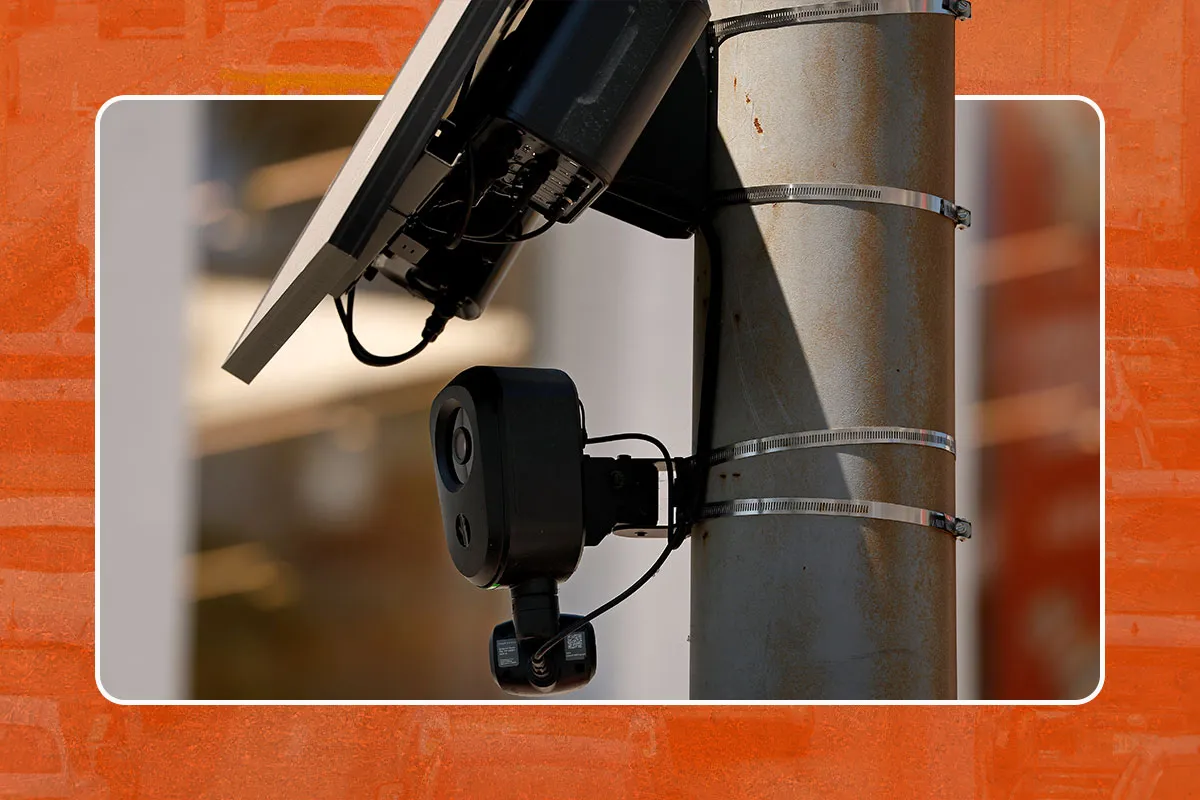
The recent use of artificial intelligence-equipped surveillance cameras by Montreal police is raising questions about privacy rights and how the technology will be used, as the use of similar cameras in the United States has become a major issue.
The Genetec Cloudrunner cameras are similar to those made by company Flock Safety, an AI surveillance system widely used in the U.S. that has faced widespread public resistance.
But how do the two types of cameras differ, and what information are the smart cameras providing to the Montreal police? The Gazette spoke with experts in AI ethics and a representative from Genetec to answer to growing concerns over automatic licence plate reading cameras.
While traditional security cameras only create video, automated licence plate reading (ALPR) cameras can capture information about the type of car, colour of car, direction of travel, and the licence plate, explained Andrew Elvish, an executive at the Montreal-based company Genetec.
“It’s looking at the outside of the vehicle. So it’s designed specifically to do that,” he said in an interview.
In the U.S., the Flock cameras can tie the licence plate information to a person’s identity, which can be searched in a centralized database system shared between the camera operators.
But according to Elvish, Genetec doesn’t have a central database shared with all the company’s camera users in the same way Flock does in the U.S.
“We do not as a company sell access to data. Our business model isn’t predicated on aggregating and then selling data to customers, or giving customers as a benefit access to a vast amount of data,” Elvish said.
It’s that shared database that’s caused so much concern in the U.S.
“People don’t like surveillance. But when you tie surveillance to location, and you tie surveillance to the police and to being able to detect the patterns of your life, and tie that to your name, and where you live — not just where you’re going, but where you live. That’s why people are so up in arms,” explained Renee Sieber, a McGill University professor specializing in AI ethics.
“We’re not talking about the hardware. We’re talking about the underlying database and how easily you could search that database,” she added. “You could search that database to stalk your ex,” which several Customs and Border Protection workers have reportedly done.
Montreal police began a one-year lease in October 2025 for four automated licence plate reading (ALPR) cameras from Genetec.
The SPVM said “access to the captured footage is restricted exclusively to those responsible for the investigation” and is used “to support targeted investigative work on a temporary basis,” it wrote in an email statement.
Police said one camera was removed “to protect our ongoing investigative strategies,” which happened after Radio-Canada sighted one of the cameras.
“Since police investigations are often complex to conduct, we avoid disclosing or explaining the investigative techniques we use as much as possible so as not to compromise them. Investigative techniques, including the methods and technologies employed, are governed by clear rules established by the courts and constitute privileged information. You will understand that these are the reasons, among others, why we cannot provide further details,” the SPVM added.
While ALPR cameras are recently prominent in the news cycle, Elvish says the Montreal company has been making these types of cameras for 20 years.
“We started doing automated licence plate recognition, also known as ALPR. We started doing that in about 2007,” he said, adding the Cloudrunner cameras, used by the SPVM, have been on the market for about five years.
Facial recognition and biometric data collection are not part of the service Genetec provides, Elvish said.
“Facial recognition is very specialized. It usually works best when the cameras are kind of at eye level. Airports are a good place to understand how facial recognition works best, you’ll see a lot of cameras like upon exiting or in a customs hall. You’ll see them kind of low down. You’ll walk through a door and there will be low cameras,” he said.
“But cameras up on poles doing facial recognition? Mostly the domain of movies. It’s very, very difficult.”
Every Canadian province, including Quebec, has privacy laws governing police activities surrounding surveillance.
But the enforcement of these laws “haven’t really kept up” with how quickly these advanced surveillance tools are being adopted, according to Tamir Israel, the director of privacy and security at the Canadian Civil Liberties Association.
“What we don’t have is a really effective mechanism for assessing whether these tools should be used at all, or at a certain scale, or in a particular way,” Israel said in an interview.
He said if police are using the cameras for general law enforcement, there may be some restrictions on their use under privacy regulations. But police surveillance would mostly be governed under the Charter of Rights and Freedoms, which would only come up if someone is charged with a crime and believes the technology was used in an unconstitutional manner, which Israel said might be hard to prove.
Israel says the Charter can be used to regulate ALPRs if someone who is already facing criminal charges argues in court that it’s being used unfairly. But the misuse of an ALPR could also be difficult to prove in court, given that “the ALPR is only one piece of the puzzle.”
Related Stories
 Canada
Canada
9 minutes ago
 Canada
Carney government asks court to strike down climate litigation
9 minutes ago
 Canada
As insults fly around trade, negotiators for Canada and the U.S. avoid getting personal in public
9 minutes ago
 Canada
In Ohio, Canada
9 minutes ago
 Canada
Alberta’s current, former premiers offer contradicting views on U.S. counter
10 minutes ago
 Canada
Gregor Robertson challenged on the Broadway Construction project
1 hour ago
 Canada
Harley-Davidson becomes unlikely flashpoint in Canada
1 hour ago
 Canada
‘We’ve been so worried’: Another B.C. couple missing after Nepal flash flooding
1 hour ago