
Microsoft debuts an expansion of its model families and agentic AI intelligence for developers

Microsoft Corp. announced an expansion to its artificial intelligence models and agentic AI infrastructure today that brings more data and context into the hands of developers and business users as they deploy.
During the company’s Microsoft Build annual developer conference in San Francisco, the company made Microsoft IQ generally available. It is the company’s unified intelligence layer designed to make AI agents and Microsoft Copilot context-aware and personalized to organizations. It goes beyond being a generic chatbot by connecting foundation models to a company’s deep data and business logic to reduce hallucinations.
Microsoft IQ includes Work IQ, an intelligence layer for agents that captures how users work within Microsoft 365 by picking up organizational systems and external sources, such as people, emails, documents and meetings, and how they relate to one another. Work IQ application programming interfaces will become available on June 16 to provide agents direct access to data. Fabric IQ, hosted on Microsoft Fabric, provides a semantic data foundation acting as “ontology” to organize structured business data, and Foundry IQ ties everything together by retrieving information from unstructured documents such as wikis, policies, contracts and the live web.
The company also announced Web IQ today, the newest member of this family, a fast real-world grounding for agents that uses web search that is model agnostic and Model Context Protocol native. Microsoft said that it will return relevant information blocks nearly two and a half times faster than the next best alternative.
Agents operate by pulling together AI intelligence and that means pushing the envelope for frontier AI models. Today, the Microsoft Superintelligence Team released a family of seven new in-house models, starting with the company’s first reasoning model: MAI-Thinking-1.
Reasoning models “think” through processes using chain-of-thought before producing results. MAI-Thinking-1 weighs in at 35 billion active parameters, a 128,000-token context window, and aims for efficiency and performance at a low token cost. The company claimed that in a blind test, independent raters preferred it to Anthropic PBC’s Sonnet 4.6 and that it could match up to Opus 4.6 on coding abilities on SWE Bench Pro.
Microsoft tuned MAI-Thinking-1 to handle complex multi-step instructions, long-context reasoning and code generation. It is available now on the company’s AI Foundry in private preview.
The company also released a flash variant, a smaller, faster version designed for speed and efficiency.
Adding to the family of models, Microsoft announced MAI-Image-2.5 and its flash variant, serving both text-to-image and enabling image-to-image capabilities. This makes the model especially useful for not just telling it what you want using plain language but also passing along sketches and visuals to guide its generations. The new model is live today in PowerPoint and is rolling out on OpenDrive.
Other new models in the family include MAI-Transcribe-1.5 providing high accuracy across 43 languages, with streaming soon. MAI-Voice-2 and its flash variant are now available in more than 15 additional languages, capable of reproducing new voice options. And MAI-Code-1, an inference ultra-efficient coding model fine-tuned specifically for GitHub, which lives in Copilot and VS Code, is aimed at developers.
For developers building code with agents and models, Microsoft launched Codename MDASH – a joke about how some AI systems tend to add additional em dashes to generated text. The new multimodel agentic-security system deploys more than 100 agents to find exploitable bugs in code by reasoning about how data flows, business logic operates and exploit chains function with context-aware fixes within the Developer Portal.
Always-on autonomous agents made their debut with OpenClaw in November 2025, showing that an open-source project could prove how a harness could take AI models and make them do constant, attentive work by giving them a “heartbeat.”
Following on this work, Microsoft announced Scout, a new personal agent designed for frontier customers that remains attentive at all times. Built on OpenClaw and Work IQ, it understands how the user operates, uses the tools that exist on a user’s computer and within their organization, such as Teams and Outlook, and proactively handles things such as meeting prep, scheduling conflicts and routine tasks without asking.
Just like an OpenClaw agent, it operates using local or cloud intelligence, can be tuned to personalized needs, and can be asked to perform autonomous work on the local system to get used to everyday routines. Microsoft said the company would share more soon as it expands Scout’s capabilities as it rolls it out more broadly.
A message from John Furrier, co-founder of SiliconANGLE:
Support our mission to keep content open and free by engaging with theCUBE community. Join theCUBE’s Alumni Trust Network, where technology leaders connect, share intelligence and create opportunities.
Founded by tech visionaries John Furrier and Dave Vellante, SiliconANGLE Media has built a dynamic ecosystem of industry-leading digital media brands that reach 15+ million elite tech professionals. Our new proprietary theCUBE AI Video Cloud is breaking ground in audience interaction, leveraging theCUBEai.com neural network to help technology companies make data-driven decisions and stay at the forefront of industry conversations.
Related Stories
 AI News
Etched’s valuation doubles to $21B in a month
41 minutes ago
 AI News
China is winning one AI race, the US another
41 minutes ago
 AI News
What about the ethical challenges facing major AI developers?
1 hour ago
 AI News
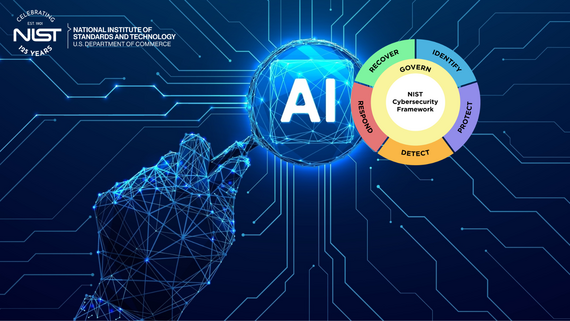
Seeking Public Comment! Using Artificial Intelligence for Cybersecurity Framework 2.0 Analysis and Reporting
2 hours ago
 AI News
AI Stocks With Real Revenue Behind The ChatGPT Build Out
4 hours ago
 AI News
Artificial Intelligence Stocks To Follow Now
4 hours ago
 AI News
Trump and White House aide Natalie Harp get the LEGO treatment in ‘incredible’ AI video from parody account
5 hours ago
 AI News
After Babel: Sapir, Whorf and the Multilingual Mind of Artificial Intelligence
7 hours ago