
[Korean Startup Interview] Buildhada: “Transforming the Small and Mid-Sized Construction Market with an All-in

[Korean Startup Interview] Buildhada: “Transforming the Small and Mid-Sized Construction Market with an All-in-One AI Building Solution, from Contractor Selection to Project Management”
Buildhada is a startup that provides an AI-powered all-in-one building solution for small and mid-sized construction projects, covering everything from contractor selection to construction management.
It is preparing a Series A round with a fundraising target of approximately USD 1.5 million (2 billion KRW), and the company hopes to close it in the fourth quarter of 2026.
South Korea’s construction market is estimated at about USD 228 billion (300 trillion KRW) a year. Much of it is made up of small and mid-sized projects, which remain stuck with information asymmetry and inefficient decision-making. Design, construction, supervision, materials and financing are each fragmented among separate operators, so most first-time homebuilders do not even know which companies to choose or by what criteria.
Their sources of information are largely limited to portal searches or visits to offices near the local government authority. Cost overruns, schedule delays, quality problems and disputes are common as a result. This is also why project management(PM) systems, already standard in large projects such as apartment complexes, have not taken hold on small sites with many individual owners.
Buildhada started from that gap. CEO Seokhee Kim entered his family’s development business, which had operated for more than 30 years, and experienced construction sites firsthand. He ran into opaque practices in which even sharing construction logs was not routine. Based on that experience, Buildhada integrated the entire building process into one platform, including designer and contractor matching, competitive bidding, contract management, process management (PM), materials purchasing and financing.
The company’s core targets are the small new-build market, with a gross floor area of up to 600 pyeong, seven floors or fewer and construction costs of up to USD 5.3 million (7 billion KRW), and the remodeling market for projects of USD 304,000 (400 million KRW) or more. To reduce construction risk, it uses monthly progress-based settlement instead of the usual down payment, interim payment and final payment, along with performance guarantee certificates. More than 300 architects, contractors and interior firms participate as member companies, and cumulative construction orders total USD 20.7 million (27.3 billion KRW).
Buildhada is refining its fundraising strategy with support from the Pangyo Hub Investment Value-Up Package, run by the Pangyo Gyeonggi Cultural Creative Hub of the Gyeonggi Content Agency. Wowtale spoke with CEO Kim about how a team that has validated its growth potential in the market within a year and a half is preparing for its next stage.
What kind of company is Buildhada?
We provide an all-in-one building solution that handles everything from selecting contractors to managing construction. Construction covers a very broad range, from apartments to detached houses and office buildings, so we focus on the small and mid-sized building market.
In terms of scale, we target projects with a gross floor area of up to 600 pyeong, seven floors or fewer, and construction costs of up to USD 5.3 million (7 billion KRW). We also include remodeling projects of USD 304,000 (400 million KRW) or more, and we run a variety of small and mid-sized building projects.
What problem led you to start this business?
People around us say building a house ages you by 10 years. Construction is a long process in which problems, big and small, keep coming up. Early-stage owners face several problems when they begin. The first is that most are building for the first time and don’t know how to start in the first place.
They are also at a loss over which companies to pick and by what criteria, so their information search ends with portal searches or visiting small offices near the local government authority. With information this limited and no experience, they make many mistakes. They find it hard to judge whether a company’s terms suit their situation, so they end up needing professional help.
At this point we actively help owners and use a digital solution to let them monitor the building process in real time. Most owners build a house once in a lifetime at most, so they care a great deal. Once it is built it can’t be undone, so this market also sees a lot of disputes. We want to solve the problems of this small and mid-sized construction market.
The name “Buildhada” is very intuitive. Was that intentional?
Yes. I studied branding at university in the UK and learned a lot about it. When I was thinking about the logo and name, above all I wanted them to feel intuitive to owners.
The corporation was established in October 2024, so we are not yet two years old.
You majored in branding. How did you end up starting a construction company?
After university in the UK, I founded and ran a branding company myself. After returning to Korea, I co-led another branding company almost like a co-founder. During that time, my father’s development company, which he had run for more than 30 years, needed help, and that is how I first started working in construction.
I’ve now been in the construction business for about 15 years. I originally majored in branding and worked in that field, but in the end I took over the family business.
What problems did you experience firsthand while working in development?
A developer handles the whole process: first buying the land, then design, construction, and then sales and post-sale management. I thought I was running the business with fairly professional knowledge, but the construction site was completely different.
Communication on site was poor, and when I asked to see the construction log, they wouldn’t show it. When I asked about progress or the completion rate, I didn’t get proper answers, and there was often abusive language.
Looking at the small-scale construction market in that very poor environment, I saw many problems and had a strong desire to fix them somehow. Even developers don’t get proper information from contractors, so what about owners? That awareness led to the startup.
How does Buildhada solve that problem?
We didn’t build a system from scratch. Large construction sites such as apartment complexes already have PM (project management) systems. You can think of what we do as applying that PM system to the small construction market. The core of construction management is being able to check construction logs and completion rates in real time, so we developed a digital solution for that and provide it to both owners and contractors.
The way construction costs are paid is also different. Normally payment goes in the order of down payment, interim payment and final payment. We assess the completion rate each month and settle progress payments according to the work done. This reduces construction risk as much as possible. At contract signing, we also secure additional construction funds through a performance guarantee certificate, which is another device to minimize risk.
This process is common on large sites but was rarely used on small ones, so we had to build it and persuade companies to adopt it. Now all of our member companies follow this process.
What is the role of a PM? Isn’t there already a supervisor?
You can think of it as management and oversight. A supervisor does exist administratively, but their role is to report to the relevant authority on permits and approvals, so they have relatively little information on how construction is actually going and what the current status is. Our PMs manage that gap across the whole project.
Our member companies must upload a construction log every day, and our PMs also visit the site at least three days a month to inspect it in person. For a contractor to get paid, it has to follow this construction log process.
Based on these logs, we write and upload a construction status report. We use that data as the basis for calculating the completion rate and paying construction costs accordingly.
Which partners take part in the platform?
Buildhada is a two-sided market, so it needs owners and also contractors and designers with real construction capabilities. More than 300 companies, including architects, contractors and interior firms, are currently registered as members.
We managed to reach this scale in only about a year and a half. My background in architecture, development and real estate helped, but what mattered more was that, since the pre-startup stage, the programs I took part in pushed us to proactively secure member companies, which is the business side, as much as the development side.
Our members are mostly people who graduated from Harvard or MIT, people who are university professors, and people who have won top domestic young architect awards or master builder awards. Persuading such capable people was really not easy, but by fully explaining our company’s vision we were able to bring them in one by one.
Because it is a two-sided market, we first needed to secure the supply side, the 300-plus member companies, to some extent, and then bring in owners. At first we got the word out mainly through building expos. The major domestic building expos are held about three times a year, and we participate actively.
We also run a referral system. When people visiting real estate agencies or design offices look for a contractor, we share the fees with whoever connects them to us.
We also provide content on actual construction cases and the building process through the architecture community app “Jipjipjip” so that owners come in naturally. In addition, we hold our own building seminar once every three months, which raises owners’ understanding and naturally leads to customers.
What results have you achieved so far?
We have carried out 12 projects so far, and three of them have been completed. In construction cost terms, we have won about USD 20.7 million (27.3 billion KRW) in orders.
Our revenue model is based on fees on this construction cost, 2 to 2.5% each from the owner and the contractor. On top of that is the additional revenue from materials ordered through us.
What are your goals for this year and your plans for future growth?
This year we are aiming for USD 22.8 million (30 billion KRW) in construction orders, and over the next three years we aim to raise cumulative construction orders to USD 760 million (1 trillion KRW).
By channel, we expect about USD 9.1 million (12 billion KRW) from referrals, USD 9.1 million (12 billion KRW) from expos and our own seminars, and USD 4.6 million (6 billion KRW) from online inquiries. Online inquiries are already coming in steadily, so we expect orders of about that size over a year. Adding it all up, our goal for this year is USD 22.8 million (30 billion KRW) in construction orders.
Where specifically is AI applied?
At a basic level, we use AI to automate construction logs, process schedules and report writing. The most important part is the multi-agent system we are developing.
When we match contractors with owners, we receive detailed estimates. Before that, we give contractors something called a “spec book.” It is the concept of fixing the specifications of every material in advance, before construction starts: wallpaper, flooring, lighting, switches, even the toilet paper holder. A detailed estimate is produced from this, and owners often want to adjust construction costs to their budget. For example, switching windows from spec A to a similar spec from a mid-range brand changes the price. This adjustment is technically called VE (value engineering). We are developing AI to automate this VE process.
In the other direction, we are also developing AI that compares construction reports and completion rate data coming in from the site with the original estimates and quantity takeoffs, to check whether the actual construction status matches the data. Our goal is for these two AIs to communicate with each other so that everything from the estimate stage to the construction status is continuously verified with data.
We hear you also have strengths in materials sourcing.
We fix all material specifications, such as windows and flooring, at the design stage, and to benefit owners in this process we cooperate closely with materials suppliers. By working with large domestic companies and large German companies, we can supply materials at up to 20% lower prices when they are ordered through us, and we can see the resulting savings in construction costs.
The contractor places the actual order for the quantities marked on the design drawings. When detailed estimates are prepared, we’ve set it up so that quotes from our partner companies are shown alongside, linked by project number. If our partners’ quotes are better than those from the contractor’s existing suppliers, there is an opportunity to cut construction costs, which helps both contractors and owners.
You might think this squeezes the contractor’s margin, but since there is about a 20% saving in quantities, we adjust the amounts negotiated within that so contractors can secure sufficient margin.
Are there competitors trying something similar?
As far as we know, there is one competitor. As I understand it, they have been in business for more than 20 years and have raised funding at a Series B scale. Right now, only two teams, ours and theirs, are doing significant business in the small and mid-sized construction market.
How much growth potential do you see in this market?
In Korea, a contractor must submit a construction commencement report to the administrative authority to begin work. By that measure, a market of about USD 228 billion (300 trillion KRW) opens each year. Excluding large markets such as apartments, the small and mid-sized building market we target is about USD 114 billion (150 trillion KRW) a year.
Recently the remodeling market has also been growing, so I’d say this is a market with a solid foundation for our growth.
There are currently eight people: four PMs and four developers. The PMs handle the construction management I mentioned, and the developers build the technology-based construction management system, including AI.
How has fundraising gone so far?
We have already received seed investment.
Now we are moving beyond seed, holding meetings and continuing discussions with various venture capital firms and accelerators to raise pre-Series A and Series A investment.
What do you expect from the Pangyo Hub Investment Value-Up Package?
We have only just started the program. As an early-stage startup, we have had a lot of concerns about making good strategic decisions on fundraising.
Through this program, I wanted to build a good strategy and plan for fundraising, and with the help of good mentors and experts, I want to make the plans I had in mind more concrete.
Why should investors back Buildhada?
Buildhada is an early-stage startup about a year and a half old. But I’d ask you to see us as a team that has grown fast, having already secured a considerable amount in construction orders relative to the size of the market.
So the funds from this round will not be spent on a development stage to validate the service. They will be used to help an already validated business grow faster. With this funding, we will work to become a fast-growing Buildhada.
Related Stories
 Business
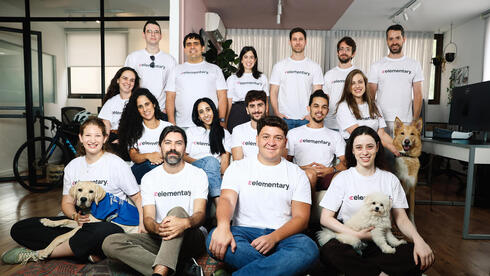
Boomi acquires Israeli startup Elementary for $43 million
1 minute ago
 Business
Mega chicken farm expansion plan withdrawn
1 hour ago
 Business
Data Breach at Hankyu Hanshin Department Store Common ID System Affects Nearly All 1.26 Million Members
2 hours ago
 Business
Global Startup EXPO and Nippon Startup Awards 2026: METI Showcases Japan's Deep
2 hours ago
 Business
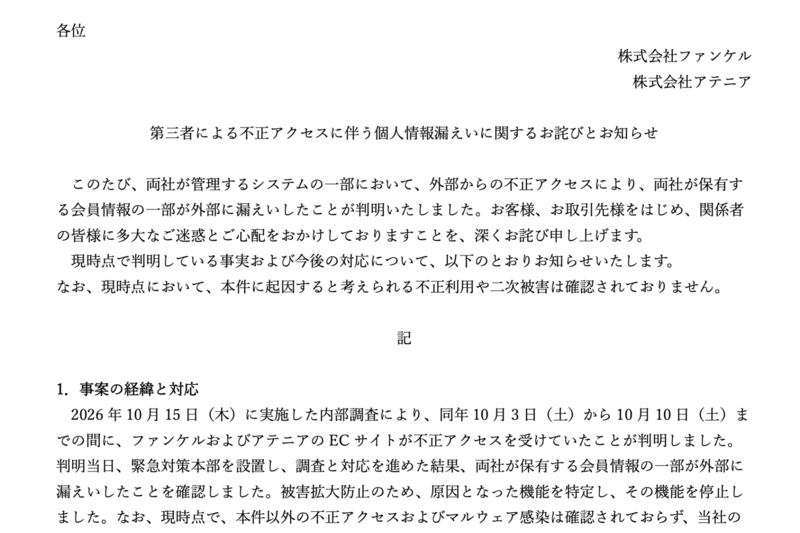
FANCL and Attenir Suffer Data Breach Affecting 780,000 Customers, Exposing Addresses, Names, Phone Numbers
4 hours ago
 Business
DeepSeek Quietly Ships V4.1-Flash
4 hours ago
 Business
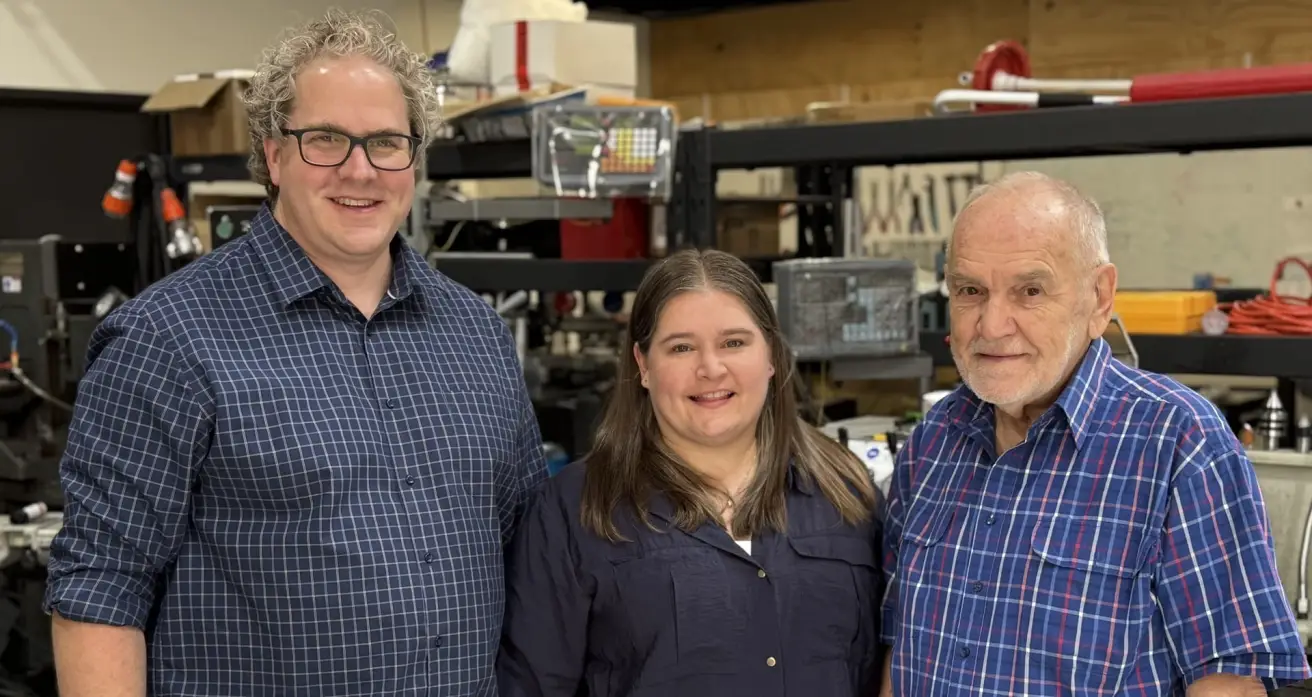
Research commercialisation hits record $336 million as government cuts funding
6 hours ago
 Business
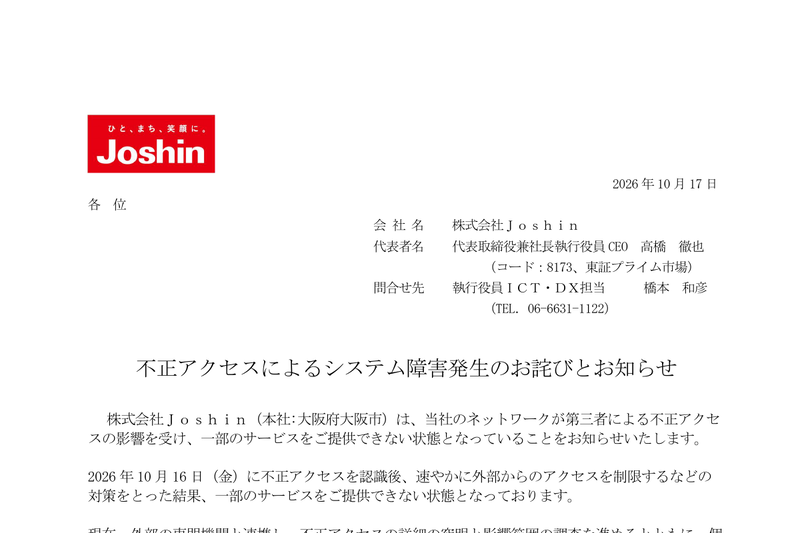
Joshin Hit by Unauthorized Access, Some Services Suspended
7 hours ago