
How explorations in physics have informed artificial intelligence
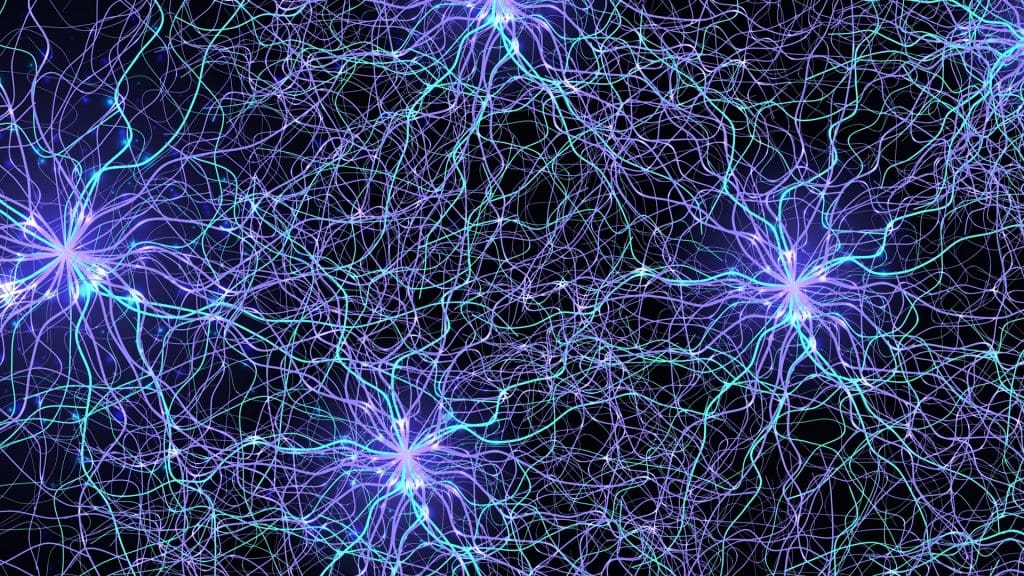
The relationship between physics and artificial intelligence (AI) is dynamic and interconnected. As physics informs AI development, AI, in turn, now serves as a critical tool across various branches of physics
From the quantum world to the macroscopic behaviours of the universe, physicists have developed theories and conducted experiments that have profoundly shaped modern civilisation. Physics experiments, due to the size and complexity of their data, have accelerated the development of artificial intelligence into a technology that is rapidly transforming the way people communicate, learn, create, and make decisions.
Discoveries in physics have transformed our understanding of nature and enabled many of the technologies that define contemporary life, including GPS technology, the World Wide Web, and touch screens. At the same time, AI has brought us large language models, image generation systems, self-driving vehicles, and personalised recommendation systems, which are rapidly becoming part of everyday life.
When people think of AI and more specifically, neural networks, they often picture the neurons and synapses that make up the biological networks of the human brain. These structures provide an intuitive connection between biological and artificial intelligence and have strongly influenced how AI is commonly understood. However, this biological analogy tells only part of the story. An often-overlooked fact is that modern AI has also been deeply influenced by physics. Many of the mathematical foundations, computational methods, and theoretical ideas that underpin contemporary machine learning (ML) originated in problems first studied by physicists.
The relationship between physics and AI has become increasingly intertwined. Advances in AI and ML have contributed to major scientific discoveries, including the experimental discovery of the Higgs boson in 2012.1,2
Today, machine learning methods permeate nearly every area of physics, from particle physics and cosmology to quantum many-body physics, quantum computing, chemical and materials physics, and astrophysics. These techniques have become indispensable tools for analysing large data sets, identifying subtle patterns, and accelerating scientific discovery.
This article does not attempt to survey the many applications of AI in physics.³ Rather, it tells the often-overlooked story of how physics inspired the development of neural networks and modern AI and helped establish these methods as essential computational tools. It also examines how AI is now accelerating scientific discovery and enabling new developments in physics.
In recent years, the volume of data generated by modern scientific instruments has grown tremendously. Particle accelerators produce billions of collisions every second,⁴ space telescopes collect images of millions of galaxies,⁵ climate models utilise petabytes of information,⁶ and medical scanners create highly detailed images of the human body. This explosion of information is often referred to as the era of Big Data.
The influence of physics on artificial intelligence dates back to the earliest stages of its development in the early 1980s when physicist John Hopfield demonstrated that networks of interconnected nodes linked by weighted couplings could exhibit collective computational behaviour.⁷ Hopfield’s ideas were inspired by the collective phenomena he studied in physics, including magnetic domains in condensed matter systems and vortices in fluid flow. An early improvement on the Hopfield network, called the Boltzmann machine, even features a mathematical formulation that can be directly mapped to the formalism used in statistical physics to describe the magnetic dipole moments of atoms, called the Ising model. In this case, the system learns by minimising an artificial energy function, analogous to the minimisation of energy in a physical system:
In this expression, E denotes the energy of the network, xi and xj represent the states of the nodes i and j, wi j is the weight of the connection between them, and bi is a bias associated with the node i. The connection between statistical physics and machine learning is not accidental. Statistical mechanics seeks to determine the most probable behaviour of a system containing many interacting particles. Similarly, AI attempts to identify the model that most likely explains a given dataset among many possible alternatives. These early insights helped establish the foundations of neural networks and modern AI. Concepts originating in physics continue to play a central role in the development and understanding of AI.
Big Data presents both opportunities and challenges. Vast datasets may contain evidence of new particles, astronomical phenomena, diseases, or even new physical laws, but clean identification of these signals can be extremely difficult. Machine learning offers natural solutions using interconnected computational units arranged in layers to process complex information and uncover hidden patterns.
Physics has also influenced AI by providing some of the earliest and most demanding applications for developing, testing, and improving new algorithms. Although this remains true today, the connection was particularly important during the early development of neural networks, when few large datasets existed outside the physical sciences. During the 1980s and 1990s, facilities such as the Large Electron-Positron Collider (LEP) at CERN in Switzerland and the Stanford Linear Accelerator Center (SLAC) in the US were among the world’s largest producers of data.
As a direct result of the early availability of big data, particle physics has served as one of the earliest and most successful applications of AI. Traditionally, collider data analyses were based on a sequence of selection criteria based on physical insight and experimental constraints, followed by statistical analysis of the selected events. However, as datasets and observables became increasingly complex, determining optimal selections from expert knowledge alone became difficult. Machine learning offered a powerful alternative by enabling the simultaneous analysis of many variables and identifying subtle patterns that might otherwise be overlooked.
These synergies between physics and AI contributed to the rapid growth of ML methods during the 1980s and 1990s, a trend that continues to accelerate today.⁸ In the decades since then, industrial and scientific data sources have matched and often exceeded collider physics in the generation, storage, and streaming of large data sets. Fig. 1 compares the volumes of data produced by several modern scientific and industrial applications. The effectiveness of AI generally scales with the volume of data, highlighting the fact that AI applications are crucial in a wide variety of applications. As data sizes across disciplines become increasingly comparable, the exchange of ideas and techniques between science and industry continues to grow in importance.
As data volumes continue to grow, it becomes challenging to process and analyse this information in real time. Data are now being generated much faster than they can be stored, making it impossible to save everything for later analysis. Decisions on what to keep and what to throw away therefore must be made much more quickly and efficiently than ever before. Rapid decisions are easy when the decision criteria are straightforward. However, as the data and the selection criteria become more complex, making accurate decisions within the required time, or latency, becomes increasingly difficult.
The interplay between the streaming data rate (bytes per second) and the latency requirement in seconds is shown in Fig. 2. When the streaming rate is high, but the latency is low, the computational challenge grows dramatically. An example that represents the forefront of streaming technologies at low rates is the Level-1 Trigger (L1T) at the Large Hadron Collider (LHC). It must analyse enormous streams of detector data and decide, within microseconds,10 which collision events to keep for further study. One solution is to combine the data accumulation step and the data processing step into one by embedding AI algorithms into the hardware. This requires translating trained neural networks into hardware-compatible implementations that can operate at extremely high speeds with minimal delay. Physics applications have become one of the primary drivers of these ‘AI-on-chip’ developments, with physicists leading efforts to deploy machine learning models directly on specialised hardware.
As the demands for high streaming data rates at lower latencies continue to increase, the partnership between physics and AI has become increasingly important. The extreme computational challenges posed by modern physics experiments continue to drive the development of faster, more efficient AI algorithms and hardware that ultimately benefit many other scientific and industrial applications.
Another important contribution of physics to artificial intelligence is the development of methods for quantification of uncertainty. Rigorous uncertainty quantification is a primary means of determining whether a result provides sufficient evidence to support a new discovery. Scientists typically distinguish between two main types of uncertainty in AI applications. Aleatoric uncertainty arises from inherent randomness or noise in the data and cannot be eliminated by collecting more data. Epistemic uncertainty arises from lack of knowledge or limited training data and can often be reduced by improving the model or acquiring additional data.
As AI becomes increasingly integrated into society, accurately quantifying these uncertainties has become essential. For example, if an AI algorithm recommends a medical diagnosis for a patient, the uncertainty threshold is incredibly important. But it is also essential to know how confident the model is in its prediction. Reliable uncertainty estimates are important in autonomous vehicles, financial decision-making, and other applications where incorrect decisions can have significant consequences. This also serves as a means for companies to critically consider potential biases that may enter their models. A bias can arise from several different ingredients, but most notably from a biased distribution in the training data that does not adequately represent the broader population. This can be a problem if AI algorithms take data from samples that include a biased subset of the population – for example, only those of a certain socioeconomic status, age, gender, race, etc. Recognising and reducing these biases has become a central challenge in the responsible development and deployment of AI.
The coming decades will bring scientific facilities that generate larger data volumes than ever before, with new facilities such as the High-Luminosity LHC (HL-LHC) to be built at CERN in Geneva, Switzerland, and the Electron Ion Collider (EIC) to be built at Brookhaven National Lab in New York, United States. With streaming data volumes of Terabits per second, AI will become not merely a valuable tool, but an essential component at nearly every step of the data-processing pipeline. Physicists will need to deploy complex AI algorithms directly on detector hardware to perform a fast rejection of 99.9% of the produced data, while preserving rare events of scientific interest. Such an on-chip AI will be essential for operating within practical limits on data storage and processing. Equally important, AI will be required to generate fast, reliable simulations that accurately model the underlying physics. These simulations will be indispensable for calibrating detectors, correcting experimental measurements, interpreting results, and comparing observations with theoretical predictions. Similar simulations are also useful in societal contexts for predicting the effects of natural or climate disasters, testing designs of buildings or cars for strain, etc.
In recent decades, the field of artificial intelligence has seen rapid exponential gains. Undoubtedly, AI has made (and continues to make) significant contributions to physics. Often overlooked are the contributions that physics has made to the development of AI. Physics has often provided the use case to push the field forward, with larger, complex data sets to analyse, growing data volumes and streaming readout rates, as well as rigorous uncertainty quantification. In the future, this mutually beneficial interplay will continue to accelerate both fields, making new developments that not only permeate scientific and academic contexts but also have a large influence on society as a whole.
Related Stories
 AI News
Bill Gross bets AI can help mass
2 weeks ago
 AI News
Nigeria records 93% rise in AI micro
2 weeks ago
 AI News
The Italian gelato maker using AI to invent new flavours
2 weeks ago
 AI News
Closing the Gap Between Agentic CX Pilots and Production
2 weeks ago
 AI News
New Brunswick data centre debate highlights cross
2 weeks ago
 AI News
How to Structure an AI Agent Referral Fee Agreement Between Startups
2 weeks ago
 AI News
No, AI didn’t delete a Swedish reality TV series
2 weeks ago
 AI News
There is no AI in Armageddon. Artificial intelligence is a tool, not an apocalypse
2 weeks ago