
How AI Factories Will Impact Engineers

AI factories are here and are changing how the engineering profession will design, build, scale, and optimize systems and products. Before we get into the details behind this shift, let’s define a few terms.
Although the phrase “AI factory” first appeared in the Harvard Business Review in 2020, it has only recently become widespread. Today, Nvidia defines an AI factory as specialized computing infrastructure designed to create value from intelligence as the primary product, measured by token throughput, which drives decisions, automation, and new AI solutions. In short, it is a scalable system that industrializes the creation of artificial intelligence.
Most news stories focus on covering AI applications, not AI factories. The difference is subtle but important. While an AI factory houses and supports the backend hardware that operates and trains AI technology, the actual applications reside in frontend software that end users use for AI-assisted tasks and decision-making.
Related:Integrating AI & Automation for Eco-Conscious Engineering
AI factories are not simply “large data centers.” They are industrial-scale systems that convert data, simulation, and compute power into trained AI models, digital twins, optimization engines, and autonomous decision systems. In many ways, they are becoming the “manufacturing plants” for intelligence.
Corine Winfield, business transformation & architecture for enterprise data products at Switch, offered more detail about AI factories at the recent Catia CUSA event in Reno, NV. “Some people might think it's just a larger and denser version of existing digital infrastructure, but an AI factory is actually a tightly coupled machine,” she explained. "It's made up of power cooling, networking, and compute, all of which must work together as one coordinated system. We are dealing with a system of systems challenge at the intersection of electricity, thermodynamics, architecture, reliability, and operations. And that shift really matters because it changes the nature of the engineering challenge from one of incremental scaling to true cross domain integration.” (As an example of the considerations for AI factories, the above picture was taken at the event of a computational fluid dynamics simulation to explore the external airflow and temperature patterns in a data center building.)
An AI factory integrates high-performance computing, large-scale data pipelines, simulation software, and AI model training into an enterprise-level ecosystem. Companies such as Nvidia, Dassault Systèmes, and Switch are helping define this emerging infrastructure stack. These systems increasingly support digital engineering, predictive manufacturing, MBSE workflows, semiconductor design, robotics, aerospace development, energy optimization, and autonomous operations.
Related:What Aviation Can Teach Engineers about Building Trustworthy AI Systems
How will AI factories impact traditional engineering?
There are multiple ways engineers from all disciplines—especially EEs and MEs—will be affected by the rise of AI factories. Here are the key areas:
Traditional engineering workflows are typically sequential (think waterfall or V-diagram) and document-driven. In contrast, AI factories are extensively model-driven, with AI systems assisting with the necessary design tasks of requirements analysis, trade studies for design optimization, simulations, reliability predictions, supply chain balancing, testing, and the like. In practice, this means engineers will use AI assistance and digital twins rather than relying solely on static CAD models, spreadsheets, and reports.
For example, in semiconductor chiplet development, applications running on AI factories could evaluate far more packaging, thermal, timing, and yield combinations simultaneously than an entire team of engineers could manually analyze in the same amount of time.
Related:AI for Embedded Code Review: What It Catches & Misses
The enormous increase in available computing power will enable engineers to run wide-ranging simulations, build virtual twins, perform physics-intensive modeling, and generate more accurate test data. AI factories will provide the computational backbone for these capabilities.
Additionally, as more data is input to AI factories from numerous sources, they will improve their system models, creating a learning feedback loop. The recursive engineering cycle can be used to generate new data sources, train AI factory models, optimize future designs, and tailor systems to generate more specific datasets.
News stories have framed AI factories and applications as the latest “must-have” technologies to stay ahead of other countries. AI factories are increasingly comparable to electric power plants, semiconductor fabs, and aerospace/defense industrial bases, thus making them infrastructures of strategic national importance.
Countries and corporations with superior AI factory capacity may gain advantages in advanced manufacturing processes, drug discovery, energy optimization, semiconductor leadership, and financial modeling. Engineers working in any of these industries will likely interact with AI factory outputs, whether they intend to or not.
Most engineers now interact with AI through a computer screen, but that is poised to change quickly as AI moves into the physical world (robotics, self-driving cars, manufacturing). This means mechanical, electrical, and systems engineers will interact with AI factories to simulate, test, and deploy physical systems digitally before manufacturing them.
Finally, energy management will affect how engineers use AI. The cost of powering AI calculations is enormous and will force engineers to focus on power distribution, smart grid technology, and sustainable energy solutions to keep operations viable.
Fortunately, AI can make engineers' lives more productive and efficient. For example, AI factories can automate many low-value engineering tasks, such as documentation, report writing, data classification, verification support, and automated requirements tracing. As a result, engineers can focus on more meaningful work, such as designing system architectures, conducting trade-off analyses, innovating, and applying human decisions and intelligence.
For engineers, the ability to rapidly evaluate enormous design spaces should lead to tailored, optimized designs. Similarly, AI factories could accelerate research breakthroughs across materials science, fusion research, semiconductor process optimization, climate simulation, and more. Engineers working in R&D-intensive industries may gain extraordinary new capabilities.
Engineers who can evaluate the results of AI-assisted engineering rather than compete with it will stand the best chance in the future. In preparation, engineers must combine domain expertise, data-driven analysis, systems thinking, and modeling skills with AI literacy.
The potential downside to AI factories is real and significant. Just as in other fields, AI technologies may automate many mundane tasks now performed by technicians and engineers, such as drafting, standard documentation, entry-level modeling, simple coding, and routine analysis. In a fashion similar to how computer-aided design (CAD) transformed entire drafting departments decades ago, engineers who perform only repeatable analytical tasks may lose their jobs.
A subtler danger might come from an overreliance on AI, for example, relying on AI-generated outputs that appear correct but may harbor concealed errors. Furthermore, there is evidence that AI “hallucinates” when determining system requirements or constraints. Such “hallucinations” occur when AI generates false, misleading, or completely fabricated information and presents it as factual. AI can also miss non-normal edge cases that can lead to poor and unsafe designs. Finally, AI factories can amplify such mistakes on a large scale if governance is weak.
The engineering profession may also risk losing basic skills and experienced intuition due to an excessive reliance on AI. Perhaps the greatest concern is that AI encourages reliance on cognitive shortcuts, sometimes called heuristics, which are rules of thumb that allow engineers to make decisions quickly without deep analysis. By generating plausible, historical heuristic solutions, AI often bypasses the deeper analysis of core physical, mathematical, and logical fundamentals required for so-called first-principles thinking. Combined with a decreased emphasis on failure analysis skills and system thinking, AI could eventually weaken engineering competence even as productivity rises.
To put everything into context, engineers should understand how today’s AI factories are being built and appreciate their status as a new class of large-scale engineered systems. Engineers who understand AI factories will be better prepared to design, integrate, operate, and optimize the infrastructure that increasingly supports systems engineering and product manufacturing. One example is the collaboration between Dassault Systèmes, Nvidia, and Switch, which provides a model for future AI factory development by leveraging digital engineering, AI computing, and physical infrastructure to design new facilities. Simply put, Dassault Systèmes provides the virtual engineering environment, including model-based systems engineering (MBSE). Nvidia provides an AI computing platform, including GPUs, high-performance networking, models, and training tools, while Switch provides the physical infrastructure, including electrical power systems, advanced cooling, and operational support. Together they form a vertically integrated AI Factory capable of turning engineering, operational, and simulation data into deployable intelligence (see below).
Key elements for an engineered AI Factory. JOHN BLYLER, JB SYSTEMS MEDIA AND TECH
Related Stories
 AI News
AI is less regulated than milk, says Microsoft president
38 minutes ago
 AI News
There have been warnings that artificial intelligence (AI) is affecting the new recruitment market f..
42 minutes ago
 AI News
Amazon emerges as potential buyer of Israeli AI startup Decart at $7 billion
1 hour ago
 AI News
Nvidia Eyes Reflection AI Acquisition: A Major Move That Could Reshape the Future of Open
1 hour ago
 AI News
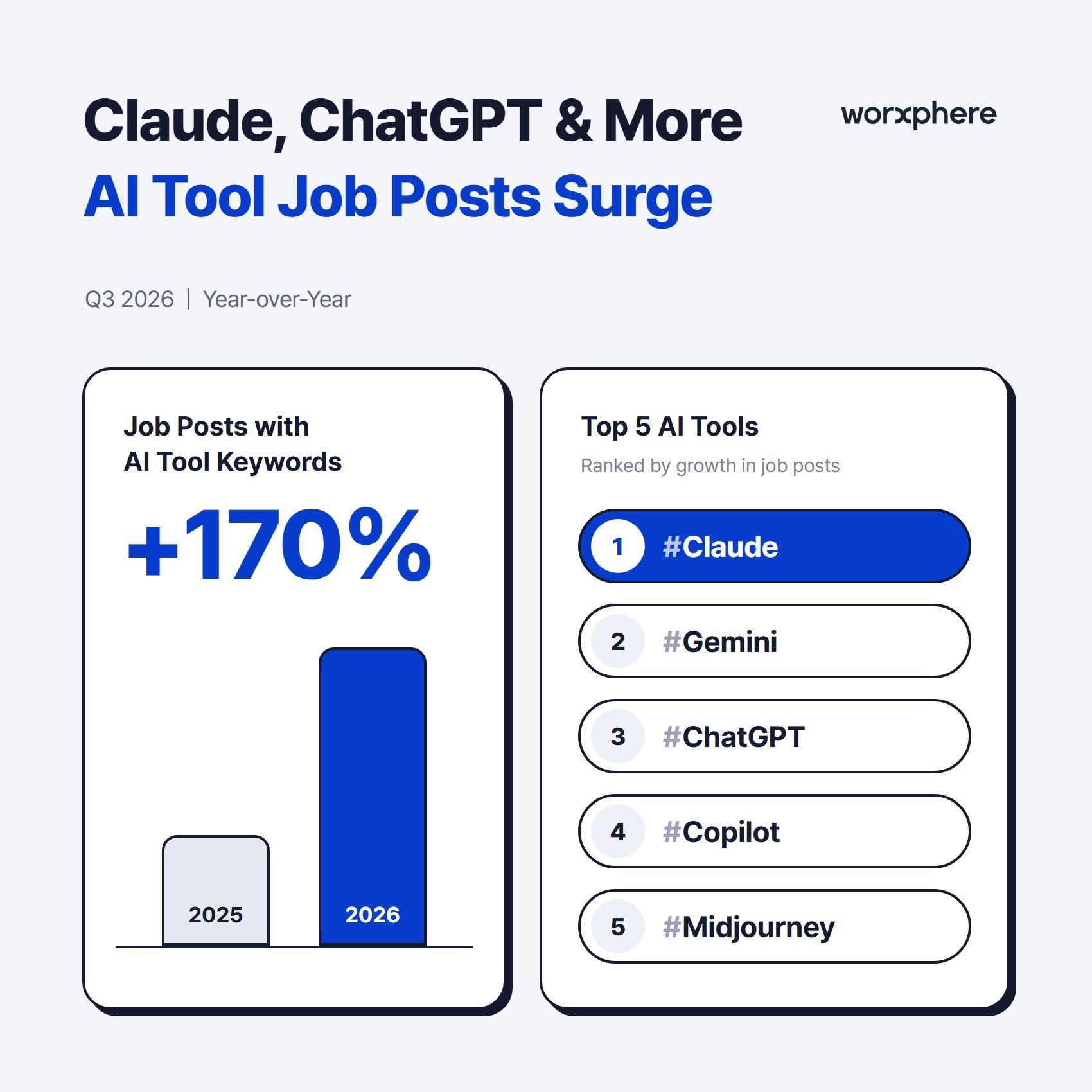
Claude emerges as fastest
1 hour ago
 AI News
TikTok CEO sees major scientific breakthroughs from AI within three years
1 hour ago
 AI News
Profitable French scale-up Wiremind raises €35 million after 12 years of bootstrapping
2 hours ago
 AI News
Jan LeCun, a world
2 hours ago