
Google Maps to show ‘Lake Ontario’ in Canada, ‘Lake America’ in U.S. Here’s why
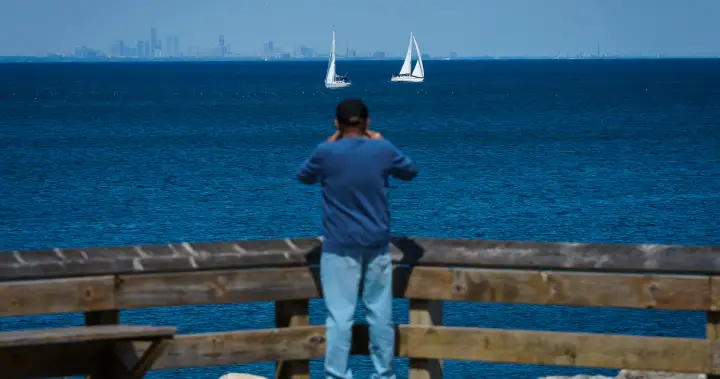
Google has jumped into the debate over Lake Ontario’s name following President Donald Trump’s executive order renaming it “Lake America,” saying the name on its Maps platform depends on where you are located.
The company said it updates Google Maps to reflect name changes from official government sources, which includes the U.S. Geographic Names Information System (GNIS). The GNIS formally changed Lake Ontario to “Lake America” in recent days.
As a result, Google said people using Maps in the U.S. will now see “Lake America,” while those in Canada will see Lake Ontario. Those living or visiting countries outside Canada and the U.S. will see a combination, with Lake Ontario listed but Lake America in parentheses.
“These updates follow our long-standing policy for bodies of water with names that vary from country to country, and are starting to roll out now,” Google wrote in its post.
University of Victoria geography professor Reuben Rose-Redwood isn’t surprised at the change.
“Google in particular, and I think Apple and Microsoft also, generally have a policy to use whatever the official federal names are for geographic places,” Rose-Redwood said.
When Trump changed the name for the Gulf of Mexico to “Gulf of America,” Google, Apple and Microsoft followed suit. As of Sunday afternoon, Apple has yet to make a change to Lake Ontario on its Maps app.
But changing the name of a location on a map is relatively common, with Rose-Redwood noting it’s been seen with other places like the Falkland Islands, or even Victoria, B.C., which was originally known as Camosack, meaning “rush of water.”
“There’s this long history of using place-naming and renaming as an assertion of power,” he said. “Place naming itself is not a neutral practice; it’s inherently political in terms of the values and the assertions of authority to name and to map that we find today.”
He said symbols like Lake Ontario matter to the public and the names of places are “the very foundations of our geographical imaginations.” But he added that name changes like what Trump is doing are a “distraction.”
“I would be very surprised if this new name lasts beyond the Trump presidency,” he said. “Just as easily as he was able to rename this lake with the signing of an executive order, a new president, if it happens to be a Democrat, will likely just as easily remove Lake America from the map.”
The Google Maps change comes just days after Trump signed his executive order directing the U.S. government to refer to Lake Ontario under the new name in his latest shot against Canada after trade talks fell apart last week.
He also criticized Canada’s trade policies while speaking in the Oval Office, but insisted he loved the country and that renaming the lake was not about sending a message.
The president’s original threat to make the name change came after Ontario Premier Doug Ford responded last Monday to Trump’s tariff threat against cars and trucks produced in Canada by saying he “can kiss my a– as far as I’m concerned.”
This prompted Trump to post on Tuesday that the U.S. was giving “serious consideration” to changing the name of the Great Lake.
Ford later that day spoke about his previous comments, admitting “things got a little heated” in an interview with CNN’s Wolf Blitzer. He stressed he wanted to get a deal that was good for his province and for Canada.
Two days later, Trump followed through with the threat.
Ford responded to the name change on social media on Thursday and also with a billboard unveiling Saturday in Winona, Ont., near Hamilton, with the words “Lake Ontario Now and Always” emblazoned on it.
“President Trump can call it whatever he wants, but I can tell you the rest of the world will always call it Lake Ontario,” Ford told reporters. “I received numerous calls from governors; they’re saying we’re always going to call it Lake Ontario, and obviously Canada’s always going to call it Lake Ontario.”
When asked for comment on Google’s decision Sunday, Ford’s office referred Global News to the premier’s previous comments.
While Google Maps has changed the lake’s naming, MapQuest earlier this week said it wouldn’t alter its maps.
Trump’s executive order says the U.S. lays claim to most of the “volume” of Lake Ontario and is mostly responsible for its security, economic activity and environmental stewardship.
— with files from Global News’ Sean Boynton and Touria Izri
Related Stories
 Canada
This 22-year-old Montrealer is representing Canada in a brick
38 minutes ago
 Canada
Separatists hold independence rally ahead of Alberta's birthday
38 minutes ago
 Canada
Nepali Teej celebrations being cancelled across Canada, funds going to relief efforts: community leader
38 minutes ago
 Canada
Alberta pitches cheap natural gas for data centre boom, at odds with Canada’s clean power aims
41 minutes ago
 Canada
Sask. woman crowned Mrs. Canada Universe after 26 years away from the stage
1 hour ago
 Canada
Trump calls NASA after successful telescope launch
2 hours ago
 Canada
Bodies of 2 missing swimmers found near Grand Bend: OPP
2 hours ago
 Canada
Google updates maps to display Lake Ontario as Lake America in U.S.
2 hours ago