
Google DeepMind Brain Drain Just Got A Lot Worse As 4 AI Legends Exit
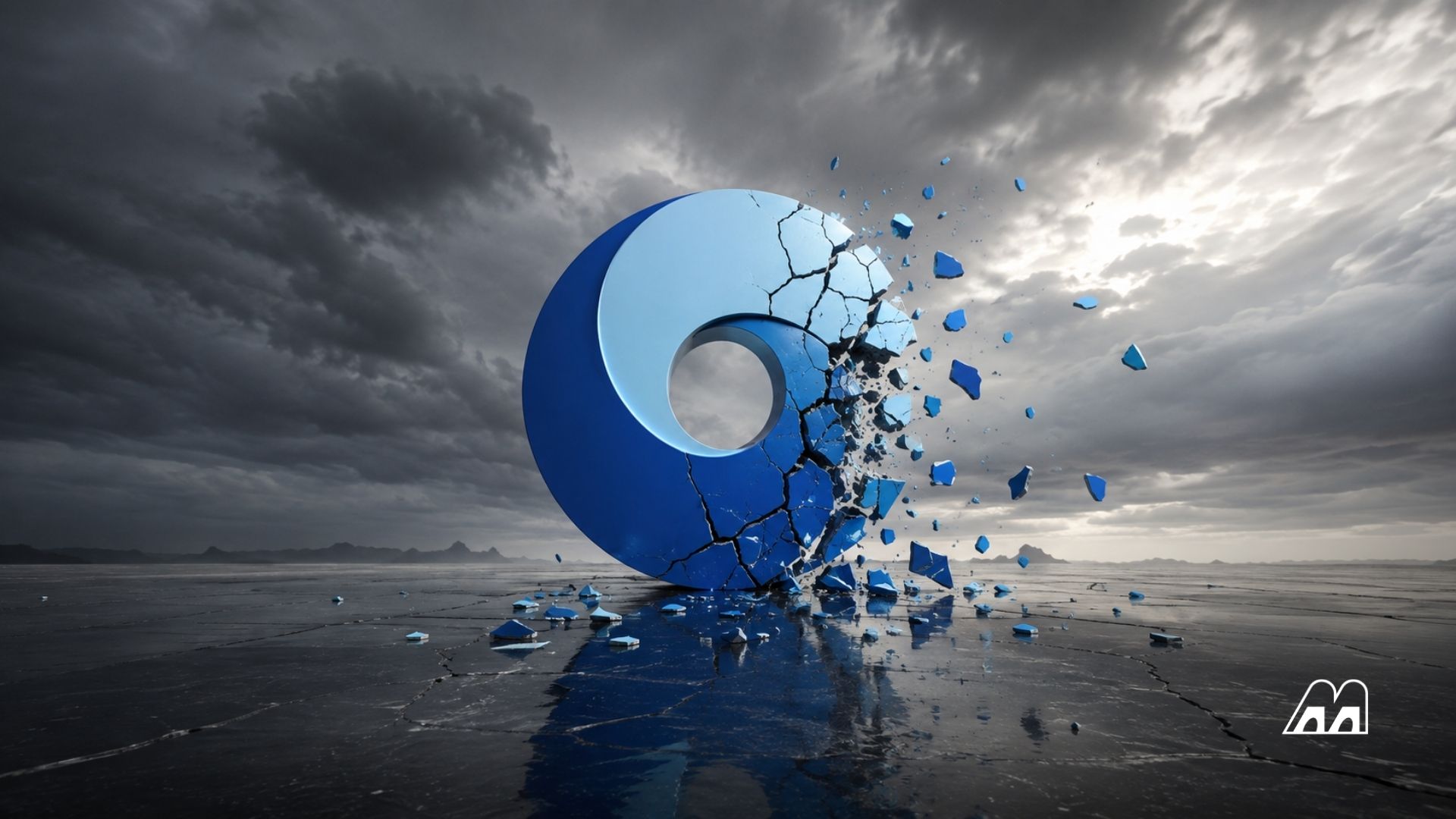
Google just lost four of the most cited AI researchers on the planet — in one afternoon. On August 5, 2026, Alphabet announced that Demis Hassabis is stepping away from running Google DeepMind day-to-day. Hours later, chief scientist Jeff Dean confirmed he’s leaving the company after 27 years. He’s not going alone. Here’s what’s actually happening — and why it matters far beyond Silicon Valley.
Hassabis Steps Back, Kavukcuoglu Steps Up
Hassabis co-founded DeepMind in 2010 and won a Nobel Prize in Chemistry in 2024 for AlphaFold. He’s not leaving Google — but he’s handing off daily operations to become chairman and Alphabet’s chief scientist, a newly created title.
In a staff memo from Google, Hassabis said he believes AGI (artificial general intelligence) — AI that reasons across any domain like a human — is “close at hand.” He’ll also spend more time on Isomorphic Labs, Alphabet’s AI drug discovery arm.
Koray Kavukcuoglu, DeepMind’s longtime CTO, takes over as senior vice president and reports directly to Sundar Pichai. He’ll oversee Gemini 4 development. In practical terms, DeepMind just lost its founding leader from daily command.
Four Researchers, One Startup, Zero Warning
Here’s where it gets interesting. Pichai’s internal memo mentioned two names leaving: Jeff Dean and Sanjay Ghemawat, a Google Senior Fellow who co-built the infrastructure behind MapReduce, BigTable, and Spanner. But Discovery Loop’s own website lists four co-founders — adding Oriol Vinyals and Quoc Le.
That matters because of who they are:
Discovery Loop is a public benefit corporation aiming to automate the scientific method — proposing experiments, running them, analyzing results, iterating at a scale no human team could match. As Dean said on his X, leaving a public company gives him room to chase research that isn’t driven purely by financial returns.
Google is a founding investor and will provide cloud computing for at least year one. Radical Ventures and Khosla Ventures co-lead the round. So Google is literally funding the departure of its own top scientists — a dynamic Engadget flagged as something close to circular financing.
This Isn’t an Isolated Event — It’s a Pattern
Step back, and the August 5 shakeup is the third act in a drama that’s been playing out all summer.
In June 2026, Google suffered what we previously covered as a DeepMind talent exodus that wiped $270 billion off Alphabet’s market cap. Five senior researchers left in a single week. Noam Shazeer — Transformer co-author, Character.AI founder, and the other Gemini co-technical lead — joined OpenAI. Nobel laureate John Jumper went to Anthropic. Researchers Jonas Adler and Alexander Pritzel followed.
Now Vinyals is gone too. That means both Gemini co-technical leads have left within seven weeks. David Silver, DeepMind’s legendary reinforcement learning researcher, quietly departed back in February. And Quoc Le’s exit means Google has now lost a co-founder of Google Brain — the lab that merged with DeepMind in 2023 to consolidate Alphabet’s entire AI operation.
Meanwhile, the broader AI talent market keeps pulling in one direction. Former OpenAI co-founder Andrej Karpathy joined Anthropic in late May. A 2025 SignalFire analysis found that DeepMind engineers were 11 times more likely to move to Anthropic than anywhere else. Pre-IPO equity at companies like Anthropic, now valued at $965 billion, offers upside that Alphabet’s mature stock mathematically can’t match.
Why the Market Reacted Immediately
GOOG dropped roughly 4% on the news, closing near $360 — its second significant AI-related selloff in under two months. In June, shares fell over 5% after the Shazeer and Jumper exits.
Alphabet’s Q2 2026 revenue hit $119.8 billion, up 24%, with Cloud surging 82%. But the company raised full-year capex to $195–205 billion and turned cash flow negative for the first time on record. Investors aren’t worried about this quarter. They’re worried about what happens when the architects leave, and the flagship model still isn’t shipping.
Gemini 3.5 Pro was supposed to launch in June 2026. It’s now August, and it still doesn’t exist as a shipping product. Bloomberg reported the delay is tied to coding performance falling short of internal targets. A training data reset in late June reportedly produced disappointing results.
Six current and former DeepMind employees told Axios that low morale is actively slowing releases. Meta’s Alexandr Wang mocked the lag on X, posting “Gemini who?” Competitors aren’t waiting — OpenAI shipped GPT-5.6, Anthropic launched Claude Sonnet 5, and Google is stuck explaining why its Pro model isn’t ready.
Google’s position once looked dominant. As we analyzed in our breakdown of why Google could be the first to build AGI, the company controls chips, data, and research at unmatched scale. That hasn’t changed. But the humans who knew how to use it best are increasingly choosing to work somewhere else.
Kavukcuoglu inherits a powerful but turbulent operation — Gemini 4 to build, a demoralized team to stabilize, and a market watching every move through the brain drain lens. Hassabis says he has “total confidence.” Pichai insists Google has the talent, compute, and distribution to compete.
Maybe. But confidence and compute don’t write code. People do.
Discovery Loop is a public benefit corporation co-founded by Jeff Dean, Sanjay Ghemawat, Quoc Le, and Oriol Vinyals. It aims to use AI to automate the full cycle of scientific research — from hypothesis to experimentation to analysis — at a scale impossible for human teams alone. Alphabet is a founding investor in the AI startup.
When top researchers leave a company, model development can slow down, features get delayed, and competitors gain an edge. If you use AI chatbots and coding agents, these talent shifts eventually shape which tools improve fastest and which ones fall behind.
Gemini 4 is the next major AI model Google DeepMind plans to develop under new SVP Koray Kavukcuoglu. No release date has been announced. Given that Gemini 3.5 Pro is still delayed, Gemini 4’s timeline remains uncertain but is likely a 2027 target.
Pre-IPO equity at companies like Anthropic and OpenAI offers financial upside that mature public companies can’t match. Culture also plays a role — former employees cite growing bureaucracy and slower paths from research to shipping products. The AI industry’s funding boom is making startup launches more attractive than ever.
AGI stands for artificial general intelligence — AI that can reason, learn, and adapt across any domain, not just one narrow task. Hassabis believes current research progress is bringing AGI within reach. Google DeepMind even published a formal “Levels of AGI“ framework to measure progress toward it.
Vincee Cole is a technology journalist with four years of experience covering the full spectrum of modern tech — from consumer devices, artificial intelligence, to quantum computing, blockchain, and digital assets. His reporting cuts through complexity to deliver stories that are sharp, grounded, and relevant to both general readers and industry insiders. Previously, he worked with fintech research teams across Southeast Asia, analysing how emerging technologies are reshaping financial systems at scale.
Related Stories
 AI News
Chinese workers fight back against AI; the meaning of milk in Rwanda
49 minutes ago
 AI News
90 Percent of Execs Say Oops, AI Didn’t Help Productivity, So Layoffs Will Continue
49 minutes ago
 AI News
UNC Artificial Intelligence: Innovate Carolina hosts AI workshop series to help students, professionals build workplace skills
1 hour ago
 AI News
STREAMLINE uses AI to tackle one of nuclear physics’ toughest problems
1 hour ago
 AI News
Experts weigh costs, benefits of using artificial intelligence in education
2 hours ago
 AI News
PRESS RELEASE: European Union Begins Enforcing Sweeping Artificial Intelligence Act
3 hours ago
 AI News
AI
4 hours ago
 AI News
No, AI doesn’t mean the end of mathematics
4 hours ago