
Europe Movie Market Outlook 2026
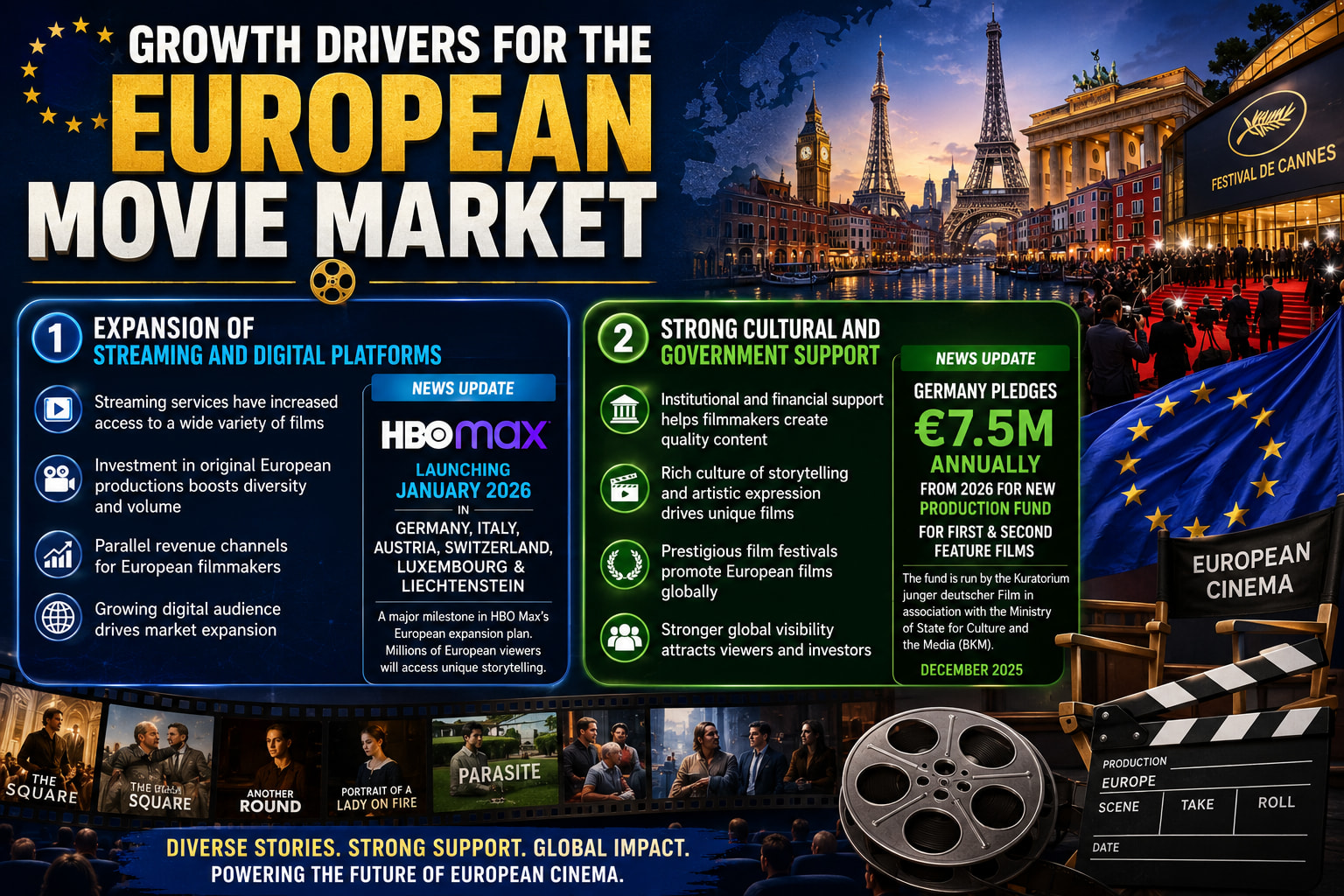
For generations, movies have played a vital role in Europe's cultural identity. From the artistic masterpieces of France and Italy to the globally recognized productions of the United Kingdom and Germany, European cinema has consistently shaped storytelling traditions around the world.
Today, the industry is experiencing another major transformation.
Streaming services, premium cinema technologies, government-backed film initiatives, and growing international collaborations are redefining how movies are produced, distributed, and consumed throughout Europe. While the rise of digital entertainment has created new challenges for traditional theaters, it has also unlocked significant opportunities for filmmakers and audiences alike.
According to Renub Research, the Europe movie market is projected to increase from US$ 22.82 billion in 2025 to US$ 33.08 billion by 2034, growing at a compound annual growth rate (CAGR) of 4.21% between 2026 and 2034. This steady expansion reflects the industry's resilience and its ability to adapt to rapidly changing consumer expectations.
As technology advances and demand for quality content continues to rise, Europe's movie industry appears well-positioned for long-term success.
The Cultural Importance of Cinema in Europe
Movies have always been more than entertainment across Europe.
They serve as powerful tools for preserving culture, expressing creativity, and exploring social issues. European cinema is particularly known for its artistic approach, realistic storytelling, and willingness to tackle complex themes that resonate with audiences on a deeper level.
Unlike many global markets that rely heavily on commercial blockbusters, Europe maintains a healthy balance between mainstream productions and independent films. This diversity allows filmmakers to experiment with different storytelling techniques while preserving national identities and cultural traditions.
Countries such as France, Germany, Italy, Spain, and the United Kingdom have built internationally respected film industries that continue to influence global cinema.
Prestigious events such as the Cannes Film Festival, Venice Film Festival, and Berlin International Film Festival further reinforce Europe's reputation as one of the world's most important filmmaking regions.
As audiences continue to embrace both international releases and locally produced content, the foundation for future growth remains strong.
Streaming Platforms Are Expanding the Market
One of the biggest drivers of growth in the European movie market is the rapid expansion of streaming services.
Platforms such as Netflix, Amazon Prime Video, HBO Max, and various regional streaming providers have transformed viewing habits across the continent. Consumers increasingly prefer the flexibility of watching movies whenever and wherever they choose.
This shift has significantly increased overall content consumption.
Streaming platforms have also become major investors in European productions. Original movies and series produced in local languages are receiving greater funding and visibility than ever before. This trend not only creates new opportunities for filmmakers but also helps preserve cultural diversity in storytelling.
For many production companies, streaming has become an additional revenue channel rather than a replacement for theatrical releases.
The ability to distribute content internationally through digital platforms allows European films to reach audiences far beyond their domestic markets.
As internet access, mobile technology, and smart television adoption continue to grow, streaming is expected to remain a major contributor to industry expansion.
Government Support Continues to Strengthen the Industry
A unique advantage of the European movie market is the strong support provided by governments and cultural institutions.
Many European countries offer financial incentives, grants, tax benefits, and funding programs designed to encourage film production. These initiatives help filmmakers create high-quality content that may otherwise struggle to secure financing.
Government-backed support has proven especially valuable for independent filmmakers and emerging talent.
In addition to direct funding, Europe benefits from a long-standing appreciation for arts and culture. Public institutions, educational programs, and film organizations actively promote cinematic creativity and innovation.
International film festivals further contribute by attracting investors, distributors, critics, and audiences from around the world.
This combination of financial support and cultural appreciation helps maintain Europe's position as a globally competitive filmmaking hub.
Premium Cinema Experiences Are Driving Attendance
Despite the growth of streaming services, movie theaters continue to attract audiences by offering experiences that cannot easily be replicated at home.
Across Europe, cinemas are investing heavily in advanced technologies such as IMAX, Dolby Atmos, 4DX, laser projection systems, and luxury seating arrangements.
These innovations are transforming movie-going into a premium entertainment experience.
Modern audiences increasingly seek immersive viewing environments that deliver exceptional picture quality, powerful sound, and enhanced comfort. Premium formats allow theaters to justify higher ticket prices while improving customer satisfaction.
Urban populations, in particular, have shown strong demand for event-based cinema experiences.
Special screenings, premieres, and exclusive content offerings further encourage theater attendance and help cinemas differentiate themselves from digital competitors.
As premium experiences become more widespread, they are expected to remain a key driver of market growth.
Challenges Facing the European Movie Industry
While the outlook remains positive, the industry faces several important challenges.
The popularity of streaming platforms has significantly altered consumer behavior.
Many viewers now choose to watch movies from home rather than visit theaters, particularly when it comes to smaller productions. Subscription services offer access to vast content libraries at relatively affordable prices, making them attractive alternatives to traditional movie-going.
This trend creates difficulties for independent cinemas and smaller theater operators that rely heavily on consistent attendance.
Although streaming contributes positively to content consumption, maintaining strong theatrical attendance remains an ongoing challenge.
Producing high-quality films requires substantial investment.
Talent acquisition, advanced technology, filming locations, visual effects, and post-production work all contribute to rising production expenses. Compared to major Hollywood studios, many European filmmakers operate with more limited budgets.
Movie theaters also face increasing operational costs, including staffing, rent, utilities, and equipment upgrades.
Inflation and broader economic uncertainty can place additional pressure on profit margins, forcing businesses to carefully balance affordability with profitability.
Movie Ticket Sales Remain a Core Revenue Source
Ticket sales continue to form the foundation of Europe's movie industry.
Major markets such as the United Kingdom, France, Germany, and Italy contribute significantly to regional box-office performance. Blockbuster releases, local productions, and seasonal viewing patterns all influence ticket revenue throughout the year.
Premium viewing formats have helped theaters maintain revenue growth despite changes in attendance patterns.
Consumers are often willing to pay higher prices for enhanced experiences that provide superior visuals, sound quality, and comfort.
Film festivals and cultural events also contribute to sustained audience interest in cinema.
Although streaming services have changed viewing habits, theatrical releases remain an essential component of the European entertainment landscape.
Food and Beverage Sales Are Becoming More Important
The food and beverage segment has evolved into one of the most profitable areas of the cinema business.
Traditional items such as popcorn, chocolate, and soft drinks continue to perform well, but many theaters have expanded their offerings considerably. Gourmet snacks, organic foods, specialty beverages, wine, beer, and restaurant-style menus are increasingly common in modern European cinemas.
Luxury and dine-in theater concepts are particularly popular in urban markets.
These expanded food options encourage customers to spend more during each visit while enhancing overall satisfaction.
Because concession sales often generate higher profit margins than ticket sales, this segment has become increasingly important for long-term profitability.
Digital 3D technology remains an important feature within Europe's premium cinema market.
Although enthusiasm has stabilized compared to earlier years, 3D continues to attract audiences for visually spectacular productions. Genres such as action, fantasy, science fiction, and animation benefit most from immersive 3D presentation.
Advancements in projection technology and improved viewing comfort have helped maintain interest in the format.
Studios are now more selective when choosing which films receive 3D releases, focusing on projects that genuinely enhance audience experiences.
While no longer considered a novelty, digital 3D remains a valuable premium offering that contributes to higher ticket revenues.
Male audiences continue to play a major role in box-office performance throughout Europe.
Action films, science-fiction movies, thrillers, sports-related content, and franchise productions often attract strong male viewership. These consumers are frequently targeted through digital marketing campaigns and social media engagement.
Their enthusiasm for major releases continues to influence opening-weekend revenue and overall commercial success.
Young adults aged 18–24 represent one of the most dynamic audience segments in Europe.
This demographic is highly engaged with entertainment, social media, and emerging technologies. They frequently attend movies with friends and actively participate in online discussions surrounding new releases.
Popular genres among this group include horror, comedy, fantasy, and superhero films.
Although younger consumers are highly familiar with streaming services, they still value the social and immersive aspects of theater attendance.
Their openness to new technologies and premium experiences makes them an important driver of future industry growth.
France remains one of Europe's most influential movie markets.
Strong government support, local-content protections, tax incentives, and a deep appreciation for artistic storytelling contribute to the country's success. French audiences continue to support both domestic and international productions, helping maintain stable cinema attendance.
The global prestige of the Cannes Film Festival further strengthens France's position within the international film community.
Germany possesses one of Europe's largest cinema markets.
Strong economic conditions, extensive theater infrastructure, and government support for local productions help sustain industry growth. Cities such as Berlin, Munich, and Hamburg serve as important cinema hubs.
Premium formats, film festivals, and a healthy mix of domestic and international content contribute to Germany's continued success.
The United Kingdom remains one of the world's most influential filmmaking destinations.
World-class production facilities, highly skilled talent, attractive tax incentives, and strong consumer demand support a thriving movie market. British productions, Hollywood partnerships, and independent films all contribute to a diverse entertainment ecosystem.
London remains a major center for both film production and movie-going culture.
The Netherlands continues to emerge as an increasingly attractive movie market.
High living standards, modern cinema infrastructure, advanced digital adoption, and strong audience engagement support market expansion. Consumers regularly visit theaters and show interest in both local and international productions.
Government support and innovative cinema concepts further strengthen industry growth.
Several major companies continue shaping the European cinema industry through innovation, customer experience improvements, and premium entertainment offerings.
These organizations continue investing in advanced technologies, digital services, premium viewing formats, and enhanced food offerings to meet evolving consumer expectations.
The future of Europe's movie industry will depend on its ability to balance tradition with innovation.
Streaming services will continue expanding access to entertainment, while theaters focus on delivering premium experiences that justify in-person attendance. Government support, international collaborations, and technological advancements will further strengthen the industry's foundations.
Most importantly, Europe's rich storytelling traditions will remain a powerful competitive advantage.
As audiences continue seeking authentic, meaningful, and visually engaging content, filmmakers throughout the continent will have opportunities to reach both domestic and global viewers.
Europe's movie industry is successfully adapting to a rapidly changing entertainment landscape. While streaming platforms have transformed viewing habits, they have also created new opportunities for content distribution and audience growth. Combined with strong government support, premium cinema experiences, technological innovation, and a deep cultural appreciation for storytelling, the industry is positioned for steady expansion.
With the Europe movie market projected to grow from US$ 22.82 billion in 2025 to US$ 33.08 billion by 2034, the future appears promising. The methods of watching movies may continue to evolve, but Europe's passion for cinema remains as strong as ever.
Related Stories
 Entertainment
Mighty Sparrow, the Trinidad and Tobago singer known as the ‘calypso king of the world’, dies aged 91 | Music
3 hours ago
 Entertainment
Director claims LGBTQ representation in Kollywood is ‘funded’ to ‘erode culture’ after Dorothy's release; gets schooled | Hindustan Times
5 hours ago
 Entertainment
Let Madonna's Celeb
8 hours ago
 Entertainment
'Avengers: Endgame Encore' sets up 'Doomsday' with 4 new scenes. Here's what happens.
13 hours ago
 Entertainment
Lime bike profits double as rider numbers surge in England
17 hours ago
 Entertainment
Two mass shootings in South Africa leave 27 dead
21 hours ago
 Entertainment
Top 76 concerts and events coming to the UAE, from Katy Perry to Mo Amer
22 hours ago
 Entertainment
What to watch on board Cathay Pacific in September 2026 | Cathay CA
23 hours ago