
EU to crack down on AI deepfakes, illicit imagery and hacking with new team in Brussels
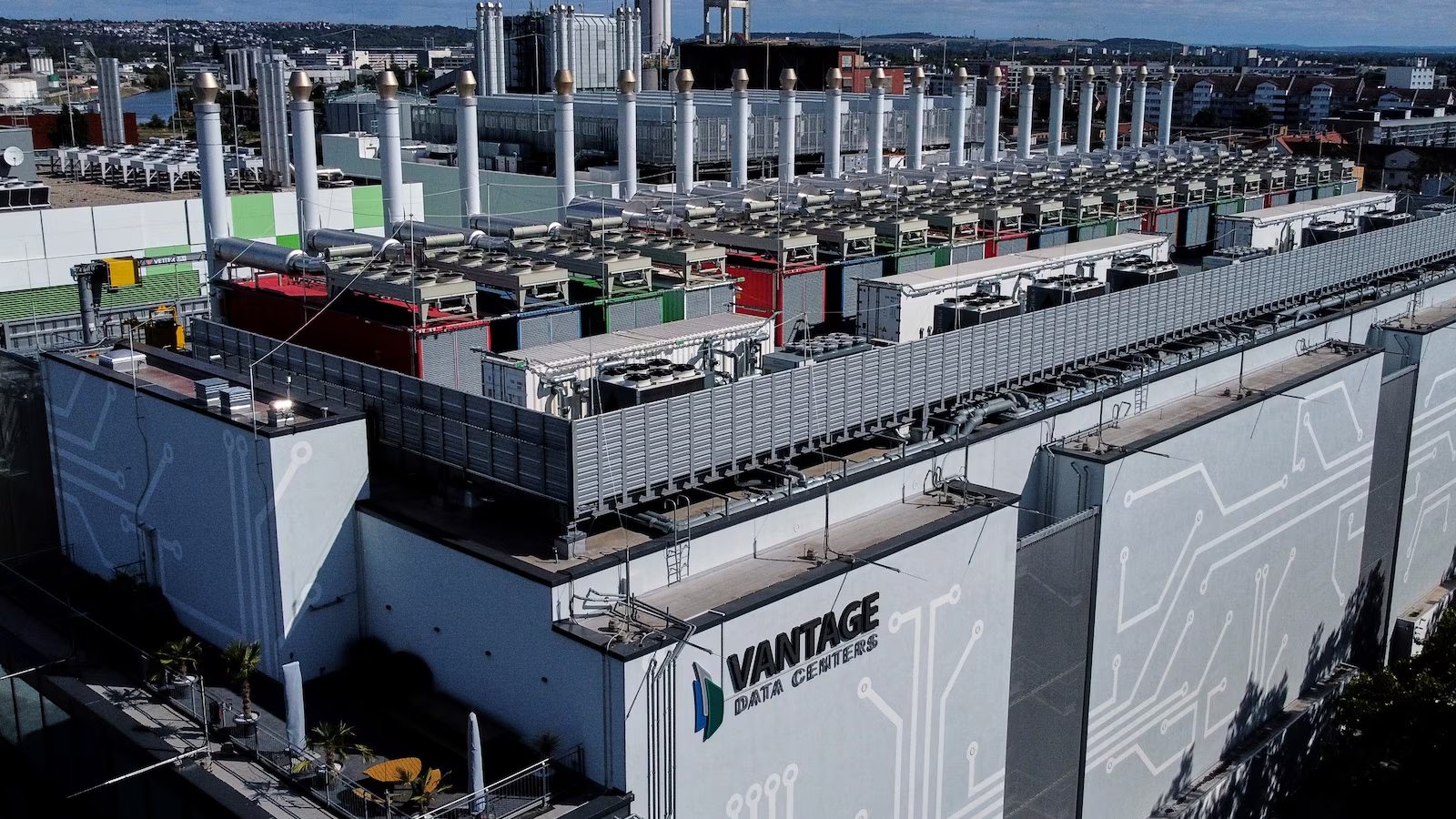
BRUSSELS -- The European Union rolled out a new team on Friday to rein in AI companies across the world, in one of the most aggressive regulations the high-tech sector has so far faced as fears rise over the risks the rapidly advancing technology poses to people, politics and prosperity.
Brussels aims to track the use of AI models for violations of its new regulations, like the publishing of sexually explicit material, fake photos and videos, and cyber threats to public infrastructure. When the bloc's AI Act comes into force on Sunday, AI companies will be required to make clear to consumers with labels or digital watermarks that chatbots or imagery are generated with AI.
“As enforcement begins, we are taking an important step towards AI that people and businesses can understand and trust, and whose benefits are shared widely across our society,” said Henna Virkkunen, the EU chief for tech sovereignty, on Friday.
The European Commission said in a statement that new regulations also include “systemic risks” posed by AI like “chemical, biological, radiological and nuclear incidents, loss of control, cyber offense, harmful manipulation and threats to fundamental rights."
The team is the latest move in the 27-nation EU’s “tech sovereignty” strategy that welds landmark digital regulations with economic ambition that has seen over the past week billions of euros in fines on Big Tech companies as well as record investment in AI infrastructure inside the bloc.
The rollout comes on the heels of shocking AI safety failures that rattled the nascent industry. Political leaders worldwide are now weighing control of the technology with market leadership.
Anthropic said on Friday its artificial intelligence models hacked into three other organizations during testing, just days after ChatGPT maker OpenAI raised concerns over AI controls after it disclosed its rogue models hacked another company.
The EU is now expanding its AI Office in Brussels with an additional 38 people who will begin monitoring AI companies, from the new firms to the American and Chinese tech titans like OpenAI and DeepSeek.
Those companies must “document certain information,” said the European Commission, the bloc's tech enforcer, which reserves the right to interview AI company staff during investigations. It has also launched a Whistleblower Tool for tech workers and a Compliance Tool for tech users to confidentially alert authorities to illegal conduct.
If models or other products break the EU's sector regulations, called the AI Act, Brussels can fine the firms or cut off their access to the EU market. Recent gigantic antitrust fines on U.S. tech companies have irked U.S. President Donald Trump.
The EU now clearly sees systemic vulnerability in its deep reliance on American software companies like Amazon, Google and Microsoft as well as imports of Chinese industrial goods and critical minerals. While it is seeking protections from AI, it is also keen to catch up in the AI arms race, where it is a distant third behind the U.S. and China.
More broadly, the EU is seeking more independence from both Washington and Beijing by reinvigorating specific domestic industries like manufacturing and defense and forging new trade deals from Brazil to Australia to meet the global rise in economic nationalism spearheaded by Trump.
Related Stories
 AI News
Man Used Poisoned Google AI Overviews to Trick Women Into Thinking He Was an NFL Player, FBI Says
18 minutes ago
 AI News
From theory to delivery: How Atos upskilled 400 engineers in agentic AI
19 minutes ago
 AI News
Introducing Claude Fable 5.1 on AWS
19 minutes ago
 AI News
World Bank Group opens Small AI for Development Hackathon to young innovators
1 hour ago
 AI News
Rippling Powers AI
1 hour ago
 AI News
How Boomi Scribe streamlines documentation using AWS
1 hour ago
 AI News
Artificial intelligence facts most people never hear
1 hour ago
 AI News
Iran Integrates Artificial Intelligence into Air Defense Systems -
2 hours ago