
Artificial intelligence facts most people never hear

Large language models such as ChatGPT, Gemini, and Claude generate text by predicting which word is statistically likely to come next. That prediction is based on patterns learned from training data. These systems do not check facts against a database or verify claims before producing them.
This distinction matters because it explains a behavior that confuses many users. A chatbot can produce a wrong answer with the exact same confident tone as a correct one. The model has no internal sense of being unsure about something. It only has a probability distribution over possible next words, and it picks from that distribution.
The underlying architecture, a neural network trained on text, does not include a built-in fact-checking step. Some systems add extra layers on top, such as connecting the model to a search engine or a specific document set. They do this specifically because the base model cannot reliably tell true statements from false ones on its own. Retrieval features, citations, and grounding tools are patches applied to a system that was never designed as a truth engine in the first place.
This is also why a chatbot can produce different answers to the same question asked twice. The process involves sampling from a probability distribution rather than looking up one fixed answer. Some randomness is built into the design by default. Developers can reduce this randomness with a setting often called temperature. They cannot eliminate the underlying prediction process itself.
None of this means these systems are unreliable for every purpose. They are often accurate, especially on well-documented, widely written-about topics. In those cases, the training data contains consistent, correct information many times over. The problem shows up most on obscure facts, recent events after a training cutoff, or narrow technical details where the training data is thin or contradictory.
Understanding this single mechanism explains most of what looks mysterious about chatbot behavior. It explains the confident wrong answers, the inconsistent responses, and the need for outside verification on anything that matters. The system was built to continue a pattern of language, not to consult a fixed record of what is true.
Related Stories
 AI News
Man Used Poisoned Google AI Overviews to Trick Women Into Thinking He Was an NFL Player, FBI Says
18 minutes ago
 AI News
From theory to delivery: How Atos upskilled 400 engineers in agentic AI
19 minutes ago
 AI News
Introducing Claude Fable 5.1 on AWS
19 minutes ago
 AI News
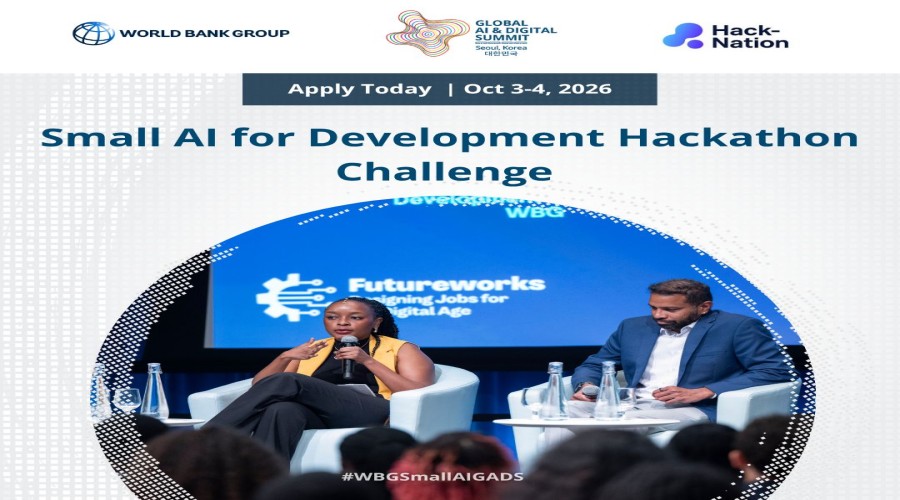
World Bank Group opens Small AI for Development Hackathon to young innovators
1 hour ago
 AI News
Rippling Powers AI
1 hour ago
 AI News
How Boomi Scribe streamlines documentation using AWS
1 hour ago
 AI News
Iran Integrates Artificial Intelligence into Air Defense Systems -
2 hours ago
 AI News
Redditors say Anthropic's expensive Claude plans offer far less usage than advertised
2 hours ago