
Cole Palmer, Coca
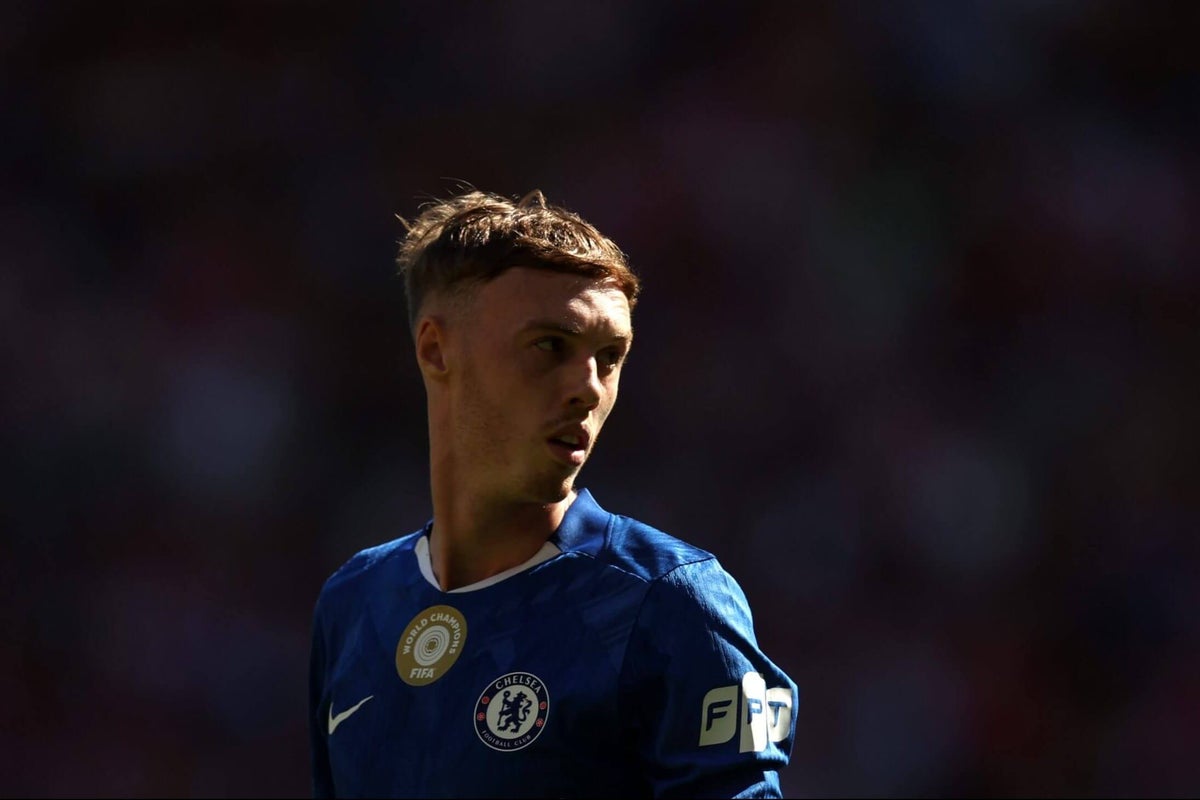
It was a little under two months ago that Coca-Cola announced it had signed Cole Palmer as a “football brand ambassador”.
In a press release on April 22, it declared the “multi-year partnership will see dynamic ice-cool player Palmer front Coca‑Cola and Powerade activations across the Premier League and FIFA World Cup 2026”.
The statement went on to explain how bringing Palmer on board “strengthens Coca-Cola’s long-standing commitment to Gen Z and mass football audience”.
Referencing football’s showpiece event again, it added that the Chelsea and England forward would “also support activations around the upcoming World Cup as part of Coca-Cola’s longstanding partnership with the tournament, as his influence continues to grow both on and off the pitch”.
Come late May, however, that deal with the fizzy-drink manufacturer had fallen rather flat.
Palmer was omitted from Thomas Tuchel’s 26-man England squad for the World Cup in the United States, Canada and Mexico, putting Coca-Cola in an awkward spot.
As England were preparing to play Croatia near Dallas on Wednesday in their opening game of the tournament, Palmer was instead being photographed next to Wayne Lineker at O Beach, a day club in Ibiza.
But with the Chelsea star playing no part at the finals, what does it mean for his link-up with Coca-Cola, as well as his other sponsorship deals? And how difficult are situations like this for big brands?
The Athletic spoke to industry experts to find out.
Tim Crow, former head of international sports marketing agency Synergy, gets straight to the point.
“It’s not ideal,” he tells The Athletic, addressing the Palmer issue. “You don’t go to all the trouble of signing a new ambassador and making all the necessary arrangements around that without hoping he’s going to get picked.
“There would have been a lot of frustration around it. But equally, if they’d done their due diligence, and I’m sure they had, then they would have had a plan for this eventuality.
“It’s really about a lack of salience. All of a sudden, you’ve got an asset you would have been hoping would be on the field of play, who isn’t, so it’s just lacking ability to capitalise on his performances on the field and his presence in the World Cup.
“It does take away a lot of options and force you into a different way of thinking about it.”
Steve Martin, founding partner at MSQ Sport and Entertainment, explains how such scenarios reflect the harsh realities of working in the sports industry.
“Most brands who are thinking ahead to what they do to activate their campaigns around any big events — such as the Olympics, but particularly around a World Cup — are always about who’s going to be in the squad,” he says. “If you asked any fan in the street, the vast majority would have said Palmer would have been in the squad. It’s just one of those awkward coincidences that he hasn’t been picked.
“You have to put those bets on a bit earlier, because you’re creating campaigns months before they actually go live. People aren’t naive, there’s always a risk.”
Ricardo Fort, former head of global sponsorships at Coca-Cola and Visa, agrees.
“For a company like Coca-Cola, that has been doing this for a long time, they know they sometimes get players who are not selected, or get injured,” he tells The Athletic. “That’s part of the working-with-players business.”
Looking ahead, Crow says, for Coca-Cola, it is likely a case of tweaking rather than scrapping the campaigns involving Palmer that its executives had in the pipeline this summer.
“What will have been shelved is anything that they had ready to go, or that they were prepared to do, if he had a terrific performance in a (World Cup) game, or scored a winning goal,” he adds.
Fort agrees and says there are probably going to be some costs as a result of Palmer’s absence this summer.
“They might have produced work with him, photographed him, filmed him and created content with him that’s unlikely to be used,” he explains. “But these production costs are a fraction compared to the contract itself. Some of these things could be redeployed later, when the Premier League starts. They have to be a bit more creative and flexible not to discard all the material.”
He estimates that a partnership such as the one between Palmer and Coca-Cola would cost approximately £3million ($4m) per year. Sources familiar with the situation, granted anonymity to protect relationships, have told The Athletic that the player’s deal runs for three years.
With Palmer absent from the World Cup, Fort says Coca-Cola would look to centre any campaign activity on the start of the Premier League season in August instead. Coca-Cola also signed a sponsorship deal with the Premier League last year.
“It will be worth the investment,” Ford adds, pointing out the long-term nature of the contract between the company and Palmer.
Crow says what will be more concerning to Coca-Cola is the 24-year-old Mancunian rediscovering his best form, following the groin troubles that affected his performances last season.
Despite Palmer missing out on the World Cup, the industry experts all agreed he is still a big draw.
“He is a really great marketing asset because of his very relaxed manner and the everyday-guy type brand around him,” Richard Johnson, a sports marketing strategist, tells The Athletic. “He is relatable, as much as a footballer can be. He seems like a decent guy, and because he leans into this ‘meme-able’ aspect of him, that’s good for a global brand.”
Martin agrees. “People will associate Cole Palmer with the brand, which is fine,” he says. “And, actually, he’s got so much going for him. Cast your mind back a year — he was the hottest property around. And the World Cup will come and go. These are minor blips, rather than anything too dramatic.
“Do the fans care? Not really. It’s the marketing industry that might care more.”
Over the past year, Palmer’s advisors have gone to great lengths to boost his image and monetise his brand. Last year, The Athletic revealed how he has successfully trademarked the term ‘Cold Palmer’ and his autograph. He later trademarked his signature shivering goal celebration, his name ‘Cole Palmer’ and a figurative trademark for his facial image.
To mark the start of its partnership with Palmer, Coca-Cola launched a short film set in a Chinese takeaway. In the advert, Palmer was given a can of Coca-Cola Zero Sugar by the man behind the counter and said, “I hope that’s ice cold, boss,” before the server performed Palmer’s signature shivering celebration.
It ended with Palmer saying, “Let’s do this,” with the film closing with an image of his cold cross-arm symbol.
That trademark, which is two marks in different colours, was approved in January, and covers a vast range of goods and services, much like his other registrations.
A post shared by Cole Jermaine Palmer (@colepalmer10)
It wasn’t just Coca-Cola caught out by Palmer’s World Cup omission.
He also has deals with Nike, Burberry, Beats by Dre, Sure and Boohoo.
For Nike’s star-studded ‘Rip the Script’ advert, released this month, Palmer was the only England player to feature, alongside the likes of Kylian Mbappe, Vinicius Junior, Erling Haaland and Cristiano Ronaldo.
Despite Palmer being overlooked by Tuchel, Nike decided to retain him in the six-minute advert.
In the film, Palmer appears in an England kit, wearing the No 20 shirt, alongside rapper Central Cee, with an ice backdrop.
“Nike obviously have the confidence to keep that piece,” Martin says. “And it was quite fun, his sequence, so they probably made a call creatively to keep it in.”
He also featured in an advert to promote Rexona (the deodorant known as Sure in the UK), owned by Unilever, with the tagline “Won’t ever let you down”.
Last week, Palmer also made an appearance, standing at a urinal, alongside Chelsea team-mate Joao Pedro — who also missed out on the World Cup, having been omitted by Brazil — in a promotional film for Madonna’s new album, Confessions On A Dance Floor: Part II.
However, he did not feature in Burberry’s ‘Good Sport’ advert, released two weeks ago. Perhaps tellingly, his England team-mates Declan Rice and Eberechi Eze, both named in the World Cup squad, did make the cut.
The Athletic contacted both Coca-Cola and Palmer’s representatives for this article, but received no response.
This isn’t the first time a sponsor has backed a player, only for them to miss out on selection for the biggest stage.
At Nike, Fort remembers doing campaigns with Romario for the 2002 World Cup, before he was left out of Brazil’s squad. Two years ago, Jack Grealish was the face of Hellmann’s mayonnaise, but was not included in England’s Euro 2024 squad.
Perhaps the most famous example was the ‘Dan and Dave’ campaign Reebok ran in the lead-up to the 1992 Olympic Games in Barcelona.
This saw the sportswear firm ramp up a rivalry between Dan O’Brien and Dave Johnson — at that point, two relatively unknown decathletes — with a series of adverts. However, when O’Brien failed to qualify for the Games, Reebok’s storyline no longer worked, so its executives had to quickly change tack. They instead ran commercials showing O’Brien cheering on and coaching Johnson, a shift in strategy that proved successful and helped make the campaign memorable.
“We had about 10 spots that we already filmed that we couldn’t use, so we filmed three new ones,” Johnson told CNBC in an interview published in 2008. “The funny thing is that I almost didn’t make it as well. I qualified, but when I left the track, my foot hurt.”
The other obvious example is the Panini sticker album published before every World Cup — as that company must choose the players included for each nation a whole year in advance. In the latest edition, Neymar is not among those on the Brazil pages, but has since been called up to the squad by manager Carlo Ancelotti.
“This is the world of sport we live in,” Martin adds. “At the end of the day, sport is cut-throat. If we could all predict the future, it would be a very easy job.”
Related Stories
 World
World
Three Saudis killed in Riyadh airport attack claimed by Houthis
57 minutes ago
 World
World
The Mario Kart World European September Slipstream results are in!
57 minutes ago
 World
World
Winner of 2026 Nobel peace prize to be announced
57 minutes ago
 World
World
Nobel Peace Prize awarded to Navanethem ‘Navi’ Pillay for her efforts to promote international law
57 minutes ago
 World
World
Man, 72, to crawl across counties after World Cup bet
1 hour ago
 World
World
South Korea test
1 hour ago
 World
World
Japan to launch study on satellite transportation | NHK WORLD
2 hours ago
 World
World
US seized tools used by China-linked hackers | NHK WORLD
2 hours ago