
Are we killing ourselves with technology?
Are we killing ourselves with technology?
Published 8:07 am Wednesday, September 23, 2026
I am a hypocrite. It’s best to admit that up front, before I get too deep in the weeds in this discussion of technology. I’m writing this on my MacBook after all, having just reread Wendell Berry’s 1987 essay entitled, “Why I Am Not Going to Buy a Computer.”
What makes this even more hypocritical is that just behind me on a bookshelf sits a mint condition Remington Rand Model 5 manual typewriter (circa 1937). Furthermore, there is a stack of yellow legal pads in the cabinets beneath the old manual. I could opt for either for writing instead of the laptop, but I do not.
Berry wrote everything by hand. That’s over 50 books of poetry, essays, novels, and short stories, all written out in longhand and then typed by Berry’s wife Tanya. Berry didn’t want to lose the human touch.
All of this has me pondering how much technology we really need? When do we reach a point of negative return? Personally, I feel that in many ways we’re already past that point.
On the heels of Berry’s death in late August, I decided to start reading his fiction. I’ve devoured his essays and poetry over the years, but have yet to explore his fiction.
However, before beginning my Berry vision quest, I found myself rereading his computer essay in response to another book I’m reading, Paul Kingsnorth’s “Against the Machine: On the Unmaking of Humanity.”
I began the Kingsnorth book in hopes that it would give me a bit of hope, a desire brought on by recent news articles warning of the dangers of artificial intelligence (AI).
AI seems to be everywhere I turn these days and, to be honest, it doesn’t give me a warm, fuzzy feeling. My initial misgivings were over the fact that it seems to have the effect of dumbing us down.
It seems that many students can no longer write their own papers or speeches, and many professionals can no longer complete their own presentations or business analysis without a little (or a lot) of help from ChatGPT or Microsoft Copilot. Are we consistently killing our ability to think for ourselves?
Recent headlines like The Wall Street Journal’s, “Biggest AI Rivals Agree They Need to Slow It Down” have my AI concern radar activated. It seems that Elon Musk, Sam Altman, and Dario Amodei all believe there is a need “to slow development of the technology before their advances create a menace than can’t be controlled.”
I remember watching “Terminator” on the big screen in 1984. Back then, the thought of military superintelligence like “Skynet” becoming self-aware and trying to wipe out humanity seemed like something I would never have to worry about in my lifetime.
It seems that Musk, Altman, and Amodei think otherwise. Amodei’s warning about the risks of AI comes after an Anthropic employee left the company while announcing to the world “that there was a greater than 10% chance that AI systems could destroy civilization within the next decade.” What are we to think?
The “self-awareness” and “self-improvement” capabilities of current AI systems led the CEOs to warn that continued progress could yield systems that “could outrun our ability to understand and control” them. Terminator’s Skynet no longer seems far-fetched.
Berry once wrote, “It is easy for me to imagine that the next great division of the world will be between people who wish to live as creatures and people who wish to live as machines.” I believe he lived to see the beginnings of that reality.
One of the lies of technology has always been, according to Kingsnorth, that it will “save either time or labor” which he argues is seldom (if ever) true. The advancement of technology also seems to always come at price.
Kingsnorth gives email as an example citing that “…we were promised that the advent of email would save us hours of time: no more faxing, or opening and replying to letters! Now we spend, by some estimates, thirty days a year on email alone, and it is increasingly impossible to be out of touch with anyone, anywhere.”
To this I would add our so called “smartphones.” A quick Google search reveals that the average person spends 4 to 5 hours per day on their phone. That adds up to 70 days per year.
Again, I’m a hypocrite in writing this. I use a computer to do the bulk of my writing, and I use a smartphone to check email and social media, to text, and to actually phone others. I’ve even caved to tech in my outdoor pursuits.
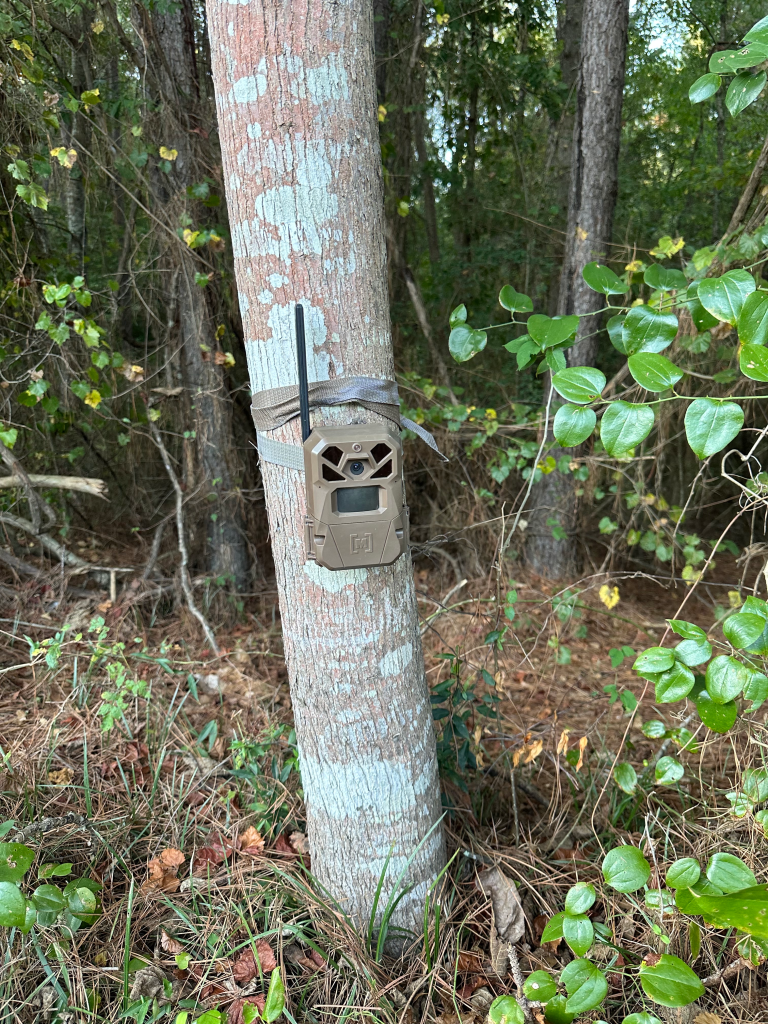
For example, I now use cellular game cameras, and while I admit that I get excited when the pictures come to my phone, I also must admit that the cameras have done nothing to make me a better hunter. Arguably, they’ve made me worse, as woodsmanship is an acquired skill, one that, like most skills, improves with practice and time.
Fortunately, I can still claim that I’m very limited in my usage of AI. I use a computer, and search engines, but I don’t use Microsoft Word’s Copilot while writing, and I’ve never used ChatGPT (not even to make a better looking, enhanced photo of myself, which seems to be the trend these days).
I cringe when I see the integration of AI at every turn in the workplace. That reality has even led me to research personal protections against its use. Can I obtain some sort of conscientious objector status against the use of AI?
Pope Leo XIV, while not opposing its use, has insisted that AI must be “regulated and kept subordinate to human dignity.” That seems like a reasonable first step to me, but what are the next steps?
For now, I’ll be right here hypocritically typing away on my computer while pondering just how much technology is too much, both indoors and out. Until next time, here’s to seeing you out there in our great outdoors.
Related Stories
 Technology
Atlanta’s Engage Names 8 Startups to Cohort 17
10 seconds ago
 Technology
Fearn launches AI patent firm for startups after USD $5.5m
1 hour ago
 Technology
ETSU and Northeast State expand radiologic technology pathway
1 hour ago
 Technology
Gorilla Technology Group Inc. (GRRR) Stock Price, News, Quote & History
1 hour ago
Montana Tech earns national recognition in 2027 U.S. News & World Report rankings
1 hour ago
 Technology
UltraShort Technology declares quarterly distribution of $0.0721
2 hours ago
 Technology
Guanajuato Seeks to Support 60 University-Based Startups
3 hours ago
 Technology
Technology, Power, and ‘Constitutional Rot’
3 hours ago