
Startup LittleHorse Says It Can Rein In AI Agent Chaos With ‘Business-As

Startup LittleHorse Says It Can Rein In AI Agent Chaos With ‘Business-As-Code’
The company’s new Saddle Command Center platform, unveiled this week, makes it easier to create, deploy, operationalize and govern AI applications and agents across enterprise business workflows.
Startup LittleHorse has launched a major release of its workflow orchestration and distributed application management platform that the company says will help software engineers and business teams create, deploy and govern AI applications and agents.
The new core Saddle Command Center 1.3, which utilizes a business-as-code approach to creating and deploying AI applications, provides a way to bridge business requirements and software code, according to the company.
The product news comes as Las Vegas-headquartered LittleHorse is stepping up its channel efforts as it recruits partners to resell the software and provide integration and professional services around it.
[Related: 9 MSP Execs On AI Usage Concerns In 2026]
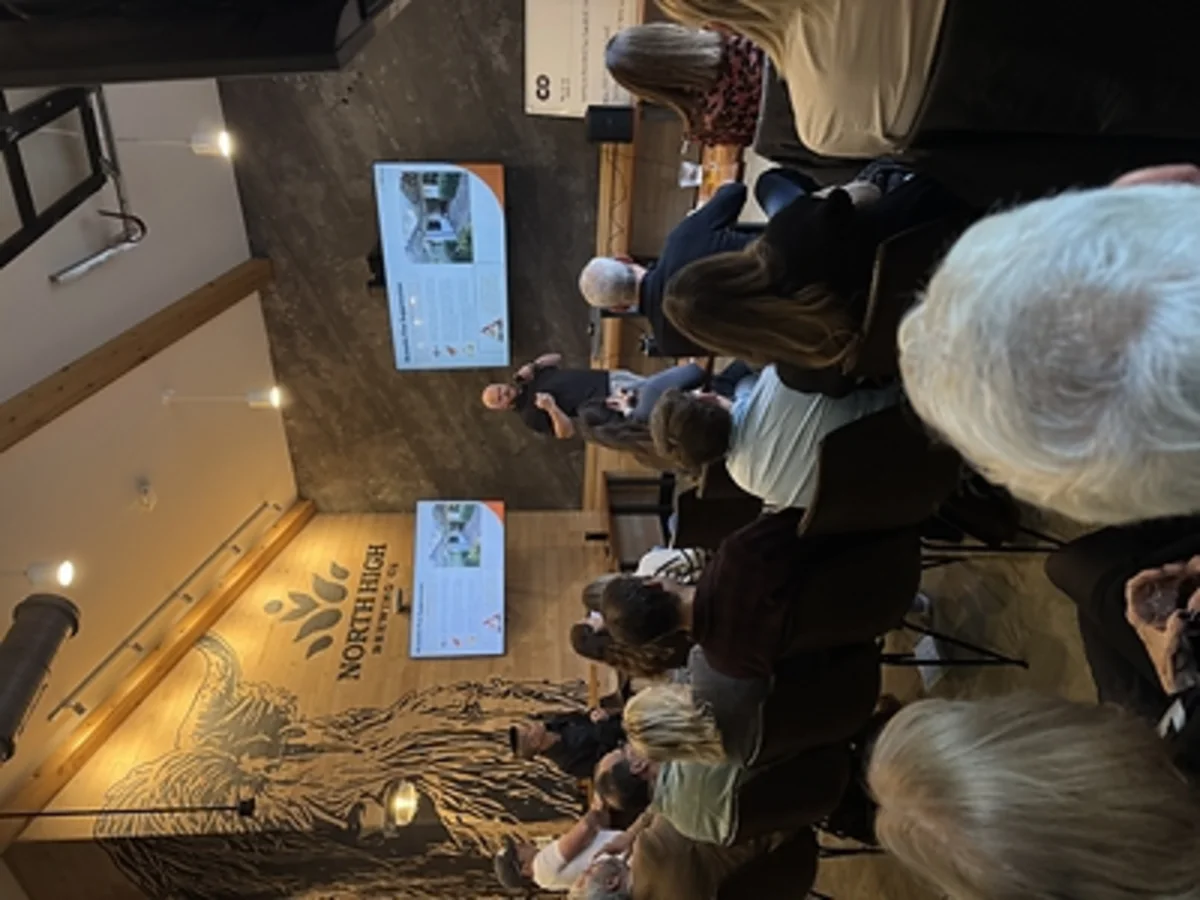
“We have a unique approach, which is business-as-code to create the action layer to orchestrate AI agents,” said Colt McNealy (pictured), LittleHorse founder and CEO, in an interview with CRN.
Companies are rapidly developing AI large language models (LLMs), AI agents, governed MCP servers, AI harnesses and software factories, McNealy said. “But no one is really focusing on the problem of last-mile delivery,” he said, noting that enterprise business processes today often run across different IT systems “that are brittlely connected to each other via point-to-point integrations and glue code.”
(AI harnesses are the software infrastructure and the execution layer wrapped around AI models. They provide the code, boundaries and tools that models need to interact with the outside world and execute multi-step tasks, access external data, and run applications.)
“How can I automate the majority of that using AI?” McNealy said. “The way we do it is we codify the process and orchestrate that process across various systems.”
That, according to McNealy, “allows you to take an incremental approach to swapping out certain tasks from human work to AI work. By making parts of the process deterministic—that can be deterministic—then you reduce the decision surface that the agents have to make, which allows you to deploy them with more confidence using fewer tokens and lower latencies.”
Ioet, a nearshore software development services and IT staff augmentation provider, has been evaluating the LittleHorse product and training ioet development engineers on the technology with an eye toward providing clients with implementation and professional services, said Alejandro Perez, a senior software engineer at ioet, based in Incline Village, Nev., in an interview with CRN.
“We are experimenting with this and our business development team found it very useful because it can automate a lot of processes while maintaining control of everything,” Perez said.
“I think one of the things that we can benefit from LittleHorse is it’s like a guardrail for AI agents,” he said. “AI agents tend to be probabilistic, not deterministic, but we need to keep control of our business processes and have the human in the loop. So AI agents can make decisions and gather context, but we execute what we want to execute, so we still have the control. I think that’s really one of the problems that LittleHorse is solving.”
Under The Covers Of The LittleHorse Platform
LittleHorse was founded in 2022 by Colt McNealy, son of Sun Microsystems co-founder and CEO Scott McNealy, who is an advisor to the company. After devoting several years to developing its technology, the company debuted the first production release of its software 18 months ago.
Under the business-as-code approach, all the organizational logic of a business process (including workflows, standard operating procedures, decision rules and data structures) is written, maintained in one place, and then executed across disparate, connected systems. The LittleHorse core orchestration engine is built on the Apache Kafka and Apache Kafka Streams software.
The new Saddle Command Center 1.3, the third iteration of the company’s product, is a major release that provides an end-to-end platform for implementing business-as-code, making it easier to translate business processes into executable workflows while keeping business requirements and code aligned, according to the company’s announcement.
Saddle Command Center 1.3 “provides the action layer that bridges business requirements and code,” enabling organizations to “orchestrate, stream, connect, and govern agents, microservices and events” for cross-domain applications “while managing the complexity of distributed systems and AI-powered workflows,” according to the company.
New capabilities in Saddle Command Center 1.3 include easy AI agent creation, pre-built task workers and agent skills, and a JavaScript WfSpec software development kit for developers, the company said.
LittleHorse is also offering a free serverless edition for trial use, a move the company described as lowering the barrier to AI application development.
McNealy said LittleHorse has a “rapidly growing” channel operation that began with several system integrator partners who began using the company’s product for client integration projects.
The company has a professional services practice that relies heavily on service partners—one of which is currently developing a LittleHorse product training and certification program for engineers. LittleHorse is also in the early stages of working with a value-added reseller partner.
Altogether McNealy said about one-third of LittleHorse deals come through partners.
While Ioet, the developer service company, is in the early stages of its LittleHorse partnership, Perez says he has “good expectations” for the relationship. Ioet is currently providing LittleHorse with feedback on its technology and developing proof-of-concept solutions around the platform. Perez is bullish on the value of the product—both for internal use and for use as it works with clients—especially around the challenge of leveraging AI agents while maintaining control of business processes.
Related Stories
 Business
California tech exec’s startup cancels diner takeover plans after dating post backlash
2 hours ago
 Business
Africa’s financing gap is also a data visibility problem
5 hours ago
 Business
Icehouse Ventures expands into the US: a Kiwi in New York
6 hours ago
 Business
AI startup Ema raises $77 million in funding led by Creaegis
7 hours ago
 Business
Morocco Launches USD 37 M Startup Catalytic Fund To Boost VC Funding
7 hours ago
 Business
COhatch and City of Dublin to Host Fourth Annual Dublin Pitch Competition to Find Ohio's Next Breakthrough Startup
8 hours ago
 Business
Dolly Parton's manager accuses her nephew of threats and intimidation
9 hours ago
 Business
Nigeria digital economy UNGA side event draws calls for 'clean' business
10 hours ago