
AI, China, and the New Risks to U.S. Security: Q&A with Matan Chorev

AI, China, and the New Risks to U.S. Security: Q&A with Matan Chorev
Matan Chorev, vice president and director of RAND Global and Emerging Risks
As vice president and director of RAND Global and Emerging Risks, Matan Chorev oversees research on some of the most consequential challenges facing the United States and the world. That portfolio ranges from the rapid advance of artificial intelligence to growing biological threats to intensifying geopolitical competition.
Chorev has spent his career working on U.S. national security strategy and diplomacy, in government as well as at policy research organizations. He most recently served as Principal Deputy Director of the State Department's policy planning staff.
How do you define the mission and mandate of RAND Global and Emerging Risks?
We take a lot of inspiration from RAND's founding era, immediately after World War II. The contours of the post-war international order were uncertain, and the implications of nuclear weapons were still unclear. That required some foundational analysis and planning to develop the strategies, doctrines, and capabilities that would help policymakers navigate an international landscape they had not confronted before.
We're at a similar inflection point today. The world as we knew it in the post–Cold War era no longer exists. Many of the assumptions that animated U.S. foreign policy and national security no longer hold. The nature of the emerging order is at best hazy. Meanwhile, AI is reshaping every aspect of how we live, work, fight, and compete. And so our mission is to help decisionmakers understand, anticipate, and navigate a world that is again undergoing rapid transformation.
How do you see AI challenging some of those global assumptions?
We have to be careful here. There's a tendency to argue that everything we know about the world goes away overnight, and that's never the case.
But I think there will be some significant discontinuities. One widely held assumption is that we are moving into an era in which many states will have the power and capacity to pursue strategic autonomy. That means they will have more freedom of action, more diverse relationships, fewer strategic dependencies, and more influence.
My colleague Salman Ahmed and I asked whether and how the rapid advance of AI might challenge that assumption. By mapping the capabilities that states will need to leverage AI to enhance their national power and influence, we showed that AI is likely to frustrate ambitions for strategic autonomy.
Major powers like the United States and China will find it harder than they hoped to translate advantages in AI into geopolitical dominance. They'll still depend on external players for key resources, inputs, markets, and more. Emerging powers, meanwhile, will find that the gap between them and the great powers will grow, rather than shrink, since none of them possesses the combination of inputs—chips, compute, capital, talent, and energy—needed to develop frontier AI.
The implications of this will require states large and small to rethink their national security and diplomatic strategies.
What motivates you to focus on this intersection of AI, national security, and geopolitics?
I'm a strategic planner by training. The joke is that when planners see someone with a bouquet of flowers, we ask who died.
We're trained to always think about strategic surprises, second- and third-order consequences, and how to prepare for them. Governments are challenged to prepare for inconvenient realities. Nearly every national security strategy in the post–Cold War era had to be reimagined in light of events, some of which could have been foreseeable.
Now we're in a moment when it's evident that transformative change is coming—and potentially very soon. Failing to prepare for these transformations is preparing to fail. And the consequences of that failure could be catastrophic, not only for U.S. national security, but also for humanity itself. I can't think of anything more motivating than that.
What do you see as the biggest obstacle to that kind of anticipatory planning?
When it comes to the collision of AI and geopolitics, there are some factors that make this especially difficult. One is just that, unlike in the nuclear era, governments do not control this technology. Second, the trajectory of the technology, and the implications of it, are deeply uncertain, and governments always struggle with managing uncertainty.
AI is also not just a national security capability. It's touching every part of our lives—our labor market, our manufacturing, the social and political questions that are at the root of our democracy. One of the biggest obstacles is just us failing to muster the vision, the commitment, and the capacity to come together as a society and work through these incredibly hard challenges.
You have a conservatory degree alongside your training and career in international relations. How do you apply lessons from music in your policy work?
Fundamentally, the art of performance is interpretation. You have to study not only the score and the composer's markings and writings, but also the historic and cultural context, to understand the composer's intent—and then consider how to make it real and meaningful to audiences today.
It's how I learned about strategic empathy. In diplomacy, that means trying to see the world through the eyes of others so you can better understand what is motivating your friends and foes, how your actions may be seen and interpreted, and what it would take to achieve your desired outcome.
Related Stories
 AI News
Matt Lucas and Hugh Bonneville among actors calling for law on AI voice cloning
5 minutes ago
 AI News
SUNY to incorporate civic discourse and artificial intelligence components into curriculum
6 minutes ago
 AI News
‘Artificial Intelligence will not take jobs away directly’
6 minutes ago
 AI News
Premium Comment Most in logistics still can't make AI pay
6 minutes ago
 AI News
AI startups dominate as private valuations surge past $1 trillion
1 hour ago
 AI News
100+ Tech and Security Organizations Call for Global Cyber Defense Surge Against AI Attacks
1 hour ago
 AI News
How The Anthropic And OpenAI IPOs Could Shake Up The AI Brawl
1 hour ago
 AI News
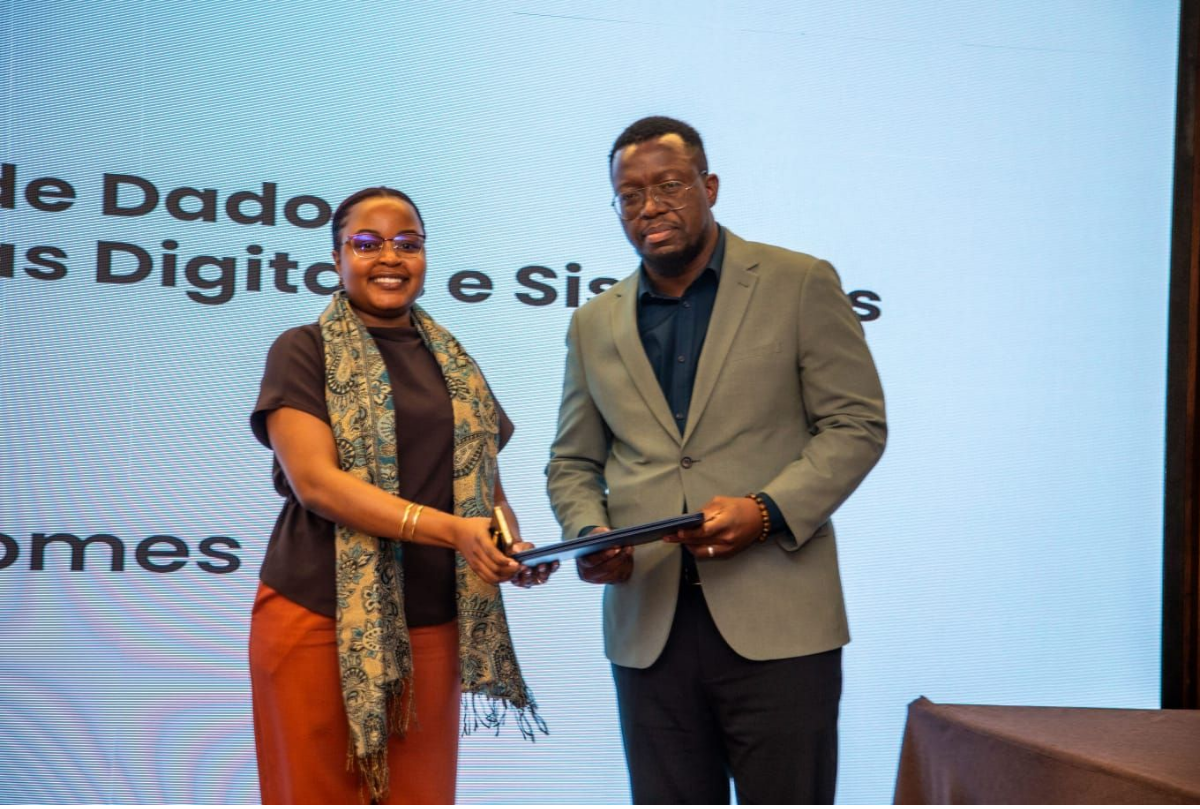
Mozambique Launches AI Association to Drive National Technology Ecosystem
2 hours ago