
A Conversation with Startup Blink CEO Eli David Rokay
Aside from the top four cities — San Francisco, New York, London and Los Angeles — the past two years have either served as beneficial boosts to startup ecosystem growth or contributed to a steady decline. Of course there are many factors that attribute to changing trends. After sifting through the latest index, I reached out to StartupBlink CEO Eli David Rokah to discuss the activity of certain cities, the possibility of closing ecosystem gaps and movements that proved surprising. — Alexis Elmore
Site Selection: San Francisco maintained its dominance due to AI. While New York has been able to increase growth, cities like London are set to benefit from the government’s massive investment into quantum tech and research. Do you think that innovation push will give London the ability to close the gap on U.S. cities?
Rokah: At this stage, we do not see London as close to closing the gap with New York or San Francisco. The gaps are still very substantial, and it would take a major structural shift for London to catch up with those ecosystems.
That being said, never say never. London is a very strong ecosystem, and it has many advantages. But if such a shift were to happen, we do not believe it would happen mainly because of government investment or a specific government initiative. Historically, when an ecosystem makes a dramatic leap, it is usually driven by a major increase in the quality of entrepreneurs, the quality of startups and the ability of those startups to scale globally.
Eli David Rokah, CEO, StartupBlink
Government support can be helpful, and investments in areas like quantum technology can strengthen specific verticals. But in our experience, government programs alone rarely create the kind of leap needed to close very large gaps with ecosystems like San Francisco and New York.
It seems startup ecosystem activity in Boston is beginning to hit a lull. Had it not been for Beijing’s greater decrease, do you believe Boston would have remained stagnant or possibly fallen below Tel Aviv? Do you see it maintaining its positioning among U.S. ecosystems?
Rokah: Boston definitely had a weak year. It is one of the only major U.S. ecosystems in the top ranks to experience a decline, and this is a worrying trend.
That said, Boston is still significantly stronger than Tel Aviv in total score. Tel Aviv has a score of around 86, while Boston is around 127, so the gap is still close to 50 points. In other words, even without Beijing’s decline, Boston would still have remained ahead of Tel Aviv. Its ecosystem strength is still substantially larger.
However, the trend is something to watch. Los Angeles is now opening a gap over Boston, and that gap may become harder to close if Los Angeles continues to grow. We also see very fast growth in places like Austin. While Austin is still much smaller than Boston, if the current growth rates continue for several years, Austin could start closing the gap.
Boston still has a very strong track record, especially in industries such as health tech and deep research-based innovation. But the ecosystem cannot rely only on historical strength. It will need to regain momentum if it wants to protect its position among the top U.S. ecosystems.
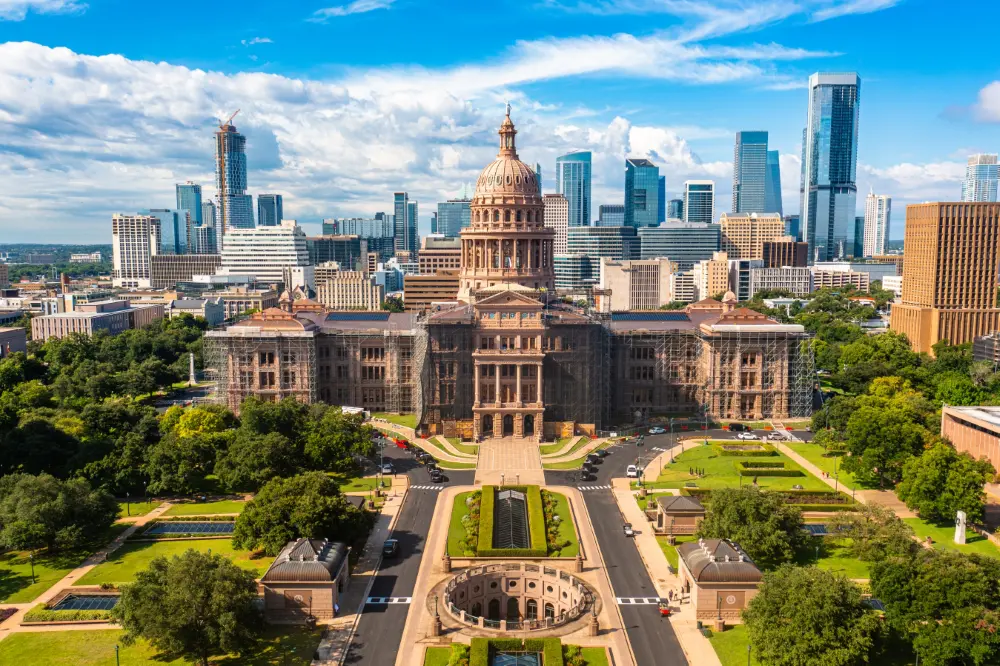
Austin’s startup ecosystem has seen consistent growth since 2023. What factors have allowed this ecosystem to maintain momentum on a global stage and now jump into the top 15?
Rokah: Austin is doing many things correctly. It has positioned itself as a pro-business and pro-startup location, and that positioning matters.
Austin, together with Miami, has benefited from the fact that some larger U.S. startup ecosystems have created uncertainty or sent negative signals to entrepreneurs. When founders feel that an ecosystem is becoming less welcoming, more expensive or less aligned with business growth, they start looking for alternatives. Austin has been one of the biggest beneficiaries of that movement.
It is still a much smaller ecosystem than San Francisco, New York, Boston or Los Angeles, so we should keep the scale in perspective. But the momentum is real. Austin has built a strong narrative as a place where entrepreneurs can build, grow and operate in a more business-friendly environment. That has helped it attract talent, founders and companies, and it is now showing up clearly in the rankings.
“When founders feel that an ecosystem is becoming less welcoming, more expensive or less aligned with business growth, they start looking for alternatives. Austin has been one of the biggest beneficiaries of that movement.”
The greatest rankings jump since 2022 is seen from Singapore City, with a new total score placing it just behind Shanghai. Do you see potential for Singapore to shake up China’s reign in the Asia Pacific region?
Rokah: We do not think Singapore should be compared directly to China. China’s leading ecosystems, such as Beijing and Shanghai, are primarily connected to the strength of a massive domestic market. Singapore is different. It is a regional and global business hub.
Singapore’s growth comes from its position as probably the best place to do business in Southeast Asia. It has become a natural headquarters and expansion base for companies looking at the region.
The real question for Singapore is not whether it can replace China. The question is whether Singapore can consistently become part of the global shortlist for startups and international companies choosing where to relocate, scale or set up regional headquarters. If Singapore continues to strengthen that position, it can start competing more directly with international hubs like Tel Aviv, Boston and Los Angeles, and potentially close the gap with them in the top 20.
Overall, there was a lot of movement across the top 20 cities. Was there anything about this year’s rankings that surprised you?
Rokah: A few things stood out. First, the resilience of Tel Aviv is remarkable. Considering the level of turmoil Israel has experienced, the fact that Tel Aviv remains so strong is surprising and shows the depth of the ecosystem.
Second, Austin’s rate of growth is extraordinary. It is one of the clearest examples of a startup ecosystem gaining momentum by positioning itself as a business-friendly and founder-friendly alternative to larger and more established ecosystems.
Third, I am very interested to see what happens in New York in the coming years. New York has had strong recent success, but there are also shifts that could affect its startup ecosystem and its attitude toward entrepreneurs. When an ecosystem is doing well, it should be very careful before changing policies or narratives in a way that might make entrepreneurs feel less welcome. The competition for founders and startups is global, and ecosystems can lose momentum if they send the wrong signals.
Related Stories
 AI News
Ottawa sees more than 100 mm of rain as severe Canada Day storm floods basements
3 seconds ago
 AI News
Opinion: Venture capital’s software bias constrains materials start
3 minutes ago
 AI News
Intel, Marvell Technology, and AMD Stocks Trade Down, What You Need To Know
5 minutes ago
 AI News
Creative Medical Technology awards $100,000 bonus to CEO Timothy Warbington
5 minutes ago
 AI News
America 500? 3 futurists predict what the U.S. will be like in the centuries ahead
5 minutes ago
 AI News
Microsoft Spends $2.5 Billion on Customer AI Deployments
6 minutes ago
 AI News
Companies Trust AI’s Advice but Not Its Actions
6 minutes ago
 AI News
UN report: AI brings enormous opportunities
6 minutes ago