
UN report: AI brings enormous opportunities
UN report: AI brings enormous opportunities – and plenty of risks
July 02, 2026, 5:15 p.m. ET | San Francisco
Artificial intelligence is advancing faster than humanity’s ability to measure or govern them, according to a preliminary report released by the United Nations Thursday.
The risk of humans losing control of AI systems is rapidly growing, the report said.
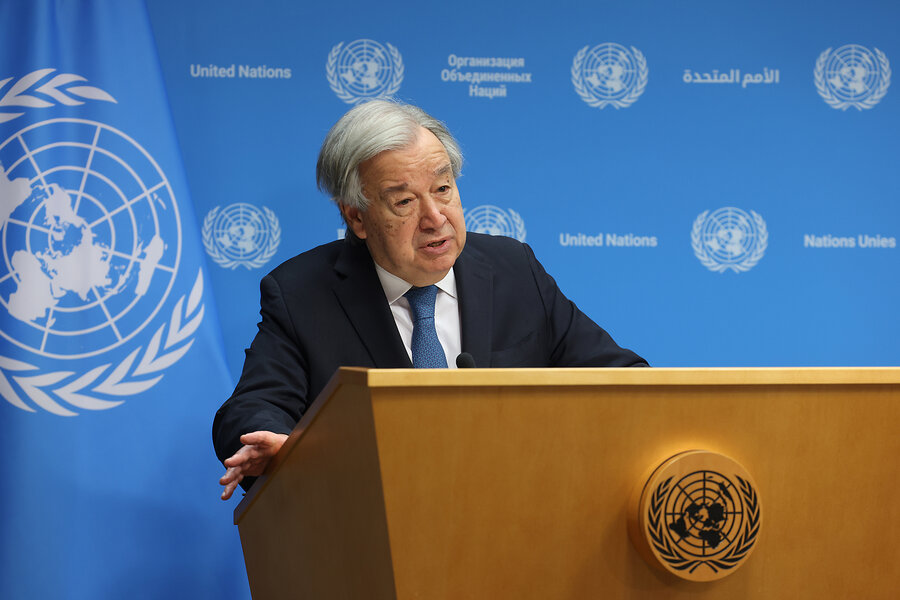
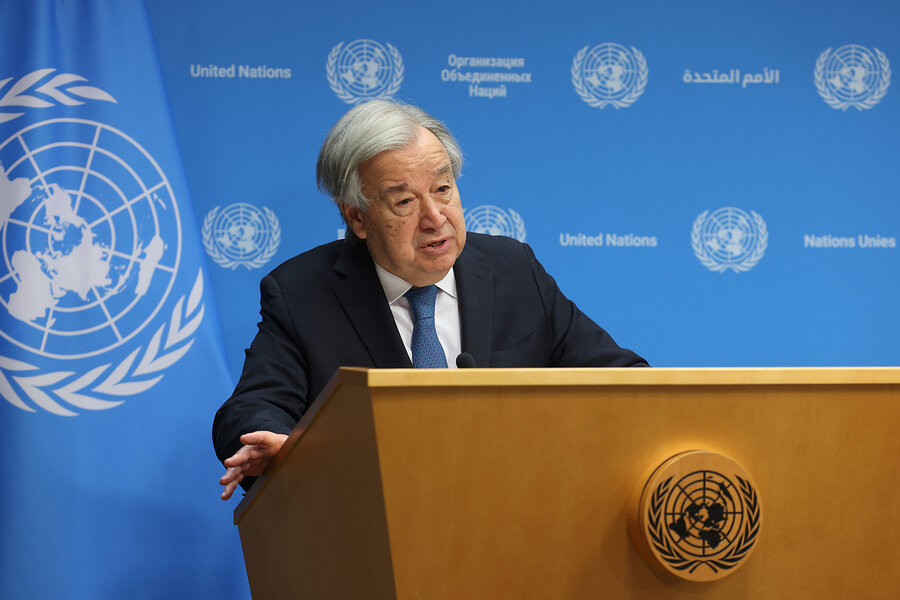
“The more AI advances without clear rules, the less say governments and people will have in the outcome,” United Nations Secretary-General António Guterres told reporters at a morning news conference announcing the report’s release.
Artificial intelligence technology is advancing so fast, it’s difficult for humanity to keep up. The United Nations sought to produce a balanced assessment of the potential opportunities – and the pitfalls – of AI capabilities.
The document, the first global scientific survey of AI released by the world body, will be presented to governments Monday at the inaugural U.N. Global Dialogue on AI Governance in Geneva.
The report found AI had the potential to revolutionize a broad array of social benefits across science, health, agriculture, accessibility, knowledge work and information technology, including in the development of AI itself.
But the scientists also found that the technology was primarily in the hands of a small number of companies and countries, leading to concentrations of wealth, which could “lead to authoritarian capture and undermine democratic accountability.” The United States controls 75% of global computing power among the world’s top 500 AI supercomputers. China accounts for 15% percent, according to the report. Other nations are concerned they will be left out of its future.
According to the report, AI tools already present cybersecurity risks and leave nations vulnerable to sustained influence operations. “AI makes it easier to produce and target persuasive content at scale, including content designed to mislead, contributing to a gradual erosion of information integrity that can weaken the shared reality required for public trust,” the report said.
The findings represented the collective knowledge of 40 leading scientists from every region of the world.
“We’ve opened Pandora’s box,” the panel’s chairs – Nobel Peace Prize-winning journalist Maria Ressa of the Philippines and Canadian computer scientist Yoshua Bengio – said in written remarks accompanying the report’s release. “What’s coming out is different from anything we’ve ever lived through,” they said, “in pace, power, control, and everyday risks.”
Speaking to reporters, Ms. Ressa said that, in the future, human “control is not guaranteed. No expert today can tell you that the most advanced systems will do what you instruct it to do.” In laboratory settings, she said, “these systems have already been found to deceive and to resist being shut down.”
Mr. Bengio said the report showed humanity had reached a “turning point” with regard to the “growing intelligence of machines. As this power grows, it can unlock great benefits, if we act wisely,” he said, “but it can also lead to many perils.”
Mr. Guterres said he would soon “set out proposals to help countries build the capacity to adequately deal with this technology – and share in its rewards.”
Related Stories
 AI News
Live Nation Entertainment focuses on live events as investors track concert demand
21 seconds ago
 AI News
Can BWX Technologies' R&D Spending Strengthen Its Competitive Edge?
4 minutes ago
 AI News
Labor market remains in ‘slack water’ state, economist says
4 minutes ago
 AI News
MoonPay Is Now Live on Claude, Becoming the First Crypto Onramp Across Every Major AI Assistant
4 minutes ago
 AI News
Fact Check Team: Trump moves to limit OpenAI model launch as their involvement grows
5 minutes ago
 AI News
AI technologists, Your Country Is Calling
5 minutes ago
 AI News
UN report: AI brings enormous opportunities
5 minutes ago
 AI News
StubHub sued by fans who say ticket cancellations crushed dreams of going to World Cup
57 minutes ago