
5 CleanTech opportunities European startups should watch in the Republic of Korea (Sponsored)
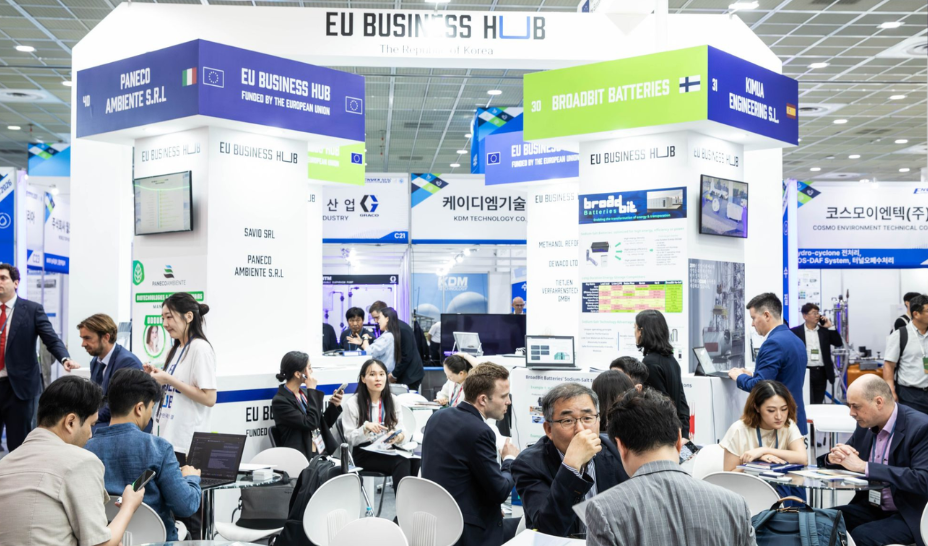
The Republic of Korea is already a global leader in semiconductors, batteries and advanced manufacturing. Now, its energy sector is undergoing a major transformation too.
The country’s per-capita energy consumption is around 40% above the OECD average. At the same time, the Republic of Korea is pursuing carbon neutrality by 2050 and plans for more than 70% of its electricity to come from carbon-free sources by 2038. This means the country needs not only more clean energy, but also smarter ways to store, manage and distribute it.
For European CleanTech startups, this is creating opportunities in areas ranging from AI-powered grids and energy storage to virtual power plants and smarter energy management.
These are also among the opportunities explored through the EU Business Hub – Japan and the Republic of Korea, an EU-funded programme helping European SMEs connect with partners and customers in these markets. Its upcoming EU Business Hub @ Korea Smart Grid Expo 2027 business mission will give European companies a closer look at the Republic of Korea’s evolving energy market.
Adding renewable energy is only one part of the energy transition. The grid also needs to become smarter to manage it efficiently.
The Republic of Korea is investing in a smarter, more digital grid. Its 3rd Basic Plan for Intelligent Power Grids (2023-2027) supports technologies including AI and cloud-based energy platforms, with the aim of better managing electricity demand and integrating distributed energy resources. For startups, this creates opportunities in areas such as grid analytics, demand forecasting, digital twins, monitoring and AI-powered optimisation.
European companies do not necessarily need to compete with Korean industrial giants on infrastructure. A more realistic opportunity may be to provide the software and technologies that make existing energy systems smarter and more efficient.
Startup angle: Focus on a measurable result. Can your technology improve forecasting, reduce costs or make it easier to integrate renewable energy? A specific business case will be more compelling than a broad “AI for energy” pitch.
2. Energy storage beyond the battery
The Republic of Korea hardly needs an introduction to batteries. It is home to some of the world’s largest battery manufacturers.
But the opportunity does not end with manufacturing battery cells.
As more variable renewable power enters the electricity system, storing that energy – and deciding when and how to use it – becomes increasingly important. The Republic of Korea’s ESS Industry Development Strategy aims to capture 35% of the global energy storage system market by 2036.
For European startups, opportunities range from battery management and storage optimisation software to thermal management, diagnostics, power electronics and second-life battery technologies.
Safety is another important area. ESS battery fires have led to stricter safety and insurance requirements in the Republic of Korea, creating demand for better monitoring, diagnostics and risk-management technologies.
Startup angle: Don’t try to compete across the entire battery value chain. Look for a specific problem that battery manufacturers, utilities or storage operators need to solve.
3. Virtual power plants and distributed energy
The electricity system of the future will not rely only on large power stations. Thousands of smaller assets – from rooftop solar and batteries to EV chargers, buildings and industrial facilities – can increasingly work together as a flexible energy resource.
This is the idea behind Virtual Power Plants (VPPs): digital platforms that connect and coordinate distributed energy assets.
For startups, this opens opportunities in aggregation software, real-time energy management, automated demand response and technologies that help businesses and utilities decide when to consume, store or sell electricity.
This is particularly relevant in the Republic of Korea, where limitations in the grid’s ability to absorb additional renewable power are increasing the need to use existing capacity more intelligently.
Startup angle: Don’t sell “a VPP“. Sell the problem it solves – reducing peak demand, making better use of renewable power, monetising unused flexibility or lowering a customer’s electricity bill.
4. Smarter energy use in factories and buildings
The Republic of Korea’s highly industrialised economy creates another opportunity: helping factories and buildings use energy more efficiently.
Energy-intensive industries face growing pressure to cut both energy costs and emissions without compromising competitiveness. This creates demand for energy management software, industrial IoT, smart sensors and AI-powered optimisation.
For European startups, the business case is straightforward: technologies that help factories, data centres and commercial buildings use less energy can deliver direct and measurable savings.
The market is growing quickly. Globally, the Energy Management Systems market is projected to more than double from €51.3 billion in 2024 to €107.8 billion by 2030.
Startup angle: Lead with ROI. Lower energy consumption, reduced peak loads and a clear payback period may resonate more strongly with industrial customers than sustainability claims alone.
5. The technologies enabling the hydrogen economy
Hydrogen is often associated with huge infrastructure projects. But startups do not need to build hydrogen plants or manufacture electrolysers to find opportunities in this market.
The Republic of Korea sees hydrogen as an important part of its long-term energy transition. Under carbon-neutrality scenarios cited in EU Business Hub market research, hydrogen could account for around a quarter of final energy consumption by 2050.
For European startups, some of the most accessible opportunities may be in the technologies around hydrogen itself: sensors and monitoring, safety solutions, optimisation software, storage and transport technologies, and certification and traceability.
European companies can also benefit from growing EU-Republic of Korea cooperation in clean technologies. The Republic of Korea’s association with Horizon Europe since 2025, for example, opens further opportunities for joint research and innovation.
Startup angle: Look for the bottleneck rather than the biggest project. Specialised technology, software or safety solutions can offer a more realistic route into the hydrogen ecosystem for a smaller company.
The opportunity is real – but so are the barriers
The Republic of Korea is not an easy plug-and-play market.
Large domestic companies play a powerful role in the energy ecosystem, public procurement can favour local suppliers, and certification requirements can add complexity for foreign technology providers.
For a startup, that changes the market-entry question.
Instead of asking “How do we sell our technology in Korea?”, it may be more useful to ask: “Which Korean company already serves the customer we need – and where does our technology fill a gap in its offering?”
That is where structured market-entry programmes can help.
From market opportunity to market entry
The upcoming EU Business Hub @ Korea Smart Grid Expo 2027 business mission will bring up to 50 European SMEs and startups to the Republic of Korea from 31 January to 4 February 2027.
Participating companies will have the opportunity to showcase their technologies at the Korea Smart Grid Expo, meet potential Korean business partners through tailored B2B matchmaking, receive market intelligence and business coaching, and benefit from customised business support and financial support for accommodation.
For founders considering the Republic of Korea, the mission offers something that desk research cannot: the opportunity to test whether there is genuine demand for their technology, understand how Korean buyers respond to their proposition and start building the local relationships that are often critical to market entry.
Applications are open until 30 October 2026!
Apply here for EU Business Hub @ Korea Smart Grid Expo 2027.
Related Stories
 Technology
The Top 7 Debt Recovery Startups To Keep An Eye On
39 minutes ago
 Technology
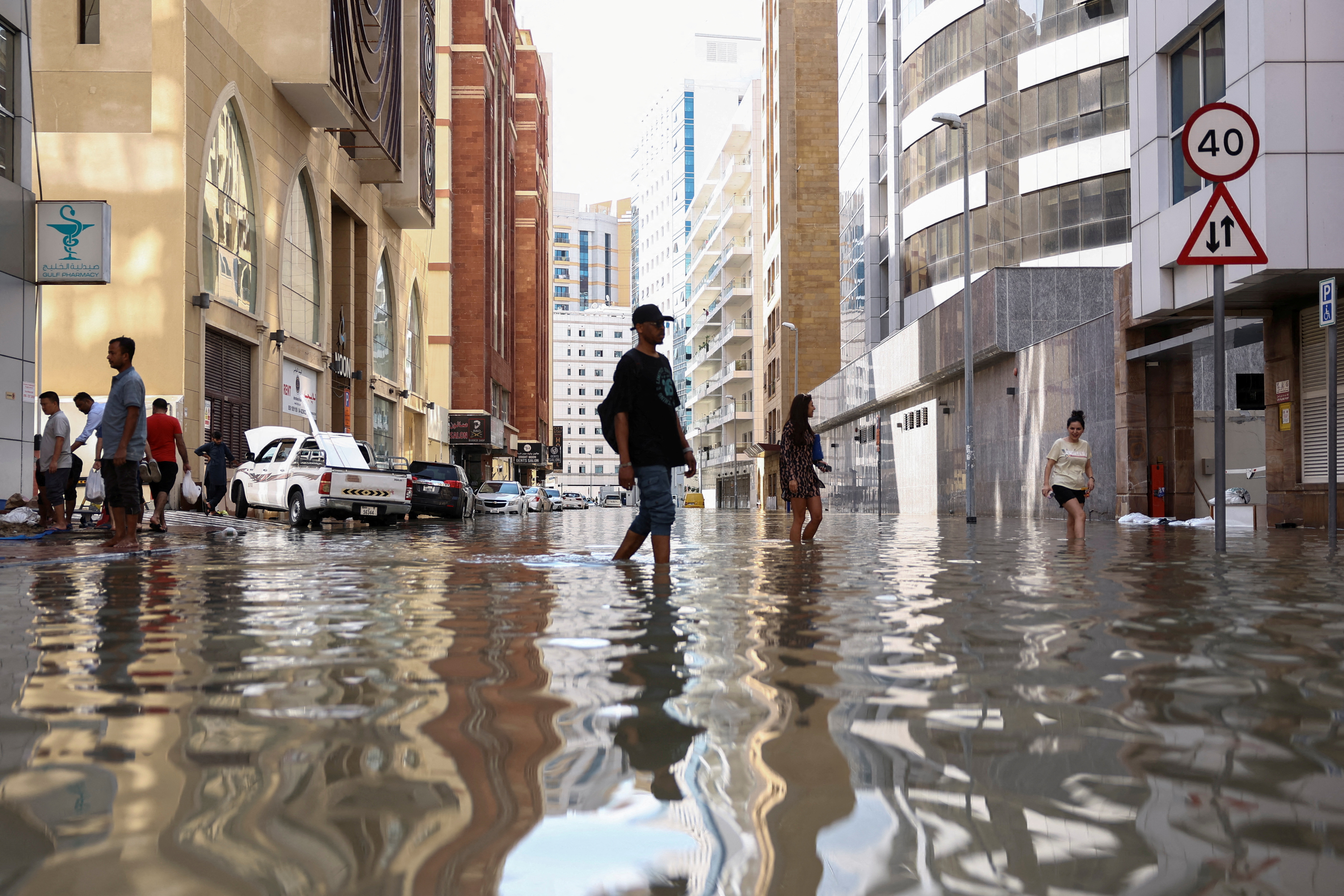
Managing rainfall through technology, bricks could reduce flooding in Gulf region
40 minutes ago
 Technology
A Niagara construction dynasty just wrote a $1
1 hour ago
 Technology
Jeypore police turn to technology for smarter night patrolling
1 hour ago
 Technology
Exclusive: Ex
2 hours ago
 Technology
Robotics startups are courting university researchers. Microagi just hired eight.
2 hours ago
 Technology
Two
3 hours ago
 Technology
Why RLX Technology (RLX) Is Getting Attention Today
3 hours ago