
YSR and the politics of public welfare
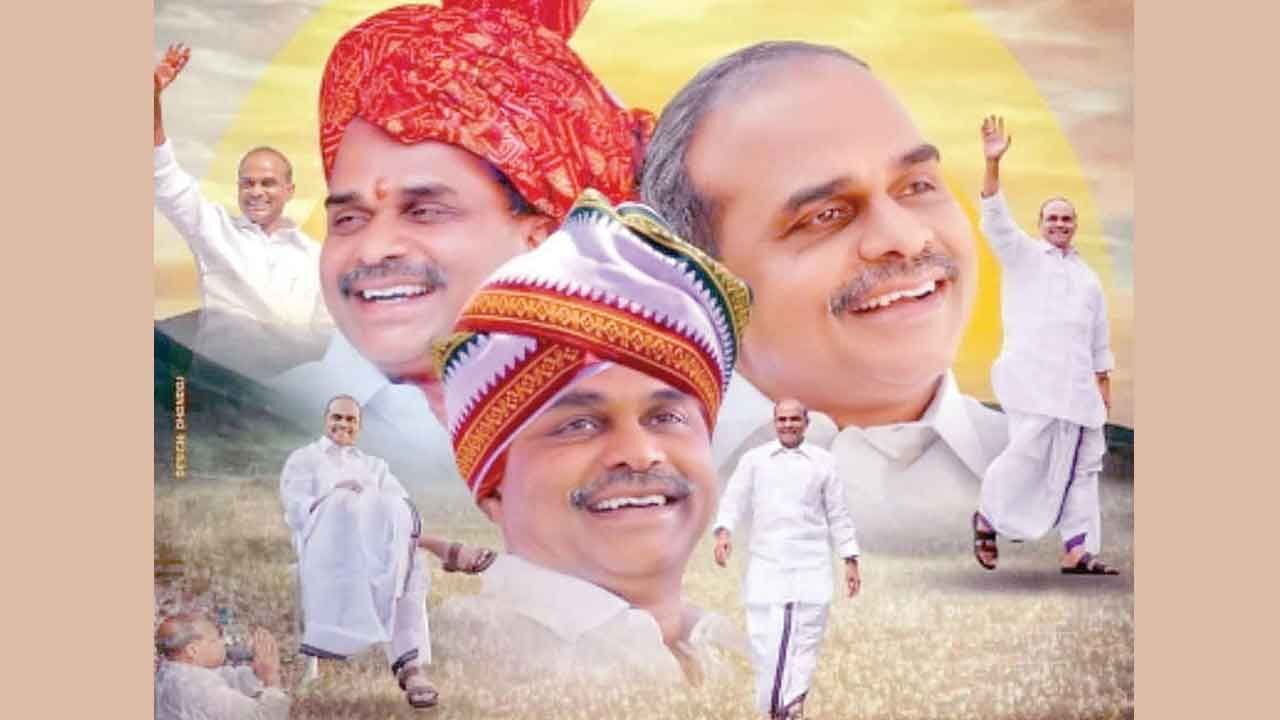
YSR and the politics of public welfare
Today (July 8) is the former chief minister’s 77th birth anniversary
Politics is not merely about winning elections and occupying positions of power. At its best, it is a responsibility to improve people’s lives. While many leaders attain office through electoral success, only a few transform political power into an instrument of public welfare and leave an enduring imprint on society. Among such leaders, former chief minister of the undivided Andhra Pradesh, Dr Yeduguri Sandinti Rajasekhara Reddy (YSR), occupies a distinctive place in the political history of the Telugu-speaking people.
His birth anniversary (July 8) is not merely an occasion to remember a former chief minister. It is an opportunity to revisit a model of governance that sought to place public welfare at the centre of policymaking and viewed social justice as a guiding principle of administration.
A close examination of YSR’s political journey reveals that power was never an end in itself. Rather, he viewed it as a means to serve society. His governance was shaped by a simple, yet profound, belief that public policy must emerge from the lived experiences of ordinary people. This conviction enabled him to establish an emotional bond with citizens that extended well beyond conventional political allegiance.
Before entering full-time politics, he practised medicine, an experience that exposed him to the realities of poverty, illness, and rural distress. His medical background deepened his understanding of human suffering and reinforced his belief that governance must be compassionate and responsive. He preferred engaging directly with people rather than relying solely on bureaucratic reports, a trait that later became a defining feature of his political leadership.
That philosophy found its most visible expression in the historic Praja Prasthanam padayatra of 2003. Covering nearly 1,500 kilometres from Chevella to Ichchapuram, the march was more than a political campaign; it was an extensive exercise in public listening. Walking through villages under difficult conditions, he interacted with farmers, labourers, students, women, and the rural poor, gaining first-hand insight into their aspirations and hardships. Many of the welfare initiatives introduced after he assumed office in 2004 reflected the concerns he encountered during that journey.
One of the earliest decisions of his government was the provision of free electricity to farmers, aimed at strengthening agricultural productivity and easing the burden on cultivators. Recognising agriculture as the backbone of the rural economy, his administration treated farmers’ welfare as a broader social and economic priority rather than merely an agricultural issue.
His government’s interventions in healthcare marked a significant shift in access to medical services for economically disadvantaged families. The Aarogyasri health insurance programme enabled poor patients to receive advanced medical treatment that had previously remained beyond their reach. Complementing this initiative were the 108 Emergency ambulance service and the 104 rural health service, both of which substantially improved emergency healthcare delivery and primary medical access across the State. Together, these programmes reflected the principle that quality healthcare should not remain the privilege of the affluent. Education was another sector that received sustained policy attention. The fee reimbursement scheme opened the doors of higher education to lakhs of students from financially weaker sections. By ensuring that economic hardship did not become a barrier to academic advancement, the programme contributed significantly to educational inclusion and social mobility.
Housing and women’s empowerment also occupied a central place in his governance agenda. The Indiramma Housing Scheme enabled thousands of poor families to realise the dream of owning a permanent home. Simultaneously, support extended to women’s Self-Help Groups strengthened financial independence of rural women and encouraged grassroots entrepreneurship. His administration recognised that women’s economic empowerment was integral to family welfare and inclusive development.
Water resource development became another defining feature of his tenure. Through the ambitious Jalayagnam irrigation initiative, the government sought to expand irrigation infrastructure and improve water availability for agriculture. While aspects of its implementation have continued to generate debate, the programme undeniably reflected a long-term commitment to addressing irrigation needs on an unprecedented scale.
Equally noteworthy was Dr YSR’s personal style of leadership. Despite occupying the highest executive office in the State, he remained accessible to ordinary citizens. His willingness to visit villages, listen patiently to grievances, and encourage officials to adopt a people-centric approach enhanced his credibility as a leader who valued human connection alongside administrative authority.
YSR’s political legacy extends far beyond individual welfare schemes. His broader contribution lay in redefining the role of government as an active partner in improving the lives of farmers, students, women, workers, and the economically vulnerable. Under his leadership, welfare was not treated as an isolated policy objective but as a fundamental obligation of democratic governance.
His untimely death in a helicopter crash on September 2, 2009, plunged the State into profound grief. The extraordinary public response that followed underscored the emotional relationship he had built with millions of people across regions and social groups. For many, the loss was not merely that of a Chief Minister but of a leader who had become an integral part of their collective aspirations.
History ultimately judges political leaders not by the offices they held but by the lives they transformed. By that measure, Dr Y S Rajasekhara Reddy remains one of the most influential architects of welfare-oriented governance in contemporary Andhra Pradesh. His emphasis on farmers’ welfare, accessible healthcare, educational opportunity, women’s empowerment, and rural development continues to shape public discourse even years after his passing.
Political landscapes may evolve and governments may change, but leaders who succeed in placing human welfare at the centre of governance leave a legacy that transcends electoral cycles. It is this enduring legacy that continues to keep YSR alive in the public memory as a leader who sought to make government meaningful for the most vulnerable sections of society.
Related Stories
 Education
Huge protests in France over education, rising prices | NHK WORLD
3 days ago
 Education
France shaken by fiery street protests uniting students, workers and 'yellow vests'
3 days ago
 Education
Strike dispute resolved at four schools
3 days ago
 Education
Watch: 'Mood has really shifted' as Paris protesters clash with police
4 days ago
 Education
Anti-government protests sparked by Kushner
5 days ago
 Education
‘Pretty shoddy’: Prof says N.B. education plan attributes to him an article that doesn’t seem to exist
6 days ago
 Education
Kamal Mitra Chenoy: JNU professor’s education, career and why he is in the news?
1 week ago
 Education
French police detain teen pupil suspected in school shooting in which 2 were wounded
1 week ago