
With Atlanta Roots, Fusen Builds a Global Student Startup Network
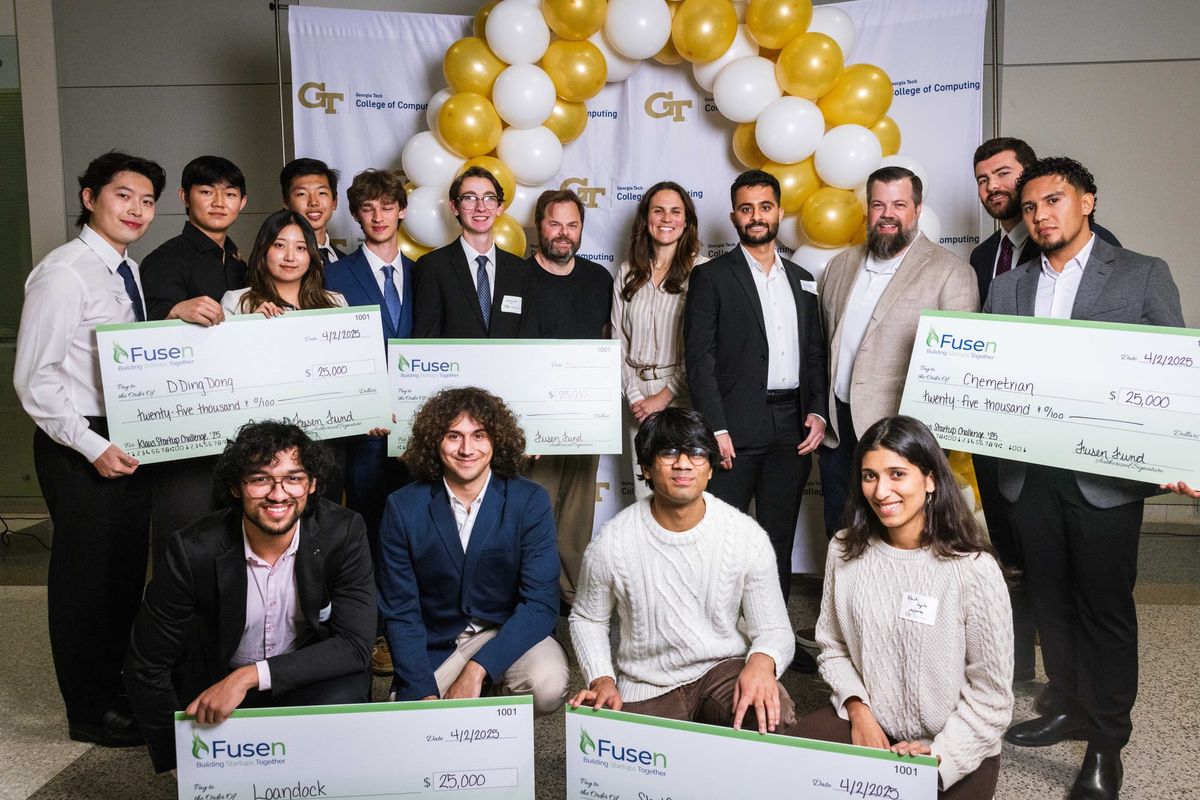
ATLANTA, September 22 (Hypepotamus) - Few people have shaped the Atlanta tech landscape the way Christopher Klaus has as a technology founder and builder of startup communities and ecosystems.
With his latest venture, Klaus and his team are turning their attention to the next generation of global entrepreneurs. Fusen is a startup accelerator that helps students explore entrepreneurship, develop ideas, launch companies, and prepare for growth. Its network now includes 123 active companies founded by students from more than 15 universities around the world.
Make every text, call, and lead count. CallRail connects the dots between your campaigns, conversations, and customers.
For Klaus, the focus on student founders is personal. He was one himself, starting Internet Security Systems (ISS) while still a student and experiencing the full lifecycle of building a technology company. ISS went public and was ultimately acquired by IBM.
That experience gave Klaus an appreciation for the value of reaching entrepreneurs earlier, when they are still learning how to identify problems, understand customers, test ideas, and build companies. It also helped shape his belief that students can benefit from access to entrepreneurial communities, experienced mentors, resources, and capital much earlier in their journeys.
Today, that opportunity is taking on new significance as artificial intelligence changes what it takes to start and scale a technology company.
“We are living through one of the biggest technological shifts in history, and AI is going to impact virtually every industry and every business,” Klaus said. “I believe this may be one of the best times in human history to build a company.”
The falling cost and complexity of turning an idea into a working product is giving students and small teams access to capabilities once reserved for larger, better-capitalized companies.
“Capabilities that once required large teams and significant capital are becoming accessible to individuals and small teams,” Klaus added. “Intelligence should be baked into the DNA of the next generation of startups, whether through distributed AI, open-source models, or entirely new ways of building and delivering products.”
For students, Klaus sees a particular advantage in learning to build with these technologies from the beginning.
“They have the opportunity to learn, experiment, and build with these technologies from the very beginning rather than having to transform an existing business around them.”
How Fusen Finds and Supports Student Founders
The emphasis on reaching entrepreneurs early shapes how Fusen works with student founders. Fusen looks first at the founder, not simply the initial idea, focusing on qualities such as resilience, curiosity, problem-solving ability, and the ability to identify meaningful customer problems.
The initial business idea carries less weight because Fusen expects it to evolve as founders talk with customers, test assumptions, and validate the market. The aim is not simply to find students who already have the right startup idea, but to help develop founders who can identify worthwhile problems and build around what they learn.
To reach those students, Fusen works with universities and existing entrepreneurship programs, including Georgia Tech’s CREATE-X and Universidad de Concepción’s 7th Gear Challenge in Chile. It also operates eight-week startup challenges on campuses, including the Klaus Startup Challenge within Georgia Tech’s College of Computing and a newer challenge with the university’s Daniel Guggenheim School of Aerospace Engineering.
Fusen has also hosted two cohorts of a 12-week summer fellowship for students interested in startups who may not yet have an idea or a co-founding team. Structured similarly to a venture studio, the fellowship brings students together to form teams, identify problems, conduct customer discovery, and build an initial version of a product.
The goal is to give students a structured pathway into entrepreneurship—one that allows them to explore problems, learn by building, find potential co-founders, and take the first steps toward creating a company.
From Student Idea to Growing Company
Fusen’s support continues as companies move beyond those earliest stages. Its accelerators and workshops are designed to help founders launch, find product-market fit, acquire customers, and build the systems needed to grow.
Its Ignite Accelerator, for example, works with companies that have demonstrated early product-market fit. The program helps founders refine their ideal customer profiles and value propositions, strengthen their go-to-market strategies, and accelerate customer acquisition.
Fusen recently brought the first two Ignite cohorts together with invited early-stage investors and community partners for a curated Demo Day. The event gave founders an opportunity to build relationships with potential sources of capital while also connecting with the broader community around their companies.
For Fusen, funding is one part of that support system rather than its defining purpose. The broader aim is to create a community in which students can encounter entrepreneurship earlier, develop as founders, and access the relationships and resources they need as their companies grow.
See more Hypepotamus stories in your search results
➡️ Add Hypepotamus to Google
Related Stories
 Business
Sylvester Stallone calls Trump’s ‘special ambassador’ role ‘impossible’
1 hour ago
 Business
Republican senator calls for investigation after Trump son's wedding party bankrolled by Russian oligarch
1 hour ago
 Business
British Columbians to choose next provincial government on Oct. 24 after Eby calls early vote
1 hour ago
 Business
John Anastasi Appointed to Massachusetts Small Business Development Center Statewide Advisory Council
1 hour ago
 Business
Eric Ries: How to scale without losing your soul
6 hours ago
 Business
Cyera raises $400 million from Goldman Sachs, bringing 2026 funding to $1.4 billion
8 hours ago
 Business
Heidi raises $475 million, hits $1.26 billion valuation in blockbuster funding round
9 hours ago
 Business
Fixing agent memory
11 hours ago