
What we know about the Cornell University frat house rape investigation
What we know about Cornell University frat house rape investigation
New York state prosecutors have reopened an investigation into the alleged rape of a woman at Cornell University in 2024.
The woman filed a civil lawsuit against the Ivy League university on 16 September alleging she was drugged and raped at a fraternity house at the university.
She also alleged that Cornell failed to protect her or adequately punish the men involved.
The men have been dubbed the "Cornell Seven" and the woman was identified as Jane Doe in court filings.
Cornell has said it supported presenting the case to a grand jury, while rejecting as "false" claims that it failed to punish those involved.
Here's what we know about the case.
In a 101-page civil lawsuit, the woman alleged that on the night of 19 October 2024, seven men from Cornell's Chi Phi fraternity chapter allegedly assaulted her for hours in an incident involving alcohol and the drug ketamine.
She was a 20-year-old Cornell undergraduate at the time.
Jane Doe said in her lawsuit that she was intoxicated during the alleged incident and incapable of providing consent.
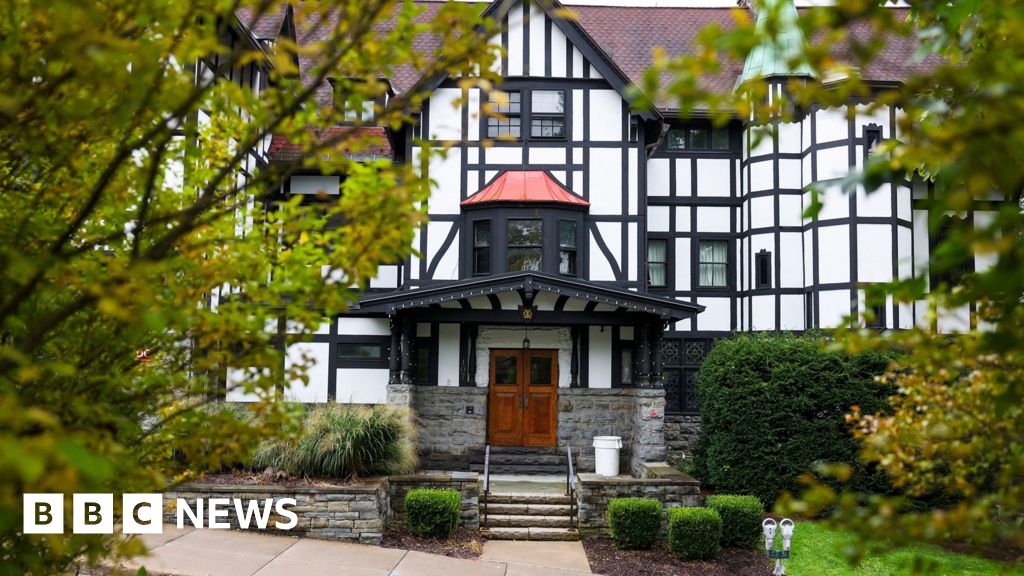
She says she left her sorority sisters after drinking that night and "stumbled alone" to the Chi Phi fraternity house in the city of Ithaca to see a male friend.
The lawsuit alleges sexual assault and battery, negligence, breach of contract and violations of New York's Human Rights Law.
It was filed against the university, fraternity sorority and men involved in the alleged attack.
The lawsuit contains an image purported to be from a fraternity group chat in which a participant alerted other members, in vulgar terms, to the potential for a sexual encounter with Jane Doe.
Her lawyer has said she was "traumatised, numb and unable to function or accept the horror of what had happened" in the days after the assault, which she reported to Cornell University Police on 8 November 2024.
The outrage in recent weeks grew when Jane Doe alleged in her lawsuit that the men were "afforded the opportunity to mitigate their conduct by submitting essays".
Doe's lawyer has said two of those involved were expelled.
The university newspaper's editorial board published the names of the defendants in the lawsuit on 21 September in a piece titled "Cornell Won't, We Will", fuelling a social media outcry.
What was in the fraternity Snapchat and text messages?
The Cornell University Police Department provided an image of the Snapchat group, titled Chi Phi Actives, to prosecutors as evidence in November 2024, the university said.
The members are named in the chat and discuss a "free" sexual encounter with Jane Doe, using coarse language, just before 02:00 local time on 20 October 2024.
CBS News New York has also published excerpts of additional text messages reportedly exchanged between one of the defendants and a woman who appears to be the person who made the allegations.
The messages were reportedly sent two days after the alleged assault.
In one of the messages, one of the men appeared to apologise for "how things went down".
He said his memory was "kinda fuzzy", and that he and another man felt bad for being too intoxicated to "shut it down and kick people out before it got way out of hand".
The woman in the text chain replied saying her memory was "super clouded too" and that they were all intoxicated.
She also wrote that "non(e) of the sexual stuff was illegal", that she liked being with him and another man.
Doe suggested they smoke together again, but leave out "the extra 5 billion men and ketamine".
The woman said she reported the incident to Cornell University Police two weeks after it took place.
Shortly after, Cornell University issued a public statement regarding the "serious and deeply disturbing allegations of drug abuse and sexual violence at the Chi Phi fraternity house".
It said that the campus police department was investigating and that it had suspended the local chapter of the Chi Phi fraternity, as well as "a number of students".
Cornell also said it had opened an internal investigation as well as a civil rights inquiry under the Title IX law, which bars sex discrimination in schools that receive funding from the federal government, including most universities.
Following the new lawsuit, the university disputed Jane Doe's allegation that it did not adequately investigate or punish the alleged perpetrators.
The university said in a statement that the matter was referred to a "panel of trained faculty and staff" that issued "a range of sanctions, which included expulsions and suspensions from Cornell".
Cornell did not deny that the punishment for some of those involved included writing an essay.
But it said: "None of the individuals charged were offered the opportunity to write essays as a sole consequence of their involvement."
In a statement on Tuesday, Cornell said "temporary suspensions and other restrictive measures" were issued when the conduct was reported.
It also said the events that took place on its campus in 2024 "were appalling then and remain so now".
"We are doing all we can to foster a culture where sexual misconduct is never tolerated," it said.
The Xi Chapter of the Chi Phi fraternity was closed in 2024 and remains barred from campus.
Jane Doe named Chi Phi fraternity as one of the defendants in her civil suit, alleging she suffered physical and emotional damage as a result of their actions.
Trey Robb, interim executive director of the Chi Phi fraternity, said in a statement that the organisation had expelled the accused members of Cornell's chapter.
"Our records confirm that just three days after 'Jane Doe' filed a police report, the Xi chapter voted unanimously to remove the accused members from its rolls," Robb said. "The chapter also recommended that our national fraternity permanently expel them, and our Grand Council did so at a subsequent meeting."
The fraternity "will not comment on matters before the courts or under investigation", Robb said.
Why is the case being reopened?
The county's top prosecutor said on Monday that his office would reopen a criminal inquiry into the alleged rape.
Once appropriate charges were determined, the case would be prosecuted "in the most objective and impartial means possible" through a grand jury, said Tompkins County District Attorney Matthew Van Houten.
In the US legal system, prosecutors convene grand juries to weigh evidence and testimony and eventually vote on whether they merit criminal charges.
The prosecutor said that at the time of the assault two years ago, his office concluded that evidence from the woman's statement to authorities did not meet the legal bar to bring charges.
He said he contacted Jane Doe and her lawyers for more information as he prepared to bring the case to a grand jury.
In his statement, Van Houten included a summary of what Doe told the Cornell University Police Department in 2024 after the alleged attack, noting it differed from the allegations laid out in the lawsuit.
"Jane Doe's sworn statement in November of 2024 did not allege that she was drugged against her will or gang raped," Van Houten said in a statement on Monday.
"On the contrary, Jane Doe's statement described her participation in drug use and sexual conduct as voluntary, conscious, and consensual."
However, CBS News New York reports that it has obtained a transcript of Doe's interviews with campus police that began on 14 November - more than three weeks after the incident.
She tells police of the initial sexual encounter: "I was pretty OK with all of this."
But the outlet reports that she said of what happened later: "I can say with 100% confidence I was raped."
The BBC has contacted Van Houten's office, Cornell University, and Jane Doe's attorney.
Van Houten told CBS News he had never seen the transcript of that interview.
He also told The New York Times on Wednesday that he hoped to speak to Jane Doe "to discuss new evidence that exists".
Van Houten told the Times that he did not believe the allegations in the civil lawsuit meet the legal bar to bring charges.
He did note that "the significance of it means that she believes that crimes were committed, and we want to get to the bottom of that."
If you are suffering distress or despair and need support, you could speak to a health professional, or an organisation that offers support. Details of help available in many countries can be found at Befrienders Worldwide.
A list of UK organisations that can help is available here.
Related Stories
 Business
BuuPass: How a bus ticketing startup became transport infrastructure
1 hour ago
 Business
One man dead, another arrested after shooting in downtown London
2 hours ago
 Business
Everphone secures €15 million to finance new devices for corporate customers
5 hours ago
 Business
Construction Begins on 'K
12 hours ago
 Business
Kitchen Appliance Startup EDT Raises $2.4 Million in Funding Led by Sauce VC
14 hours ago
 Business
A $12B R&D fund was meant to turbocharge startup funding. It did the opposite
16 hours ago
 Business
A tight election looms in New Zealand. This time, overseas voters could be bad news for the big parties
17 hours ago
 Business
Mamdani releases plan to combat antisemitism and hate crimes in New York City
17 hours ago