
What Startups Can Teach Insurers About What's Next
By Marcus Rohlfs, Director of Scouting and Trends, State Farm Ventures
What can conversations with thousands of startups tell you about the future of insurance?
Every year, State Farm Ventures® builds relationships with founders and companies in the startup ecosystem. We're looking for new and emerging technologies that could benefit our customers and where those technologies might be applicable within our business.
What’s happening in the world of technology? What problems are companies trying to solve? Is someone taking a unique approach to a problem we recognize to help insurance customers?
The signals we get from the startup ecosystem inform our work, and one thing we’ve learned is that sometimes the interesting part isn't necessarily the technology everyone is talking about. It's what people are trying to do with it.
That matters in insurance because technology alone isn’t the answer. What matters is how we use it to make things better for people. The opportunity is to bring new digital capabilities together with human expertise, judgment and experience that help us deliver on our promises to customers.
We're engaging with startups throughout the year, constantly looking for new technologies, new approaches and potential connections to our business. The Startup Pitch Competition is one way we bring that broader scouting work to life. On Sept. 30, we wrapped the fifth annual competition at InsureTech Connect.
This year, we had nearly 100 qualified applicants and we selected 10 finalists to pitch on the main stage. Part of what's interesting about those companies is the diversity of solutions for insurance.
We're also seeing a massive influx of AI-first companies.
But look underneath all that technology and you'll find creative new ways to tackle traditional industry pain points.
That's what we're often looking for in scouting across the startup ecosystem: a novel solution, the right founders taking a unique approach to a business need and a place where an outside technology might match an insurance need.
Something the technology industry sometimes underestimates about insurance is that integration is hard.
Our industry has decades-old systems, tools and processes. Some weren't built for or prepared for the kinds of modern solutions we're seeing today.
Now compare that with a startup that's native to a cloud environment.
Startups can move quickly. The longer I've done this work, the more respect I've gained for startups and their founders.
Great founders can hyperfocus on a business problem, apply emerging technology, test rapidly and continuously gather customer and consumer feedback. There's a sheer hunger to win. But they can also underestimate the integration challenges, complexity and scale that come with insurance.
When founders have enough of a deep understanding of the business to speak the same language, it makes a tremendous difference. They can help us understand how their technology could benefit our customers.
Those who can bring the old and new together will be the startups that succeed in insurance.
You almost can't talk about what's next in technology without AI being in the mix these days.
We’re also watching enterprise knowledge management.
Our industry has an inordinate number of people with years of experience who understand the systems, the processes and all the knowledge that isn't necessarily written down.
When that person retires, what happens to everything they know?
We're starting to see technologies that could help make that knowledge more portable and usable. Could we better capture not just information, but also the context around how things actually work?
To me, that's a great example of how our employees can benefit from stronger digital tools. The goal isn't to replace what people know. It's to use technology to help preserve that expertise, make it more accessible and put it to work in new ways.
As we migrate into new technology, we have to know where we are now to get to where we're going. I think enterprise knowledge management is understated in our industry for that reason.
Software-defined vehicles are another area State Farm is watching. Put simply, a software-defined vehicle is a car where software controls more of what the vehicle can do, and those capabilities can be changed or added through software updates after the car leaves the factory.
We're reaching a point where this technology is starting to make up a larger share of the vehicle fleet. An overnight software update can add horsepower or new capabilities to a car that's already sitting in someone's driveway. That creates an interesting question for insurers: What happens when a vehicle can have a different risk profile in the morning than it did when you went to sleep?
Severe weather is another area of observation, too. We're seeing the startup ecosystem take a major look at resilient building, prediction and other ways to better understand and address extreme-weather risk.
Those are very different technologies and very different challenges. That's part of scouting. We look broadly at what's happening outside our industry and try to understand where those capabilities could match a need inside it.
We're trying to shorten the distance between what the customer needs and what State Farm can offer or adopt capability-wise.
Sometimes an external solution can help us serve customers better. Our job is to keep looking for the right fit.
For more information about State Farm Ventures®, visit Ventures Office - State Farm®.
Related Stories
 Technology
How governments are winning the Tech talent war
3 minutes ago
 Technology
Billions of dollars, none of it taxed: ATO reveals the tech giants paying zero income tax
3 minutes ago
 Technology
Who we become when we talk to machines
3 minutes ago
 Technology
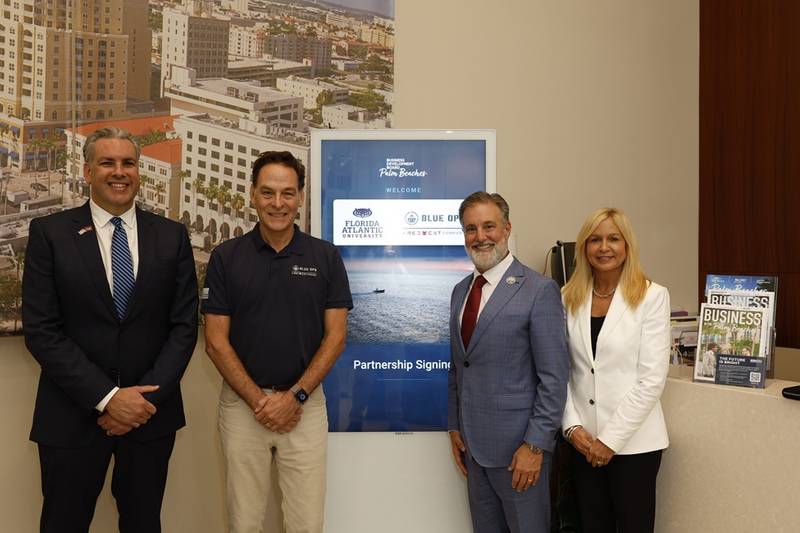
Blue Ops to Bring Uncrewed Maritime Systems to FAU Harbor Branch
3 minutes ago
 Technology
Coalition formed to advocate for biometric technology in Europe
1 hour ago
 Technology
QNA Technology S.A. (QNA) Buy Reiterated; PLN 51 Target Kept
1 hour ago
 Technology
SMX Technology Helping Prove "Made in America" is Great Again
1 hour ago
 Technology
Nuclear fusion conference spotlights Singapore as hub for spin
2 hours ago