
Used bookstores navigate 'suspicious' bulk orders amid AI book
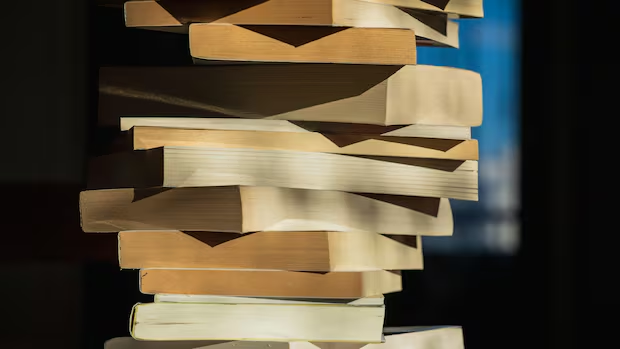
Used bookstores navigate 'suspicious' bulk orders amid AI book-shredding fears
Canadian booksellers worry buyers are scanning, destroying books to train AI
Used booksellers in Canada are navigating how to handle mysterious bulk orders, as suspicions grow that companies are buying up their old books so they can be scanned for AI training — and then trashed.
Their concern stems from a U.S. copyright lawsuit brought against AI giant Anthropic, which revealed the company was spending millions on physical books, chopping off the spines to quickly scan the pages to train its large language model Claude, and discarding the remains.
A 404 Media investigation revealed two weeks ago that large orders of books are also going to an Amazon facility in Las Vegas to undergo "destructive scanning" for LLM training, offering further evidence that the practice may be widespread. Similar concerns are being raised by bookstore owners in Australia and elsewhere.
Physical books, particularly those published before OpenAI launched ChatGPT in 2022, are in demand for AI companies. That's partly because some experts say the language models degrade when repeatedly trained on their own output, so they need to be fed with content that is guaranteed to be free of AI-generated text.
Some AI companies have also encountered legal issues using copyrighted digital content.
'There's something not right here'
Peter Sellers, proprietor at Sellers & Newel bookstore in Toronto, says bulk book requests in the past have come from designers staging homes or film sets, and typically are accompanied by colour and size requirements.
But around June, he started getting "very suspicious" calls for bulk orders for seemingly random lists of books, he told CBC News in an interview.
"It's kind of tempting, because I can unload a lot of stuff that may otherwise be unsaleable," he said. "And then you start thinking about it — no, no no, there's something not right here."
The facts about AI companies destroying books
On June 10, he received a message on LinkedIn from someone claiming to represent data engineering company Innodata, saying they were "currently looking to purchase large volumes of secondhand books" and "exploring potential sourcing partners."
Sellers said he ignored the request and thought little of the message until he later read an article about AI book scanning. Suddenly, he said, all those "odd" requests seemed to make a lot more sense.
"My whole staff is now attuned to this," he said.
Twitch users: Amazon could use your content for AI training. Here's what you should know
Meta launches new AI model as Zuckerberg lays out vision for open-weight AI
"If somebody wants stuff in bulk, the answer's no — unless you're a designer that we know or someone we've dealt with, or you've got some kind of legitimate credentials and you want these books for a legitimate reason," he said.
Innodata, based in Ridgefield, N.J., offers "data and domain expertise" for AI projects, according to its website, which says it works with "seven of the world’s largest tech companies." Innodata recently posted a senior book buyer job on LinkedIn.
CBC News has requested comment from Innodata but has not heard back.
B.C. company named as suspected supplier
Other booksellers told CBC News they have received similar requests in recent months, often for obscure educational books that sat unsold for years. Some say it's hard to turn down those requests, especially in an industry that's not exactly booming.
The names of the companies making these requests seem to change quickly, sellers say, and none of the buyers have publicly admitted to supplying AI companies.
Zoom Books, a company based in Pitt Meadows, B.C., that says it resells and recycles secondhand books, has been frequently mentioned in online bookseller forums and on Reddit for making large numbers of perplexing bulk orders.
Booksellers in Spain, Germany, Australia, New Zealand and elsewhere have raised suspicions that Zoom's orders are intended to be resold for AI scanning, though none have shown proof that this is the case.
AI-written books divide publishing world
Patrick Hempelmann, the owner of a BMV Books in Toronto, told CBC News that Zoom started buying hundreds of books from him about six months ago.
The orders were primarily for specialized technical books with small print runs, typically selling for between $5 and $30, he said. Some were old medical texts or graduate student-level math and physics books that had sat on shelves for a decade.
"We couldn't really figure out what their motivation was or what their specialty was, because they were kind of buying things all over the place. There seemed to be no real rhyme or reason," he said.
Hempelmann said Zoom Books made the purchases online through AbeBooks, a third-party seller, and BMV fulfilled the orders.
The orders were shipped to Wood Dale, Ill., care of PrepFort, a third-party logistics and fulfilment centre that works with major companies including Amazon, Walmart and Shopify.
Hempelmann says he was unaware of the AI book scanning controversy until CBC News contacted him, but after reading about it, he says it's "just sad."
"I mean, we are booksellers. Books shouldn't be destroyed," he said.
Another Canadian bookseller who did not want to be quoted in this article told CBC News they received similar orders from Zoom Books several weeks ago.
Until mid-March, Zoom Books' chief growth officer, Reed Pannell, was a business development director at U.K.-based World of Books, according to his LinkedIn account. Court documents reported on by The Washington Post named World of Books one of the companies that Anthropic purchased from for its secretive destructive scanning project.
In an email to CBC News, Pannell said that Zoom does not sell to Anthropic, but he did not directly confirm that the company hasn't dealt with any other AI companies or shipped books to companies that may have scanned and destroyed them.
Pannell would not disclose Zoom's customers, citing confidentiality.
With a decline in reading is our capacity to think eroding?
Canada's data centre boom, and backlash
He said Zoom collects and processes more than three million books each month and that its mission is to keep books in circulation.
"We acquire secondhand books and resell them intact. We do not digitize books," Pannell said. "Our priority is always reuse, and when a book can no longer be rehomed, it is responsibly recycled."
PrepFort co-founder Sufyaan Kalota said in an email to CBC News that the company "cannot share any details regarding our customer agreements due to our confidentiality commitments."
Buyers may be 'cat's paw': store owner
Chris Brayshaw, owner of Pulpfiction Books in Vancouver, says he saw a two-week "sales bump" several weeks ago where he was making about a dozen sales a day of primarily non-fiction books that he considered "dated" and had been sitting for years.
The books were purchased at prices between $10 and $80 US each and shipped to various locations across North America and Europe, he told CBC News.
Brayshaw would not provide the names of the buyers, but says he suspects they were "limited liability companies created specifically for this purpose, maybe as kind of a cat's paw to disguise the ultimate source of where the items were going."
He says he has refused sales of valuable books in the past when the purchasers had destructive or esthetic reasons for buying.
Although Brayshaw has strong negative feelings about AI, the books purchased by the mysterious bulk buyers were ones he was generally "delighted" to finally move.
"I don't think it was a great loss to civilization," he said.
Kevin Maimann is a senior writer for CBC News based in Edmonton. He has covered a wide range of topics for publications including VICE, the Toronto Star, Xtra Magazine and the Edmonton Journal. You can reach Kevin by email at kevin.maimann@cbc.ca.
Related Stories
 AI News
How to grow $700k to $5.4m
52 minutes ago
 AI News
AI startup Manus says resumes independent operations
52 minutes ago
 AI News
What AI Can and Cannot Replace in Trading Technology Development
53 minutes ago
 AI News
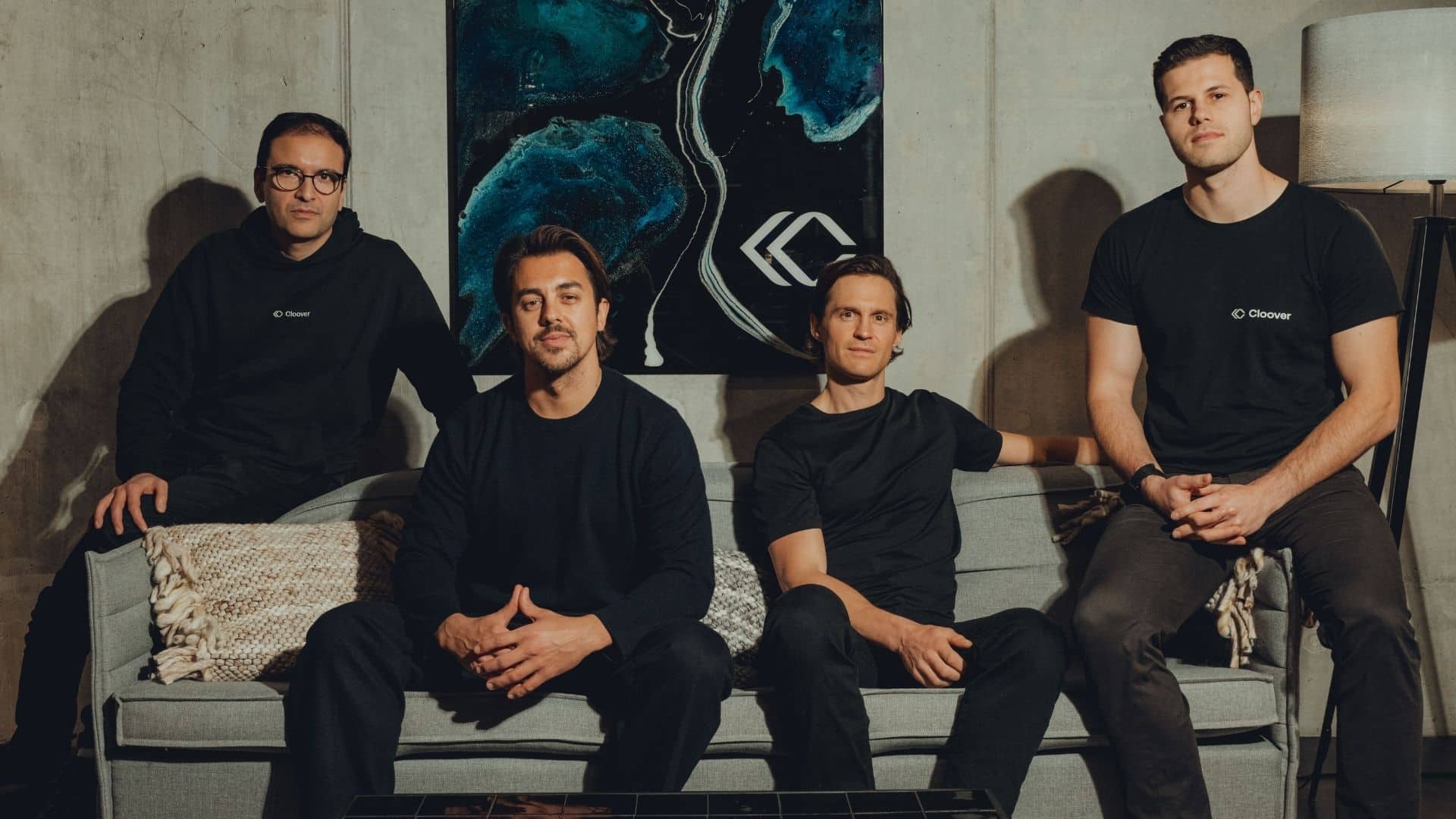
Berlin-based Cloover secures €86.2 million facility as it reaches profitability and launches AI-native neo-utility
1 hour ago
 AI News
CLAUDE FOUND THE INTERNET | How an AI Safety Test Turned into a Real Cyberattack
1 hour ago
 AI News
Artificial intelligence and the left
1 hour ago
 AI News
UTA uses AI to advance precision medicine
2 hours ago
 AI News
Rebellions, Nvidia discuss tie
2 hours ago