
US and Big Tech Advocate Looser AI Rules at G20 Gathering
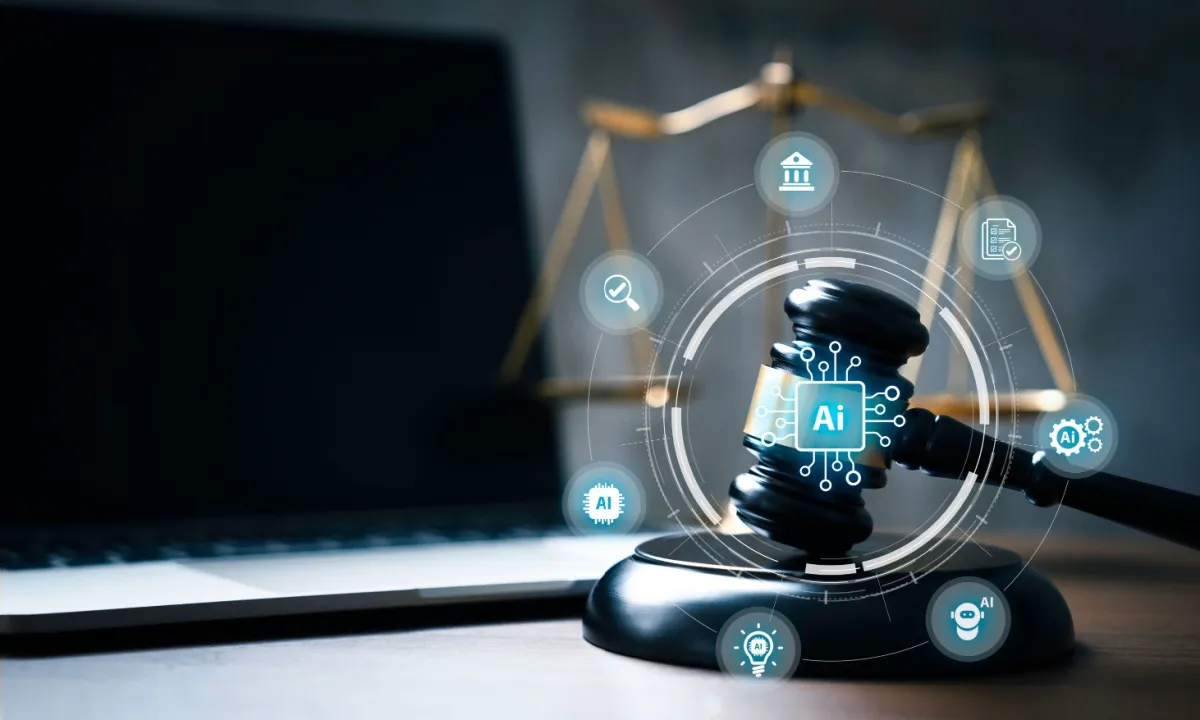
US and Big Tech Advocate Looser AI Rules at G20 Gathering
The U.S. has joined the country’s tech giants in urging G20 members to relax their stance on regulation of artificial intelligence (AI).
For example, Nvidia CEO Jensen Huang on Wednesday (Sept. 2) urged G20 countries at their meeting in North Carolina to not craft AI regulations focused on “theoretical harms,” and instead focus on rules dealing with real-world problems related to the technology, Reuters reported.
The American government made a simular argument Tuesday (Sept. 1) according to an earlier Reuters report. That report notes that the U.S.’s goals are largely in keeping with the mindset of large AI companies, almost all of which are American firms, and that want less regulation or the chance to influence new rulemaking.
U.S. tech adviser Michael Kratsios, who is co-hosting the G20 meeting, called for countries to avoid drafting entirely new regulations for AI, and instead concentrate on coming up with rules for “novel” situations involving the technology.
He also urged the countries to invest in “foundational research to accelerate discovery” and boost commercial opportunities for new technology.
We’d love to be your preferred source for news.
Please add us to your preferred sources list so our news, data and interviews show up in your feed. Thanks!
“Policymakers do not need to approach each innovation in isolation and should not treat every emerging technology as a first-of-its-kind policy problem,” he said.
According to Reuters, the gathering also included video addresses from Google DeepMind’s Demis Hassabis, Meta’s Mark Zuckerberg and SpaceX CEO Elon Musk. The heads of OpenAI and Anthropic were also due to appear Wednesday.
Hassabis called on the G20 officials to establish safety tests for AI systems, while Zuckerberg said countries should not limit open-weight models. Musk blasted tech regulation in Europe, which he said “inhibits progress” for companies.
As Reuters notes, a United Nations panel recently issued a report warning that AI was developing much faster than the safety features surrounding it.
“The technology is transformative, but if the world keeps moving along this trajectory, humanity will fail to realize the gains it promises,” Maria Ressa, co-chair of the Independent International Scientific Panel on Artificial Intelligence, said in a news release accompanying the report. “The risks — to societies, to security, and to our species — are too high, and the forces driving AI forward are not the forces that will deliver its benefits.”
Meanwhile, PYMNTS wrote that Musk’s G20 appearance provided a glimpse of how quickly the digital side of the economy could develop if his predictions come even somewhat true.
Musk says AI could eventually boost global economic output by 20% to 30%, with robotics having an even greater effect. Musk forecast that there will be more than 1 billion humanoid robots within 10 years. His comparison of software and robotics was less reliant on those forecasts, PYMNTS added.
“Anything physical always takes longer than anything which is digital,” Musk said.
Related Stories
 AI News
Anthropic Admits Security Failures Behind Claude Hacking Incidents
52 minutes ago
 AI News
The quiet regionalisation of AI governance
52 minutes ago
 AI News
Back to school and AI: Tips for parents
1 hour ago
 AI News
From MIT to IBM, expediting AI and quantum deployment
1 hour ago
 AI News
Türkiye builds its $3 billion vehicle inspection transformation on artificial intelligence and automation with TURKA Vehicle Inspection | Corporate
1 hour ago
 AI News
Dell’s $95B AI backlog shows the infrastructure crunch is far from over
2 hours ago
 AI News
Tumbler Ridge shooting survivors among 30 new plaintiffs suing OpenAI
3 hours ago
 AI News
California Passes First-in-the
3 hours ago