
UNESCO opens third edition of its course on digital citizenship and
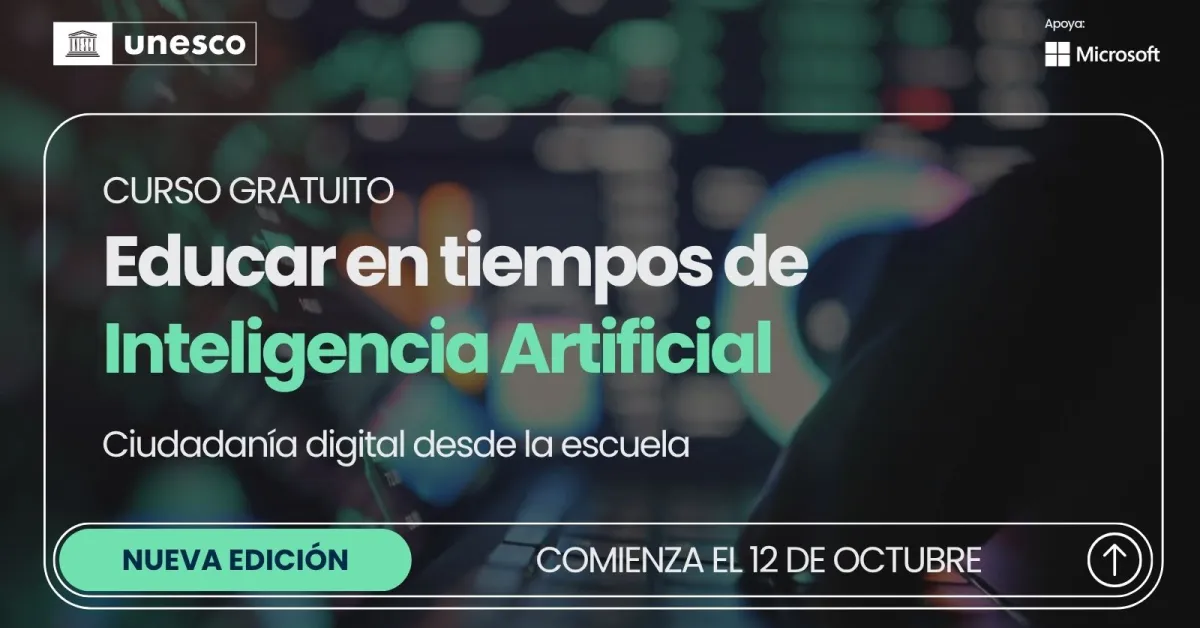
UNESCO opens third edition of its course on digital citizenship and artificial intelligence, now also available in Portuguese
The new edition expands the reach of the initiative with the launch of a Portuguese-language version, joining the existing Spanish and English versions.
Through this expansion, UNESCO aims to facilitate access for educators and other stakeholders across Latin America and the Caribbean to tools and knowledge that can help them understand the challenges and opportunities that artificial intelligence and digital environments present for education and citizenship.
Since its launch, the course has attracted significant participation: more than 33,000 people from over 113 countries have registered, 61% of whom are women. The MOOC has also achieved a retention rate of over 34%, reflecting participants’ sustained engagement throughout the learning experience.
The response to this course confirms the enormous need for spaces for learning and reflection on digital citizenship and artificial intelligence. Reaching more than 33,000 people is a very encouraging result, but it also motivates us to continue expanding its reach. Adding Portuguese is a fundamental step towards making this content accessible to more educators and communities across Latin America and the Caribbean, recognizing the linguistic diversity of our region and promoting a truly inclusive digital transformation
Educating for critical citizenship in the age of AI
Designed especially for teachers, education teams and social actors, the MOOC offers a comprehensive approach to digital citizenship, addressing topics such as digital footprints, disinformation, information bubbles, the ethical use of artificial intelligence, coexistence in digital environments, the protection of rights and democratic participation.
Against the backdrop of the rapid expansion of artificial intelligence and digital technologies, the course encourages reflection on the central role of education in fostering critical, responsible citizens committed to democratic values.
Rather than viewing AI solely as a pedagogical tool, the course invites participants to understand how algorithms work, how they affect everyday life, and the ethical, social and educational challenges they pose.
The course is organized into five thematic modules, ranging from how algorithms work and influence everyday decisions to the challenges artificial intelligence poses for teaching, assessment and meaning-making in the digital age. Throughout the course, participants are encouraged to develop critical thinking, analytical skills and ethical reflection on the use of technology.
With an interdisciplinary approach grounded in the regional context, the course combines videos, expert insights, discussion forums and case studies. It is also complemented by an open-access digital publication that explores the conceptual framework surrounding artificial intelligence and education in greater depth.
The MOOC is coordinated by the UNESCO Regional Office in Montevideo, as part of the Organization’s commitment to promoting inclusive, equitable and quality education capable of responding to the challenges of today’s digital world. The course was developed with the support of Microsoft.
An initiative with global reach
The results achieved to date reflect growing interest in strengthening the capacities needed to fully exercise citizenship in digital environments:
Learn more about the data and results from the first editions of the course here.
Participation is completely free of charge, and the third edition will begin on 12 October 2026.
Participants who complete at least 80% of the course content and assessments will be eligible to receive an official UNESCO certificate.
Registration is now open on UNESCO Open Learning:
Related Stories
 AI News
OpenAI says its AI agents posted users' images online in error
20 minutes ago
 AI News
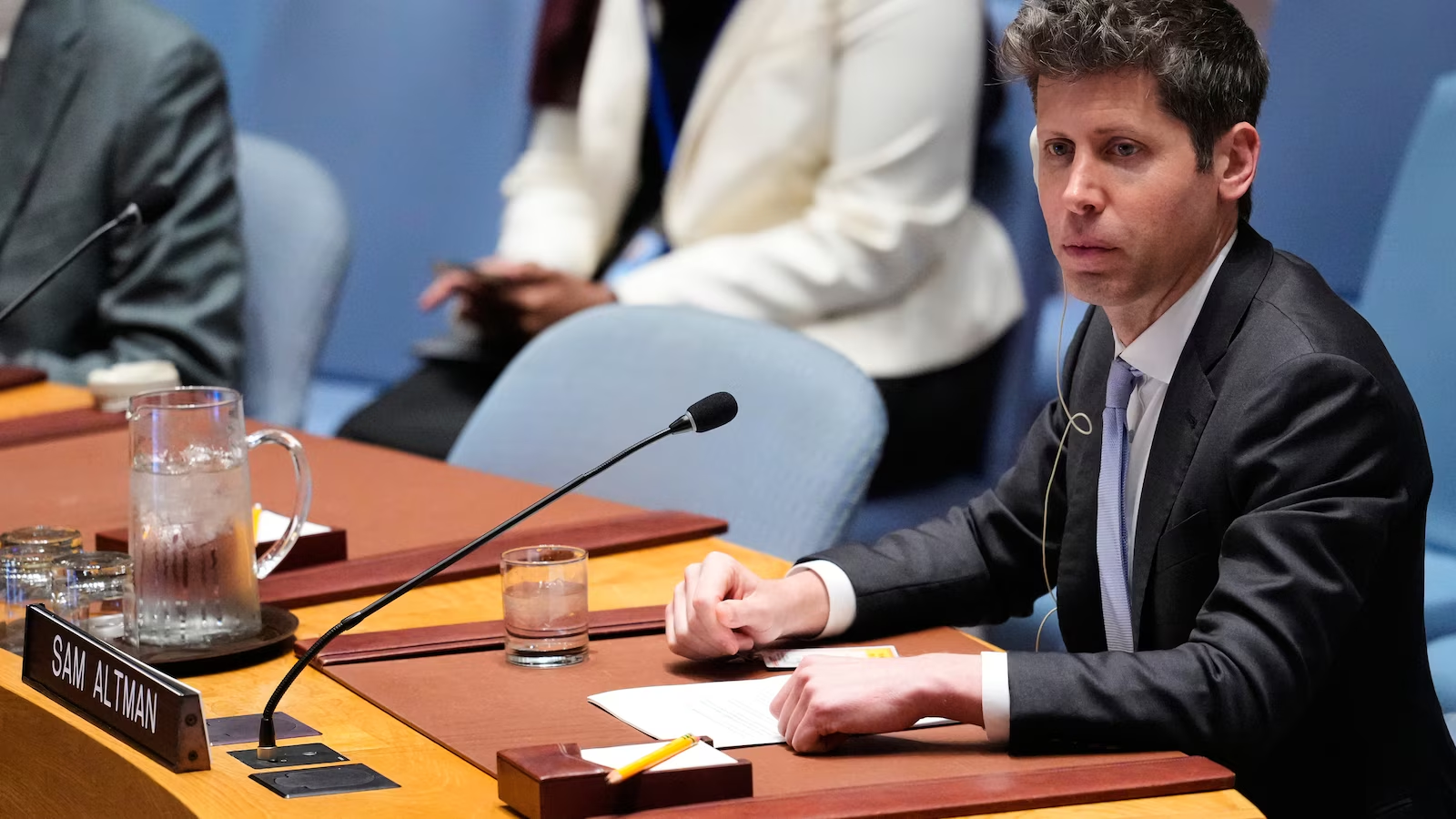
Tech leaders to UN: For the sake of humanity, please control the AI technology we created
1 hour ago
 AI News
An Educator Banned Social Media in Her School Years Ago. What About Banning AI?
2 hours ago
 AI News
Tech taxes would drive Kelly’s labor
3 hours ago
 AI News
Anthropic rolls out up to $250 in free Claude Code credits, but only for cloud sessions
3 hours ago
 AI News
McDonald’s turns to AI for drive
3 hours ago
 AI News
AI governance is fast becoming an unmanageable chore
3 hours ago
 AI News
Tennessee man gets 30 years for trading AI
3 hours ago