
Jack Mintz: Higher real interest rates are very bad news
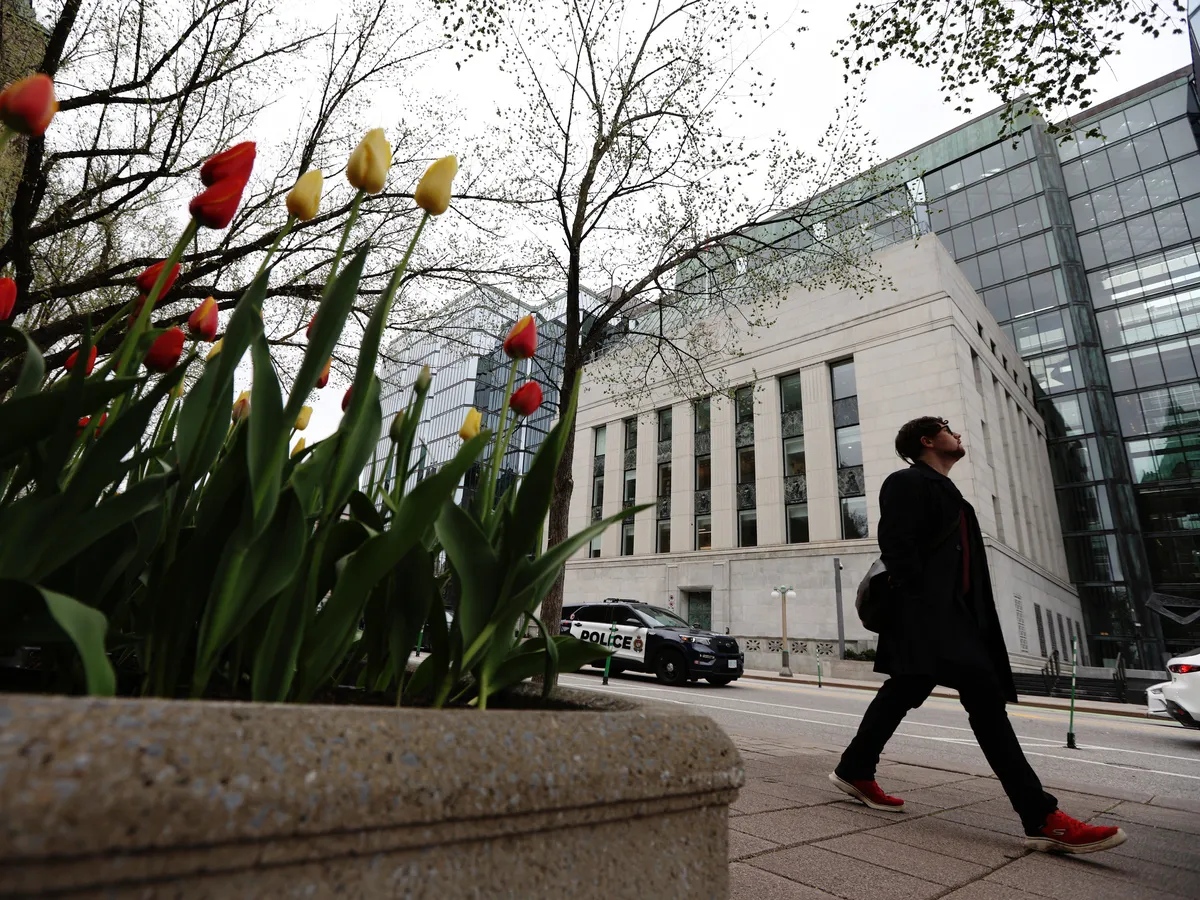
The OECD this week forecast that interest rates are expected to rise by a half point in most countries, including Canada, in the coming year. This is on top of recent hikes by the U.S. Federal Reserve, the European Central Bank, Japan and New Zealand. Only a year ago, we heard from experts that interest rates could fall as economies stalled.
Inflationary pressures are part of what’s causing interest rates to rise. The headline inflation rate peaked at over eight per cent in the EU, U.S. and U.K. in 2022 and hit 6.8 per cent in Canada because of over-zealous COVID spending and accommodative monetary policy. It has since fallen to about three per cent in many counties (without energy and food prices closer to 2.5 per cent), yet it is still running higher than the two per cent target most countries aim at.
Tariffs, the Ukraine-Russia war and oil price shocks are to blame for continuing inflationary pressure. The sharp increase in private investment in artificial intelligence — or what in his UN speech Donald Trump labelled “superintelligence” — has boosted demand for capital and labour, offsetting expected losses in GDP from tariffs and higher energy prices. Housing shortages have pushed up demand for construction and land. Diesel prices are raising the price of food and other transported products. And governments, which represent two-fifths of GDP in advanced economies, are ramping up defence and social spending, which increases aggregate demand even further.
Though inflation is an important factor influencing interest rates, something else is now at play. Real interest rates are rising and that’s a — excuse the pun — real worry.
Interest rates are a market price that equate investment demand with savings supply. Borrowers pay interest to compensate lenders for three costs: postponing their consumption, inflation and risk. The “real” rate of interest is often defined as the headline (nominal) interest rate minus expected inflation, which covers both patience and risk costs.
Consider 10-year U.S. bonds, which are viewed as relatively riskless. They sold at an average interest rate of 2.95 per cent in 2022. In the same year, 10-year inflation-protected U.S. bonds paid roughly 0.7 per cent, implying that the market was forecasting 2.25 per cent inflation over 10 years.
In 2025, the story was much different. The average interest rate on 10-year U.S. bonds was 4.29 per cent, while inflation-protected 10-year bonds were paying 2.2 per cent, indicating an expected inflation rate of 2.1 per cent. In other words, the market was not perceiving a major change in long-term inflation rates. Instead, interest rates were rising because the real rate had almost tripled since 2022.
Rising real rates partly reflect investment demand outstripping saving supply. Yet, both GDP and investment have slowed globally: the growth in gross capital formation has fallen from four per cent annually from 2016-2019 to two per cent in 2023-24 (the latest years for which data are available). After two consecutive years of decline, foreign direct investment also picked up in 2025 rising by six per cent. On the other hand, FDI includes companies simply changing ownership from domestic to foreign investors so it isn’t an exact measure of tangible investment.
Risk is also factor. Ten-year U.S. bonds hit 5.1 per cent on Wednesday, almost 0.9 percentage points higher than at the start of the year. U.S. credit default swap rates rose from 11.6 basis points in December 2021 to 25.4 basis points at the end of last year and they are now 32.6 basis points. Investors see higher risk, including ongoing supply shocks and the growing possibility of a U.S. debt default.
Rising real interest rates will hurt. Indebted households are already overstretched, with borrowings almost equal to GDP. Those wanting to buy a home, renew a mortgage or invest in rental property will face higher down payments. Higher interest rates eventually drive down housing prices, which won’t be good news for existing homeowners.
Rising interest rates will also be a bigger burden on non-financial corporations, whose debt is roughly 115 per cent of GDP. A higher cost of capital is not an issue if the economy is clipping along at a good rate and profits are buoyant. In a down economy, however, they’re a real burden.
With all levels of government ramping up deficit spending, Canadians should expect real interest rates to be that much higher. Total government gross debt as a share of GDP is a worrisome 111 per cent — though at least, unlike the U.S., we have put money aside to fund public pension funds without needing to raise taxes.
Even so, Canada is vulnerable to a major financial crisis in which governments have difficulty selling their debt, especially to foreign investors, who could turn against an economy. As the graph shows, over a third of federal debt is now owned by non-residents. That’s a higher ratio than in 1994, when we almost had to be bailed out by the IMF.
Canada’s economic growth is currently like that of our newfound EU friends: plodding. With the U.S. tariff war, higher oil prices and manufacturing companies migrating to the U.S., growth will continue to stall. That makes the combination of higher real interest rates and uncontrolled public debt even more explosive.
Related Stories
 Economy
10-year JGB yield at 3
14 hours ago
 Economy
A U.S. bond yield hit 5.1% for 1st time in 19 years. Here’s what it signals
1 day ago
 Economy
High borrowing costs push down American housing sales
1 day ago
 Economy
Even beloved hot dogs feel economic squeeze
4 days ago
 Economy
Federal Reserve rate hike reflects new world of sticky inflation and faster growth
5 days ago
 Economy
Natural draft cooling tower is preferred JEK2 option
6 days ago
 Economy
Trump ramps up feud with media after week of setbacks
6 days ago
 Economy
Japan raises interest rate to new 31
1 week ago