
Even beloved hot dogs feel economic squeeze
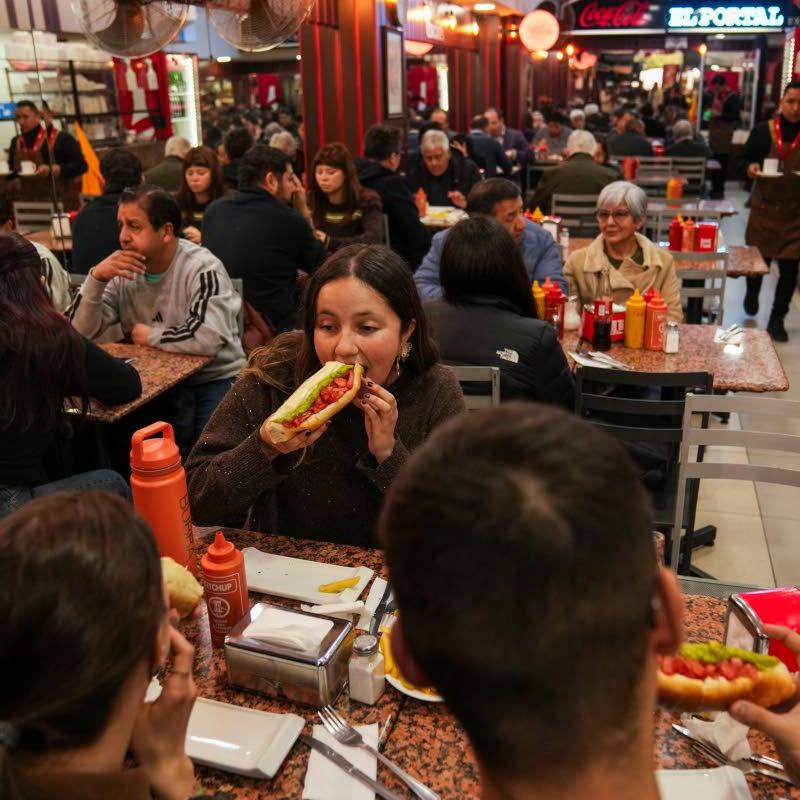
It is lunchtime in downtown Santiago, and dozens of businesses around the Plaza de Armas are serving up one of Chile’s most democratic specialties: the “completo”.
For decades, the country’s version of the hot dog has been one of the most affordable foods enjoyed across social classes. But, as the cost of living rises and the economy struggles, even the humble snack is feeling the impact.
“Not long ago, I used to pay 2,500 pesos (US$2.60) for a completo,” said Antonia Bravo, a 21-year-old student. “Now, they cost 3,500 or 4,000 pesos (US$3.60 or US$4.10).”
Official data released this month confirmed that Chile is on the brink of recession after two consecutive quarters of economic contraction. Unemployment rose to 9.5 per cent, the highest level in five years, while annual inflation accelerated to 4.1 per cent in the past 12 months as food and transportation prices increased.
The weak outlook prompted Chile’s Central Bank to cut its 2026 growth forecast, from the previously projected 1-1.75 per cent range to 0.25-0.75 per cent.
“We cannot rule out the possibility that the current weakness may prove more persistent than anticipated,” Central Bank President Rosanna Costa warned at a news conference last week.
The completo was born in one of those small shops in downtown Santiago in the early 1930s. Chile’s take on the hot dog features a sausage topped with sauerkraut, tomato and homemade potato-based mayonnaise. Avocado and other ingredients were added over time, turning it into a complete meal, hence its name, ‘completo’.
“Back then, people weren’t well off; they didn’t have many resources and would come here for completos,” said Guillermo Cid, manager of the restaurant credited with creating the dish. “It is the same today. Instead of sitting down for a full meal, many people just stop by for a completo.”
Chile’s monthly basic food basket cost just under US$100 in August, up five per cent from a year earlier, according to the Ministry of Social Development. The country’s monthly minimum wage is about US$580. Chile has also faced rising fuel prices resulting from the US-Iran war.
Together, these pressures “feed into inflation and erode household purchasing power”, creating a scenario where “confidence ... deteriorates”, the Central Bank president said.
As the cost of living rises and household budgets tighten, Chileans are looking for ways to stretch their incomes by cutting spending on key areas, including food.
Related Stories
 Economy
Federal Reserve rate hike reflects new world of sticky inflation and faster growth
9 hours ago
 Economy
Natural draft cooling tower is preferred JEK2 option
1 day ago
 Economy
Trump ramps up feud with media after week of setbacks
1 day ago
 Economy
Japan raises interest rate to new 31
3 days ago
 Economy
What the U.S. Fed hiking rates means for the loonie and for borrowers
3 days ago
 Economy
US House votes for third time to end Iran war after $38bn cost is revealed
3 days ago
 Economy
U.S. Federal Reserve raises interest rates for 1st time in 3 years
4 days ago
 Economy
US interest rates raised for first time in three years
4 days ago